
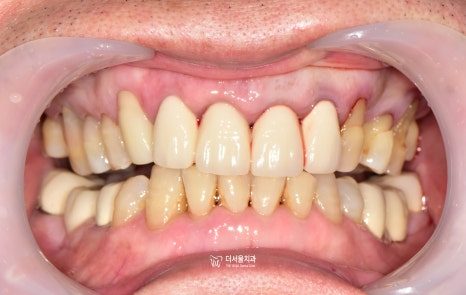
You usually feel it before you see it — a groove at the base of a tooth, right where it meets the gum, sharp enough to catch a fingernail. Cold water finds it. So does the toothbrush. What most people want settled before anyone picks up a drill is whether this is a small repair or the opening move in something expensive. That is answerable at the first examination.
What is the notch at the gum line?
It is wear at the neck of the tooth, the narrow band where the crown meets the gum. These are non-carious cervical lesions — tooth substance is being lost mechanically, not to decay. Nothing is rotting.
The neck is where the tooth’s armour runs out. Enamel is thinnest there, and the root below the gum margin is covered by cementum rather than enamel. Underneath is dentine, threaded with microscopic tubules running towards the nerve — which is why a lesion you can barely see produces a short, sharp pain from cold water or a toothbrush.
Why does the wear happen there and not on the biting surface?
Three mechanisms produce these lesions, and in most mouths at least two are working at once.
- Abrasion — horizontal scrubbing with a firm brush, sawing at the gum margin where the tooth is thinnest.
- Erosion — acid softening the surface first. Fizzy drinks, citrus and stomach acid from reflux all do it.
- Abfraction — the tooth flexing under load. Clenching and grinding bend it minutely, and that bending stress concentrates at the neck.
Why does the tooth look longer?
Because the gum has receded and exposed part of the root. The tooth has not grown; the margin around it has moved.
Recession and cervical wear travel together. Exposed root has no enamel over it and wears faster than the crown, the notch that forms there holds plaque, and the plaque irritates the gum into receding further — so the two are assessed as one problem.
Does it always hurt?
No. Sensitivity is the usual first sign, but a slow lesion can advance without it: the pulp lays down reparative dentine as the wear approaches, and that insulation can keep pace for years. Where it does not keep pace, the pulp can inflame and die quietly, and the first symptom is an abscess rather than a twinge. The absence of pain is not evidence that a visible notch is minor.
The case: notches on both sides of the upper arch
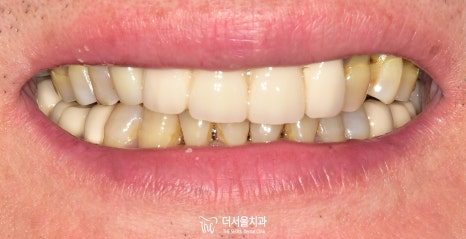
The patient attended reporting pain at a worn area and the impression that one tooth had become longer than its neighbours. Examination found cervical wear on both sides of the upper arch, which is the usual pattern: a brushing or clenching habit is not applied to one tooth only.
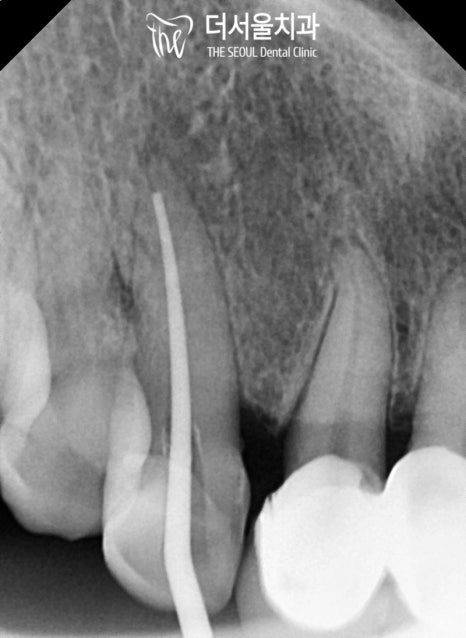
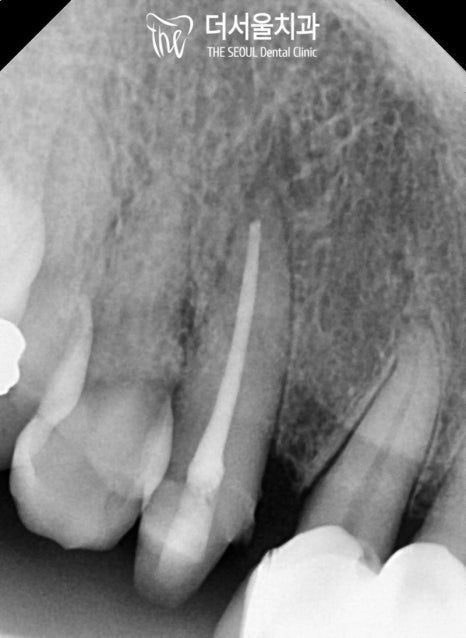
Most of the lesions were shallow enough to rebuild directly. One was not. The upper left canine, third tooth from the midline, had worn deeply enough to reach the pulp, and an exposed pulp cannot be covered over and left. That tooth needed root canal treatment before anything could be built back on to it.
When resin is enough, and when it is not
Three levels, and depth is the boundary between them.
- Shallow, within enamel and outer dentine. Rebuilt with composite resin in a single appointment, often without anaesthetic.
- Deep, close to the pulp but not into it. Still restored rather than root-treated, with a protective liner over the deepest floor and a review afterwards to confirm the pulp settles. Where enough of the neck has gone that the remaining structure is undermined, a crown outlasts a very large resin.
- Into the pulp. Root canal treatment first — the canal cleaned, shaped and filled — then the tooth prepared and a crown fitted. A root-treated tooth has lost its blood supply and much of its structure, which is why the crown is part of the treatment rather than a finish added to it.
One arch can hold more than one level at once, as this one did, so the decision is made lesion by lesion. Cost tracks the same steps: a resin at the gum line is among the smaller items on a fee list, while root canal treatment with a crown is several procedures. Our fees are on the pricing page.
How long does it take, and how many visits?
Treatment here ran from 18 March to 28 April 2022 — about six weeks, because the arch held both kinds of problem at once.
Taken separately, a resin restoration is one appointment and the tooth is usable as soon as you leave. Root canal treatment plus a crown takes weeks: the canal is treated over one or more visits, then the tooth is prepared and scanned, and the crown is made outside the mouth before a further appointment fits it, with a temporary in place meanwhile.
That difference decides what fits into a trip. Resin work can be completed within a short stay; a root canal and crown needs your travel dates raised at the first appointment so the sequence can be planned around them.
How do you stop it coming back?
A restoration replaces what was lost but not what caused the loss, and where the cause continues, wear reappears at the margin of the new filling. Prevention mirrors the three mechanisms.
- Brushing action. Small circles with a soft brush at the gum margin, not horizontal sawing. Pressure wears faster than it cleans.
- Acid timing. Rinse with water after acidic food or drink rather than brushing straight onto a softened surface.
- Clenching. Where it drives the lesion, a night guard addresses the load that rebuilding the notch leaves untouched.
Response varies between individuals, and none of this makes a restored tooth stronger than the original was.
Three things are worth having examined rather than watched at home: a groove at the gum line that catches a fingernail, a brief sharp pain at one spot from cold water or air, and a tooth that looks longer than its neighbours. Any one is reason enough for an examination: level one and level three are different treatments, not different amounts of the same one.
Frequently asked questions
Can a worn notch repair itself if I change how I brush?
No. Lost tooth substance does not grow back. A better brushing action stops the notch deepening, but the shape already lost stays until it is rebuilt. Where a lesion is shallow, symptom-free and stable across check-ups, watching it rather than filling it is a legitimate choice.
Is this the same procedure as a cavity filling?
The material is usually the same composite resin, but the preparation is not. A cavity is excavated because it holds infected tissue; a cervical notch has no decay to remove, so the surface is cleaned, conditioned and rebuilt to shape. Bonding there is harder because the site is close to the gum and hard to keep dry.
Will the filling come out?
Cervical restorations debond more often than fillings inside a biting surface, because they sit on a surface that flexes and have less surrounding tooth to grip. Where clenching caused the lesion and continues untreated, that is the usual reason one comes away.
My teeth are sensitive but I cannot see a notch. Is this still the cause?
Possibly. Exposed dentine can produce sensitivity before any lesion is visible, and gum recession alone can do it with no wear at all. Cracks, decay and failing fillings produce it too, so the distinction is made by examination rather than by the symptom.
Read more: cavities and fillings · root canal treatment · crowns and veneers