
Root canal treatment is not one procedure with one difficulty level. Canal anatomy varies, and some shapes are considerably harder to clean than others. This case involved a C-shaped canal — and it started with a symptom most patients misread.
“It hurts when I bite”
The patient described a sharp, cold sensitivity in a lower right tooth when eating. That specific pattern — discomfort on biting rather than constant ache — usually means a crack.
Heavy chewing force or biting something hard at the wrong angle can fracture a tooth. The problem is that the crack is often microscopic and does not appear on a radiograph at all. Diagnosis therefore rests on clinical examination and experience rather than on an image.
How is a cracked tooth located?
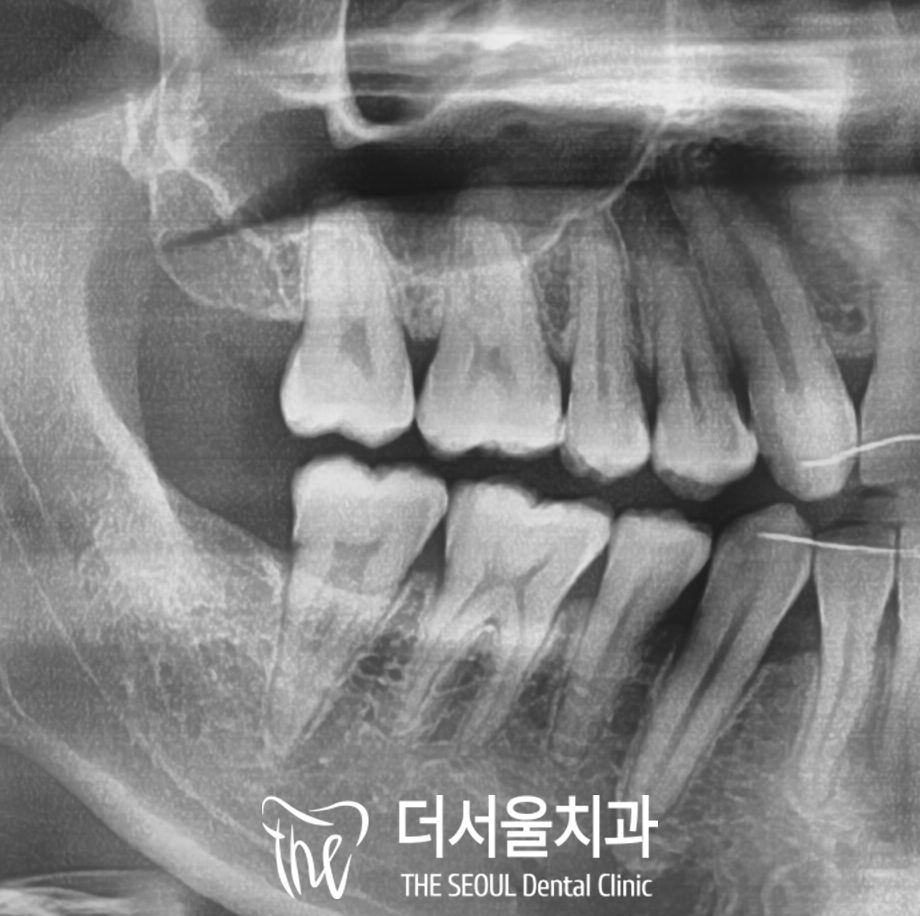
Patients often misidentify which tooth is involved, because the periodontal ligaments connecting adjacent teeth refer sensation between them. So the first step was a panoramic X-ray of the whole mouth, then a periapical X-ray of the suspect area.
Neither showed the crack — as expected. The confirmation came from a bite stick: pressing on a specific part of the occlusal surface of the lower right second molar reproduced the patient’s symptom, repeatably. That established the diagnosis, and the plan followed: root canal treatment with a crown.
What is a C-shaped canal?
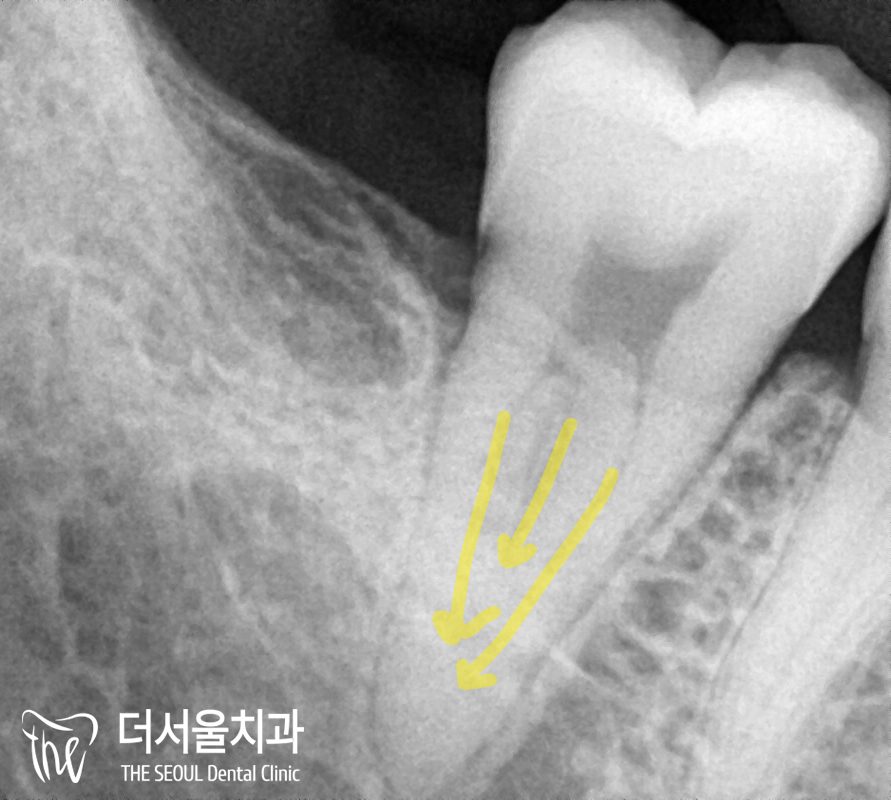
Viewed from the biting surface, the nerve canals inside a normal tooth appear as separate points at defined positions. Those are straightforward to treat.
A C-shaped canal is a continuous, curved channel rather than discrete points. The curvature limits access, which makes removing the pulp and disinfecting the canal considerably harder — instruments cannot simply be advanced in a straight line. The work depends on the clinician’s tactile control.
The treatment, visit by visit
Visit 1. Staged anaesthesia, then a small access hole through the crown so instruments can reach the inside of the tooth. The pulp is removed with sterilised hand files. From this point on, calcium hydroxide medicament is placed in the canal at the end of each appointment as an additional disinfecting measure.
Visit 2. The canal is enlarged with NiTi files using a step-back technique, then irrigated repeatedly with sodium hypochlorite and saline.
Visit 3. Irrigation and disinfection repeated. Molars have multiple roots, and in a C-shaped canal there may be areas instruments have not reached or pulp tissue that remains, so this stage is checked carefully. Failure and recurrence rates are higher than in standard anatomy.
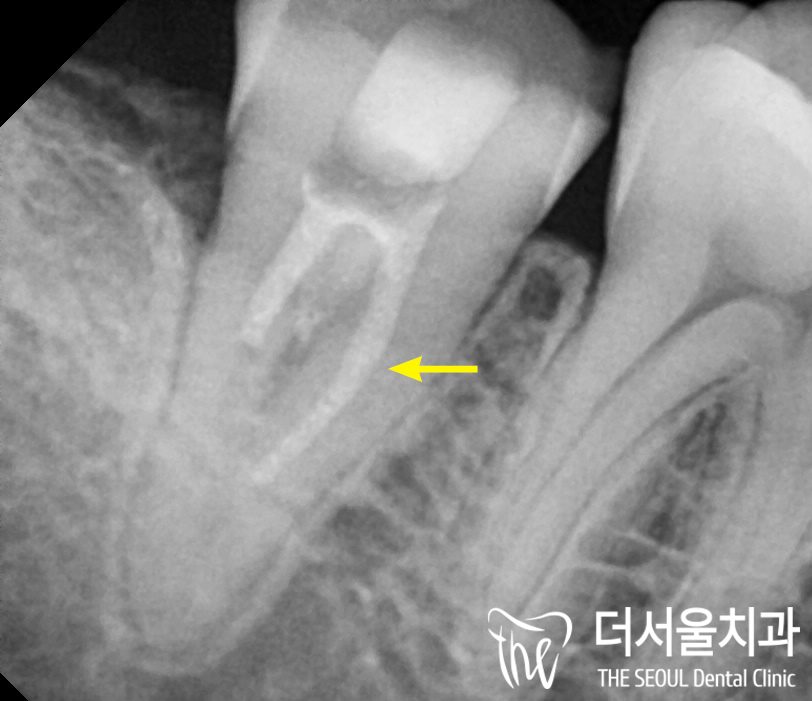
Three rounds of disinfection were enough here. The canal was then sealed with an MTA sealer — a more expensive material, chosen for its biocompatibility, antibacterial properties and the protective barrier it forms. The follow-up radiograph showed the seal complete to the root tip.
The crown
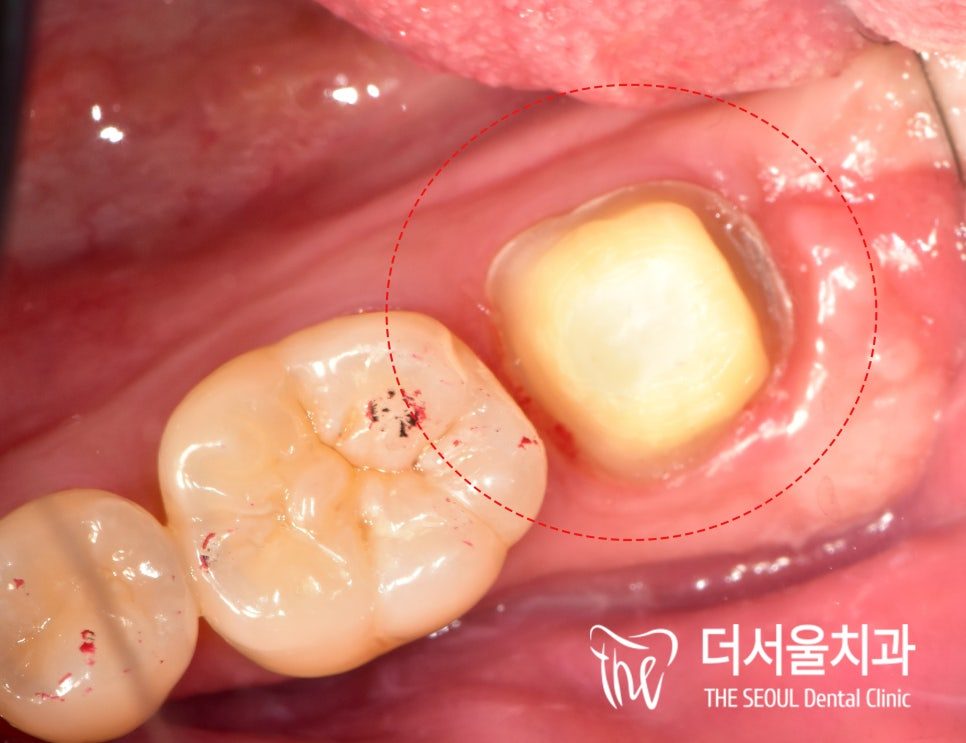
The tooth was then prepared to a thickness able to withstand molar chewing force, and a zirconia crown made.
Two details decide whether a crown lasts. Too thin, and it can fracture against the opposing tooth. If the margin is not positioned accurately, a visible line forms between the crown and the gum. Both are settled before the impression is taken, not corrected afterwards.
How many visits does it take, and what does it cost?
A C-shaped canal usually means more appointments than a standard root canal — here, three cleaning visits before sealing, then crown preparation and fitting, across roughly five weeks.
Root canal treatment is covered by Korea’s national health insurance, so it is not an expensive procedure for insured patients. C-shaped canals carry a somewhat higher insurance fee because of the difficulty involved, adding a few thousand won for the patient. If you are visiting from abroad without Korean national health insurance, ask us for the applicable fee at consultation — the uninsured figure is different, and the crown is a separate, non-covered item in any case.
Frequently asked questions
Why does my tooth only hurt when I bite down?
That pattern typically indicates a crack rather than decay. A cracked tooth flexes under load, irritating the pulp, then settles when the pressure is released. Because the crack is often too fine to appear on an X-ray, diagnosis is made clinically — frequently with a bite stick that reproduces the symptom on a specific cusp.
How many visits does root canal treatment take?
A straightforward case can be shorter, but this C-shaped canal needed three cleaning and disinfection visits before sealing, then crown preparation and fitting. Curved or merged canals need more thorough irrigation, and rushing that stage is what causes reinfection later.
Is a crown always needed after root canal treatment?
For molars, generally yes. A root-treated tooth has lost internal structure and is more prone to fracture under chewing load. The crown restores that strength — and it must be thick enough to survive contact with the opposing tooth.
Is root canal treatment covered by insurance in Korea?
Yes, for patients with Korean national health insurance, which keeps the cost modest. C-shaped canals attract a slightly higher fee reflecting the difficulty. Visitors without Korean insurance pay a different, uninsured rate, and crowns are not covered in either case — ask for both figures at consultation.
Read more: root canal treatment · crowns and veneers · cavities and fillings