
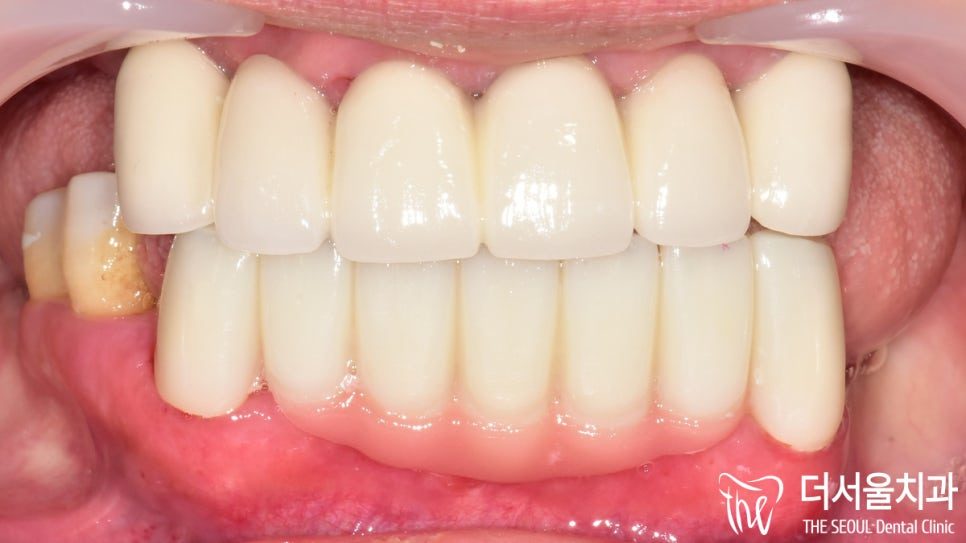
If your gums are badly inflamed, an implant is not simply a matter of placing a fixture. There may be nothing there to hold it. This case explains what has to happen first.
Can an implant hold if the bone is gone?
Teeth are anchored by roots set into the alveolar bone. When that bone is damaged and lost through inflammation or decay, the natural tooth eventually comes loose and is lost.
The same bone is what an implant relies on. If it is not there, the fixture has nothing to grip — it stays mobile or comes out. Insufficient ridge width means insufficient stability, and no amount of surgical skill substitutes for bone that is not present.
Where gum inflammation is severe, the alveolar bone underneath has usually been affected too. That is why detailed assessment comes first, and why additional procedures often have to be planned alongside the implant.
What did the examination find?
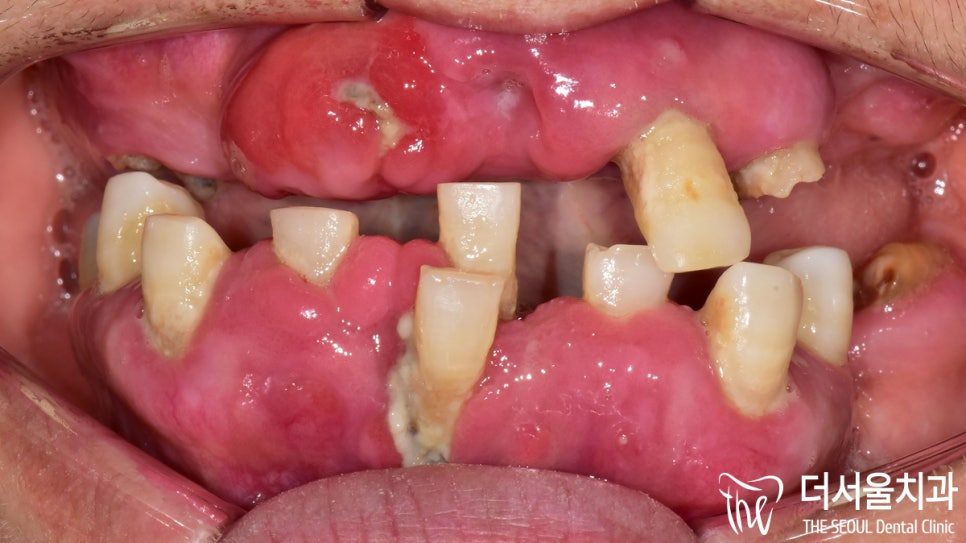
The examination found several problems at once:
- Multiple missing teeth
- Over-eruption — teeth drifted out of position into the gaps opposite them
- Heavy calculus
- Exposed root surfaces
- Retained roots — fractured teeth where only the root remained
- Periodontal disease
Viewed from the biting surface, the ridge width was visibly reduced. Narrowing of that kind indicated the alveolar bone underneath was in poor condition too. Inflammation had progressed to periodontitis, and the bone had weakened as a result.
What happens if an implant is placed anyway?
Placing a fixture into this situation risks outright surgical failure. Beyond that, inflamed and swollen gum tissue put under surgical stress can develop further complications.
So the sequence had to be: bring the gum inflammation under control first, then place implants with bone grafting. That ordering is not a preference; the second step does not work without the first.
Very few teeth in the mouth were salvageable. The four in the best condition were kept and the rest planned for extraction.
What did each stage of treatment involve?
Treatment started with scaling and worked forward from there.
Teeth that could not be saved were extracted, and periodontal treatment was carried out to reduce the widespread inflammation.
One practical point worth knowing: local anaesthetic works less reliably in badly inflamed tissue. Inflammation changes the local tissue chemistry and interferes with the anaesthetic. That is a further reason to treat inflammation before attempting surgery, rather than working around it.
On the day of implant placement, computer analysis determined which areas needed grafting, the direction of placement and the fixture diameters. Surgery followed that plan.
What were the final restorations made of?
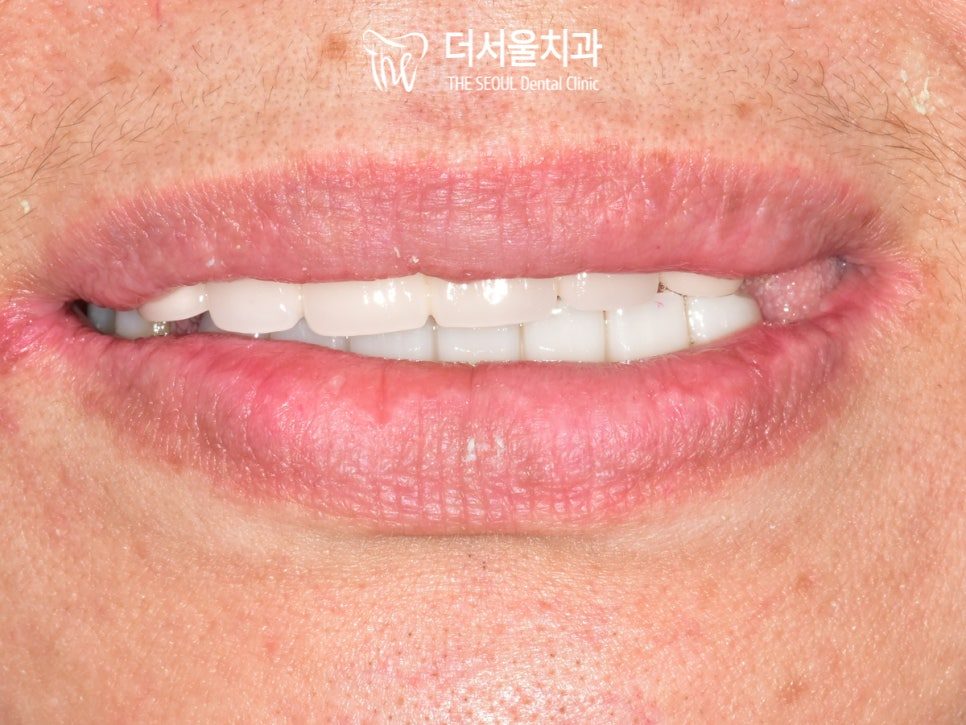
The restorations were designed around the patient’s facial proportions, age and overall presentation rather than to a standard shape.
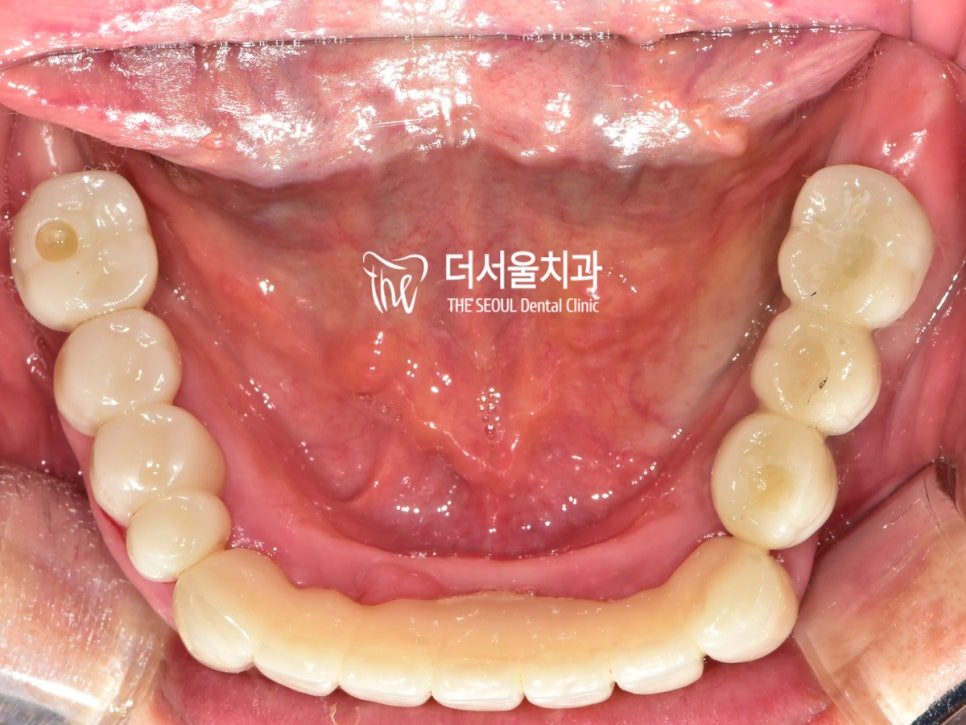
For the lower front teeth, root canal treatment was carried out on the abutment teeth and a bridge constructed across them. Pink porcelain was used at the gum margin — where periodontal disease has caused recession, pink ceramic reproduces the appearance of gum tissue that is no longer there, so the restoration does not read as unnaturally long teeth.
In the back of the mouth, zirconia crowns were fitted for durability under chewing load.
Timeline
Treatment ran from late January to late May 2023 — about four months, covering scaling, extractions, periodontal treatment, grafting, implant placement and the final restorations. Cases needing the gums stabilised first take longer than straightforward implant cases, because the preparatory stage is real treatment rather than a formality.
The point worth taking away
Advanced gum disease makes implant treatment more complicated, and it does mean more stages. It does not automatically make it impossible.
What determines the answer is how much bone remains and whether the inflammation can be brought under control — and both of those are established by examination and imaging, not by looking at the mouth. If you have been told your gums are too poor for implants, it is reasonable to ask what the imaging showed and what the staged alternative would involve.
Frequently asked questions
Can I have implants if I have gum disease?
Often yes, but not immediately. The inflammation has to be treated first and the bone rebuilt where it has been lost. Placing a fixture into actively inflamed tissue risks failure of the implant itself.
Why treat the gums before placing implants?
Two reasons. An implant needs healthy bone to integrate with, and inflamed tissue does not provide it. Also, local anaesthetic works less reliably in badly inflamed tissue, which makes surgery harder to carry out well.
What is pink porcelain used for?
To replace the appearance of gum tissue lost to periodontal disease. Without it, restorations in a recessed area look like unnaturally long teeth. It is an aesthetic solution to a tissue-loss problem.
How long does treatment take when gum disease has to be treated first?
Longer than a standard implant case — this one ran about four months across scaling, extractions, periodontal treatment, grafting, placement and restorations. The preparatory stage is treatment in its own right, not a delay.
Will I lose all my teeth if my gum disease is advanced?
Not necessarily. Teeth in reasonable condition are kept; in this case four were. Which ones can be saved depends on how much supporting bone each still has, which imaging establishes tooth by tooth.
Read more: bone grafting and sinus lift · dental implants overview · root canal treatment