
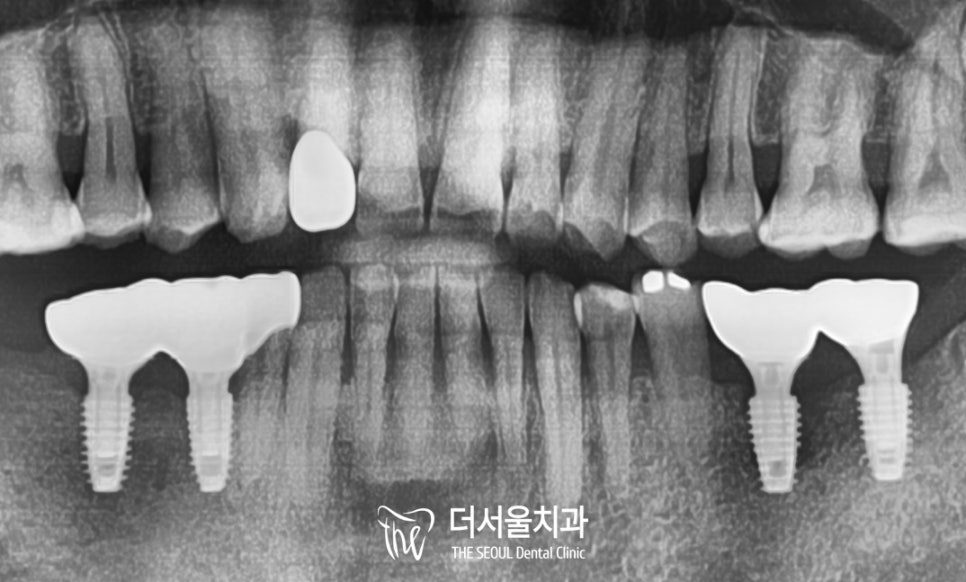
Dental fear is common enough, but when it becomes avoidance the cost compounds: something that would have been a single appointment becomes months of surgery. This patient had reached that point, and came in only because sedation was available.
What happens if I put off dental treatment?
Fear of dental treatment is ordinary. Where it becomes a problem is when it turns into avoidance — a tooth hurts, and it is left alone anyway.
The arithmetic is unforgiving. A problem that could have been dealt with in one appointment becomes surgery spread across several months. Nothing about the fear changes; only the size of the treatment does.
What the patient came in with
The patient explained they had avoided dental treatment for years because of a phobia, and had come now because the pain had become intolerable — and specifically because they had heard that treatment under conscious sedation was possible here. They also wanted the molar they had lost some time earlier replaced with an implant.
The visual examination found the mouth in poor condition:
- #45 (lower right second premolar) — potentially salvageable
- #36 (lower left first molar) — needed removing promptly, then an implant
- #37 (lower left second molar) — worn down far enough that dentine was deeply exposed; the outlook could not be predicted
Why is a CT scan needed before an implant?
A panoramic X-ray showed bone loss, but not to the extent that would require grafting. There was some loss, which meant the implant placement needed more precise planning than a straightforward case, but a bone graft was not necessary.
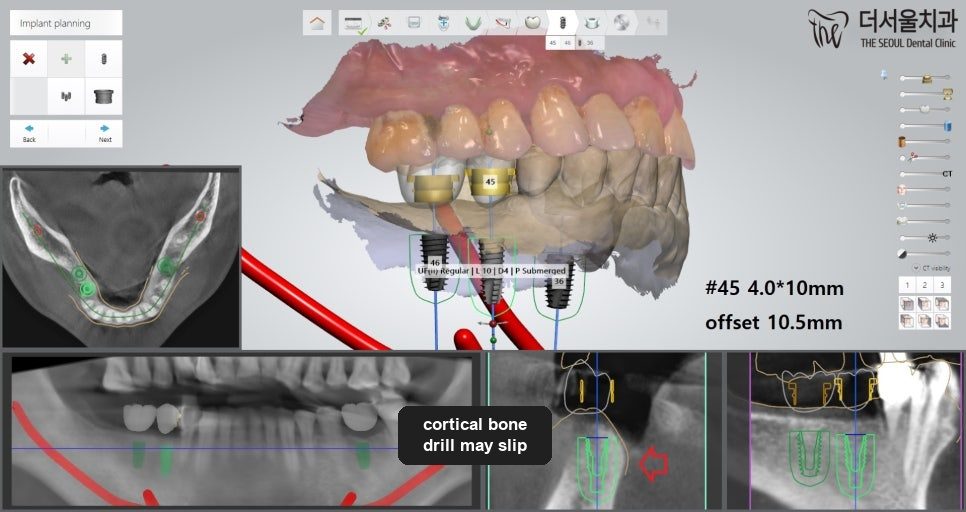
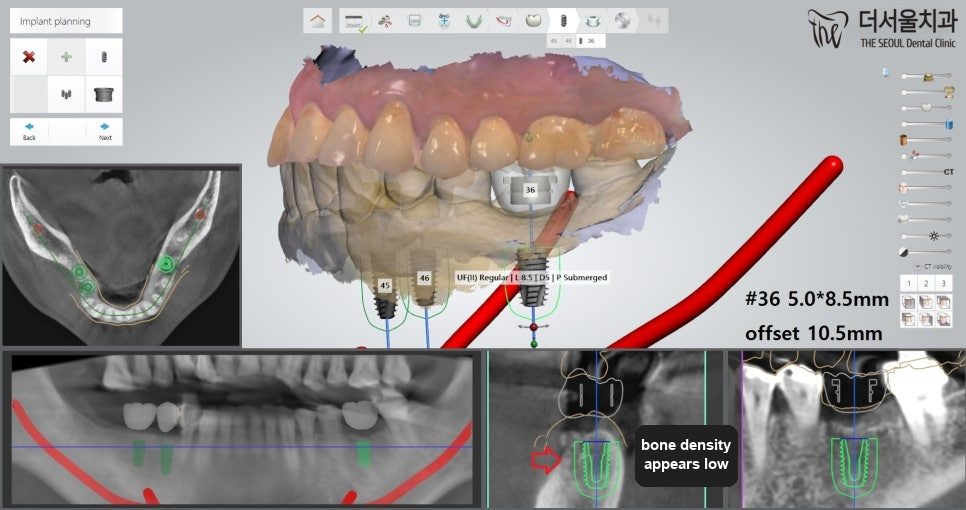
Computer analysis of the scan data confirmed two things that shaped the surgery:
- There was adequate clearance from the inferior alveolar nerve, the nerve running through the lower jaw — so no graft was needed and the planned fixture length was safe
- The bone was not especially thick, so care was needed against the drill slipping during preparation
That second point is the kind of detail worth planning for rather than discovering mid-surgery.
What can be done in one sedation session?
Under conscious sedation, the two teeth that could not be saved — #36 and #45 — were extracted.
Tooth #37 looked salvageable, so it was restored with a prosthetic rather than removed. Because the exposed dentine made its outlook uncertain, the plan was to place the adjacent fixture first and keep #37 under observation.
Sedation is what made a session of this scope possible for a patient who had been unable to attend at all. It does not remove the underlying anxiety, but it makes the treatment achievable, which for someone in this position is the thing that matters.
Placement and the restoration
The fixtures were placed according to the plan, and post-operative imaging confirmed they were correctly positioned.
Once osseointegration was established and the fixtures were stable, impressions were taken for custom abutments and crowns.
What happened to #37
The tooth kept under observation did not work out. Despite the restoration, decay continued inside it and it eventually had to be extracted after all. Because the outlook had been recognised as uncertain from the start, that was dealt with promptly rather than allowed to drag on.
It is worth stating plainly. Attempting to save a badly worn tooth is a reasonable decision that sometimes does not succeed, and a case report that only shows the parts that went to plan is not much use to anyone deciding what to do about their own mouth.
Did the treatment resolve the pain?
Post-operative panoramic imaging showed the fixtures well placed. The bite between upper and lower teeth came together properly, and the patient reported the discomfort that had brought them in was resolved.
Regular check-ups were arranged, which matters more than usual for a patient whose history is years of avoidance.
How long did the implant treatment take?
Treatment ran from May to early November 2022 — about six months, including the extractions, implant placement, healing, and the extraction of #37 when it did not recover.
How often should you actually be seen?
- Every six months is a reasonable default
- Once a year is enough if your home care is genuinely good
- More often than that if it is not, or if you have a history of decay or gum disease
The reason is straightforward: a lost tooth does not grow back. Whatever the cause, once a tooth is gone the options are replacements, not repairs.
If fear is what has kept you away, sedation makes most treatment accessible. It is worth asking about rather than waiting until the pain decides for you.
Frequently asked questions
Can I have implant surgery if I am afraid of the dentist?
Yes. Conscious sedation puts you in a relaxed, drowsy state where you can still respond to instructions, and most people remember the appointment only vaguely afterwards. Tell us about the anxiety at the consultation so it is planned for rather than managed on the day.
Do I always need a bone graft for an implant?
No. This patient had some bone loss but not enough to require grafting — the CT scan showed adequate clearance from the nerve for the planned fixture. Whether you need one is a measurement, not a rule.
Is sedation the same as being put to sleep?
No. General anaesthesia makes you unconscious. Conscious sedation leaves you able to respond to simple instructions while relaxed and drowsy. Local anaesthetic is still used at the surgical site.
What if a tooth you tried to save fails anyway?
It is dealt with promptly, which is why a tooth with an uncertain outlook is kept under observation rather than assumed fine. In this case #37 was extracted when it became clear the decay was continuing. Where that is a possibility, we say so before treatment rather than afterwards.
How often should I have a check-up?
Every six months as a default, or annually if your home care is consistently good. More often if you have a history of decay or gum disease. The point is to find problems while they are still small.
Read more: digital guided implants · dental implants overview · emergency dental care