
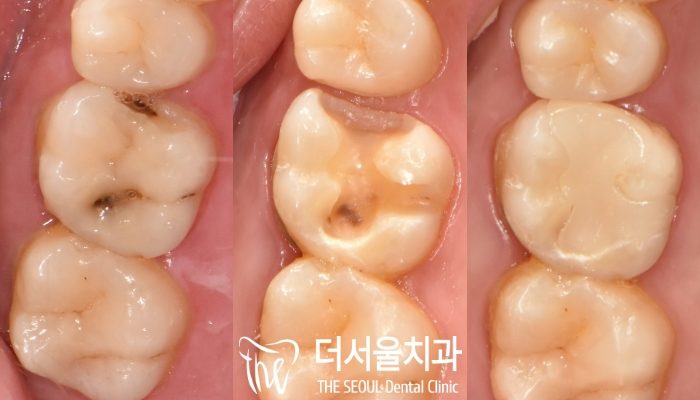
A small cavity is cleaned out and filled in one go. Past a certain size that stops working, and the repair has to be made outside the mouth and fitted in. That is an inlay — and the material choice is a set of trade-offs rather than a ranking.
When is a filling no longer enough?
At the earliest stage of decay, the affected tissue is removed and the space filled with a tooth-coloured material in a single appointment.
Two situations change that. One is depth: decay that has progressed into the dentine, the layer beneath the enamel. The other is position: decay that has spread to the surface between two teeth, where a directly placed filling has a real risk of coming away.
In either case an inlay is used. The prepared cavity is scanned or impressed, the restoration is made to match it precisely, and it is then cemented in. On molars, which take the heaviest chewing loads, that precision of fit is the main argument for it.
The cost is time. Because the restoration is made outside the mouth, an inlay needs at least two visits.
What the examination found in this case
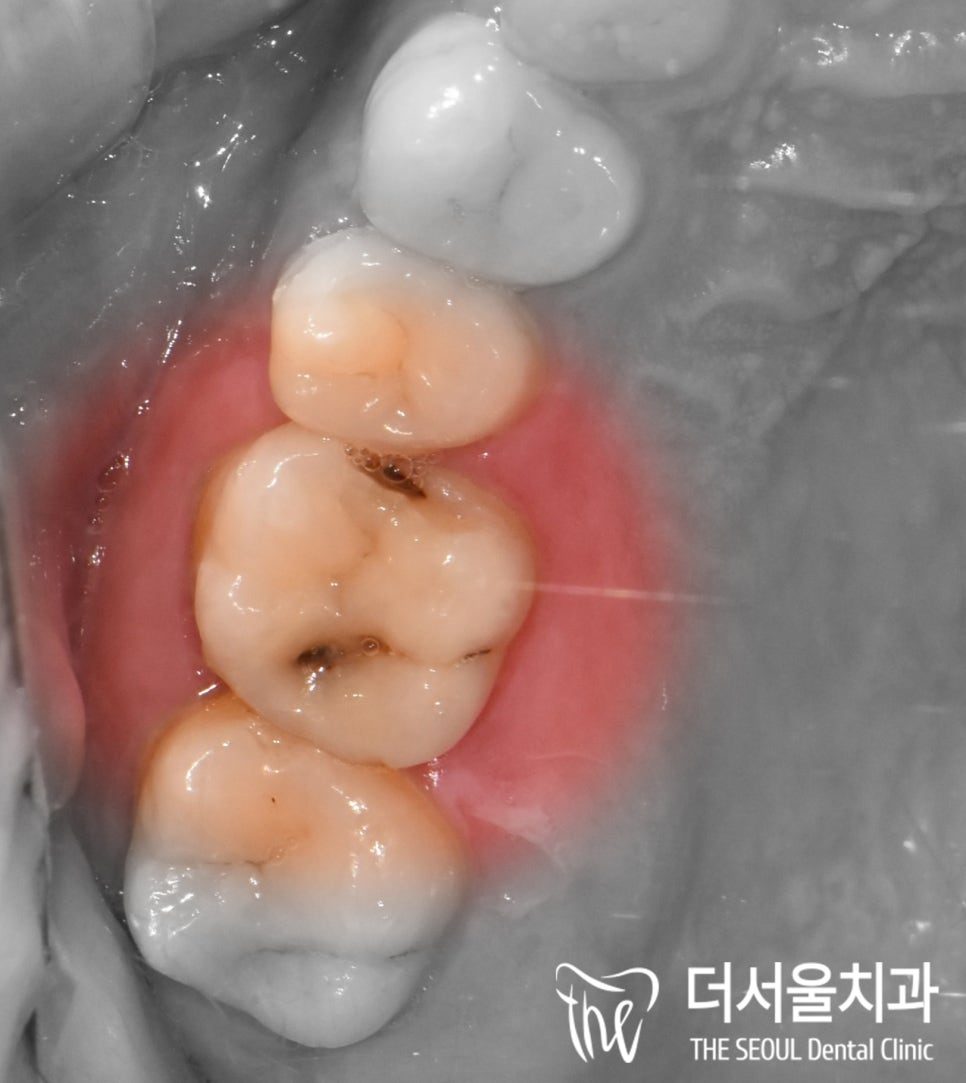
Visual examination showed decay on the upper right first molar.
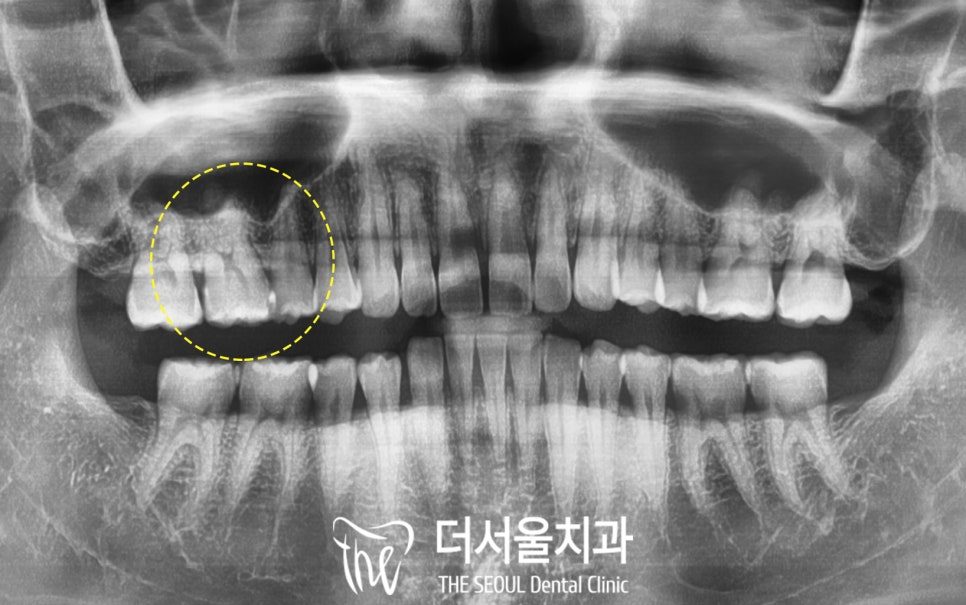
A panoramic X-ray was taken first. A panoramic image captures all 28 teeth plus the jaws and joints on one flat film, which means some distortion is unavoidable and teeth can overlap depending on how the arch is shaped — useful for an overview, limited for detail on one tooth.
So a periapical film of that tooth was added. It showed decay into the front portion of the molar, and — the finding that decided the plan — the decay had not reached the nerve canal. That put it in the range an inlay handles, with no root canal treatment needed.
What are the five inlay materials?
Resin
Closely matches natural tooth colour, bonds well, and is the least expensive option.
Against that: lower durability than the alternatives, so it suits smaller cavities, and it can discolour or fracture over time.
Tecera
A composite-based material developed to address resin’s weaknesses — higher strength, and a more natural appearance than plain resin. Reasonable value where cost matters.
Against that: it can still chip under strong bite forces, and discolouration or staining is possible with long-term use.
Ceramic
Highly aesthetic, hard, durable, and bonds strongly to the tooth so it is unlikely to come loose.
Against that: it can fracture where bite forces are heavy, and achieving adequate thickness for strength can mean removing more tooth structure.
Lava
Developed to address ceramic’s weak point, combining zirconia, silica and resin. Very durable, particularly at the curved areas where ceramic is most prone to fracture, and aesthetically strong.
Against that: it is not metal, so fracture remains possible.
Gold
The most forgiving over long service — little fracture, no discolouration, minimal corrosion — and it needs the least tooth removal of any of them.
Against that: it is obvious in the mouth, its high thermal conductivity can produce a sharp sensation with very hot or cold food, and it is the most expensive.
How the choice actually gets made
None of these is the best material in general. Each one is the right answer to a particular combination of circumstances.
Where cost is a real constraint, resin and Tecera are long-established options with a track record behind them. Where the bite is very tight and only a minimal amount of tooth surface can be reduced, gold is often the material that works, because it performs at thinner sections than the others.
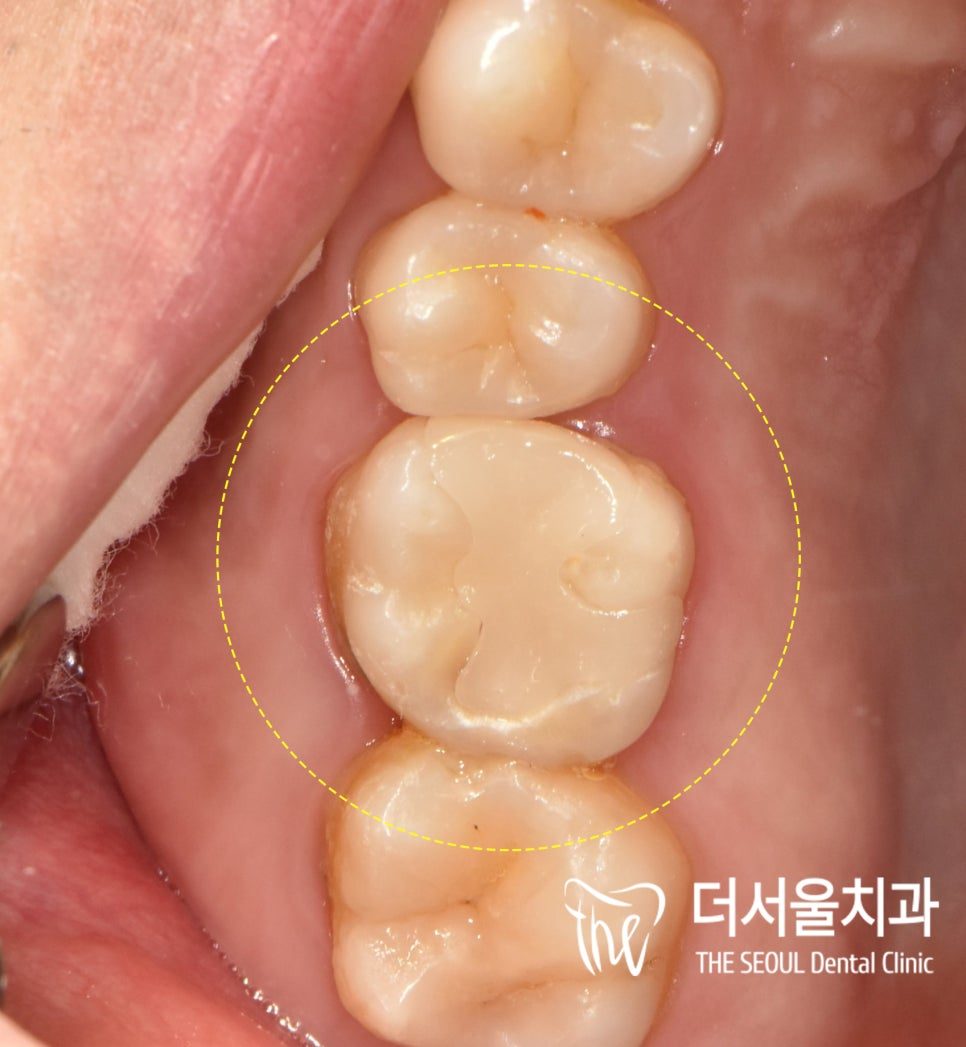
This case was restored with Lava, chosen for durability on a molar.
What should drive the decision is the state of your mouth, where the decay is and how far it extends, what you can spend, and how the restoration will be maintained — discussed with your dentist rather than settled from a materials list.
What happens at each visit?
First visit
- Local anaesthetic, then the decay is removed and the cavity shaped to receive the inlay.
- An impression is taken, either with impression material or an intraoral scanner.
- The case goes to the dental laboratory, where the inlay is made in the chosen material.
- The open cavity is sealed with a temporary filling in the meantime.
Second visit
- The temporary filling is removed and the finished inlay is tried in.
- Depending on the material and the fit, the internal surface may be etched or bonded first.
- The inlay is cemented in place.
- Excess cement is removed.
- The bite is checked and adjusted.
Treatment here ran from 24 May to 31 May 2023 — the two visits, a week apart.
What decides how long an inlay lasts?
The advantages of any of these materials only materialise if the preparation, the impression, the laboratory work and the fit at cementation all hold up. A well-chosen material fitted loosely will fail before a modest material fitted precisely.
After that it is maintenance and habits: hard and sticky foods are what break inlays, and periodic examination is what catches a margin starting to open before decay gets under it.
Frequently asked questions
What is the difference between a filling and an inlay?
A filling is placed directly into the cavity and set in the mouth, in one appointment. An inlay is made outside the mouth to fit the prepared cavity precisely and then cemented in, which takes two appointments. Inlays are used where the cavity is too large or too awkwardly placed for a direct filling to hold reliably.
Which inlay material should I choose?
It depends on where the tooth is, how heavy your bite is, how much tooth structure can be removed, and your budget. Gold needs the least tooth reduction but shows; ceramic and Lava look natural and are durable; resin and Tecera cost less and suit smaller restorations. Your dentist should tell you which of these your particular tooth rules out.
Do I need a root canal if I need an inlay?
Not usually. An inlay is the treatment for decay that has gone into the dentine but has not reached the nerve. Whether the nerve is involved is established by X-ray before treatment begins.
How many visits does an inlay take?
Two as a minimum: one to remove the decay, shape the cavity and take an impression, and one about a week later to fit the finished inlay. A temporary filling covers the interval.
Will an inlay match my other teeth?
Resin, Tecera, ceramic and Lava are tooth-coloured and shade-matched. Gold is not, which is why it is generally chosen for back teeth where appearance matters less than longevity.
Read more: cavities and fillings · crowns and veneers · pricing