
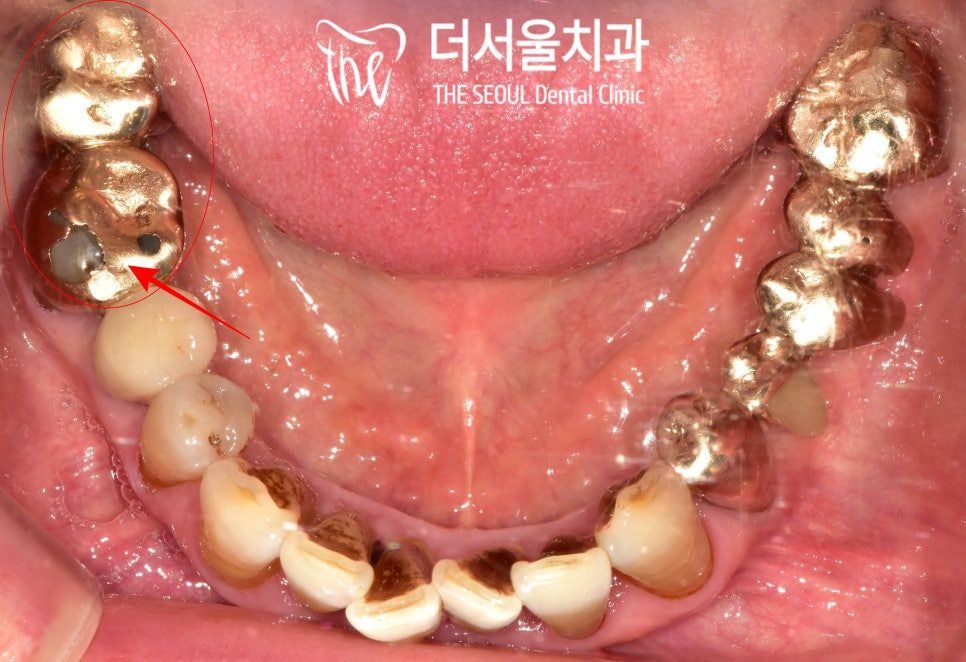
The complaint was a loose lower molar. What the examination found first was the crown on top of it — an old gold crown with a hole worn through the biting surface.
What does a worn-through crown mean?
Gold is durable, and a crown does not wear through on its own. It happens where the chewing force on that tooth is unusually heavy and sustained over years, deforming the metal until it perforates.
That is a finding about the patient, not only about the crown, and it changes what comes next: whatever replaces this tooth has to be built for the same load that destroyed a gold crown.
Two problems, treated in order
At the first visit the panoramic X-ray showed an upper right molar already missing, which was making eating difficult. That side was treated first with a guided implant.
Meanwhile the lower jaw was managed with ongoing periodontal care. The bone loss there was already advanced, the tooth was mobile, and the patient preferred to finish one area before starting another — a reasonable request, and it was accommodated.
When the upper work was complete and the lower jaw was reassessed, more bone had gone. At that point deferring further was no longer the lower-risk option, and implant placement was planned.
Why did the tooth become loose?
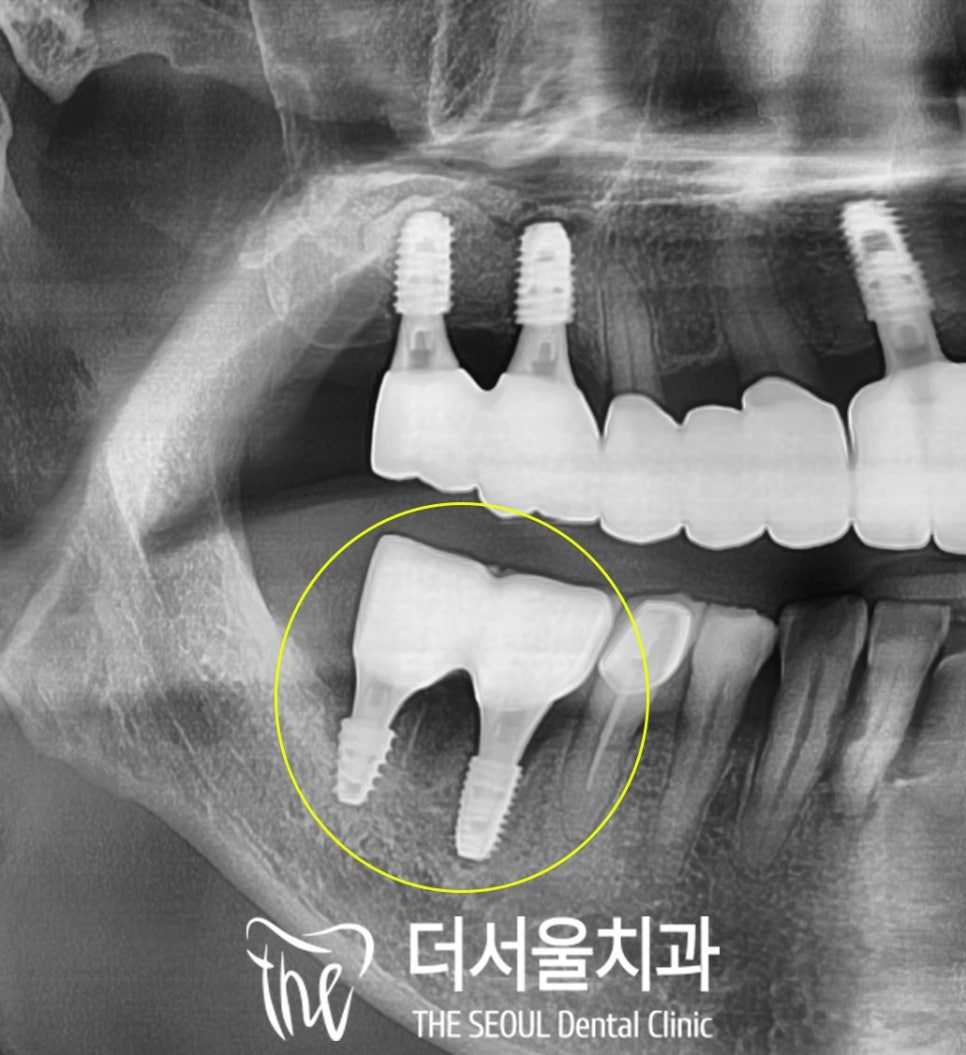
A periapical film showed the loss extending as far as the furcation — the point where the roots of a molar divide.
Once bone loss reaches that level, mobility follows necessarily. There is no longer enough supporting bone for the tooth to be stable, and no cleaning regime recovers it.
Planning the placement
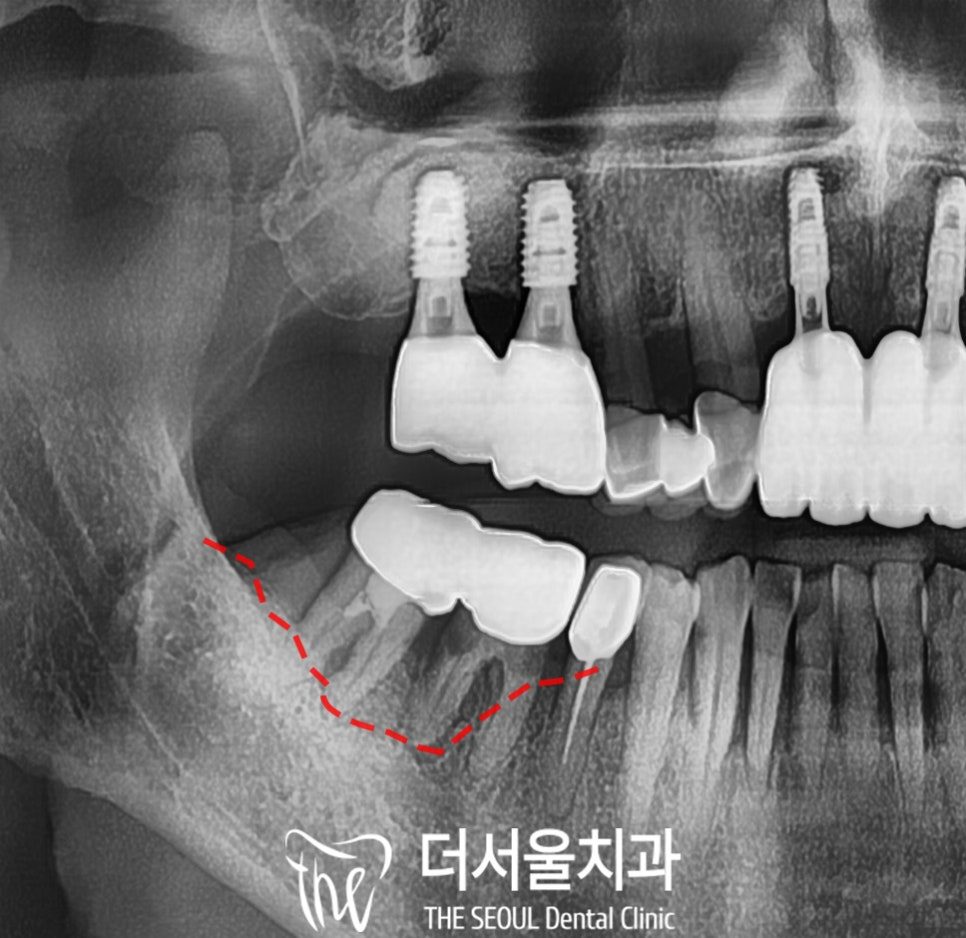
A digital guide was produced using 3Shape planning software.
Simulating the surgery beforehand settles three things: exactly where and at what angle the fixture goes, whether the planned depth keeps a safe distance from the inferior alveolar nerve, and which position will give the best initial stability — which matters more than usual when the surrounding bone is already depleted.
Placement and grafting
The fixture was placed to the planned position, maintaining the intended clearance from the nerve.
Because so little bone remained, graft material was packed around the fixture to encourage bone to build up against it. In a mouth generating this much chewing force, that added support is not a refinement — it is what allows the fixture to take the load it will be asked to take.
What did the final crown involve?
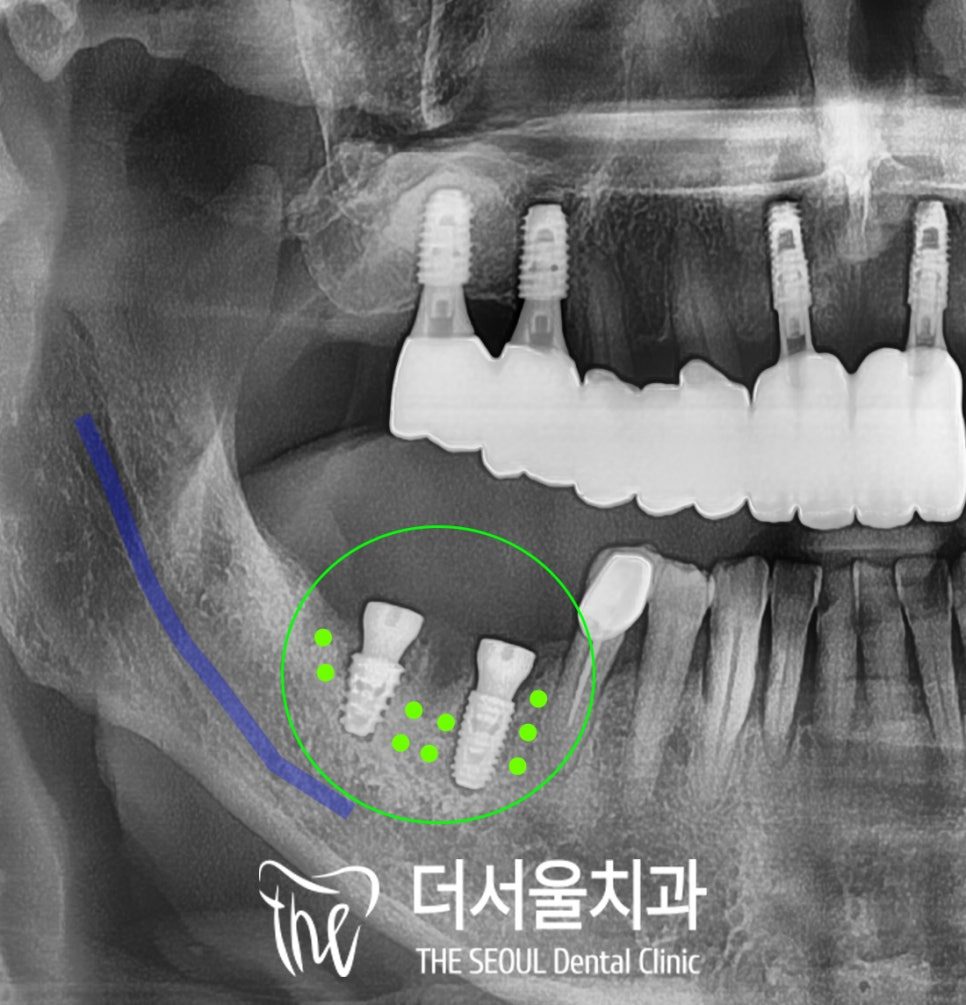
Bone had filled in around the fixture, showing as healthy grey density on the follow-up image.
Two decisions were made for this particular bite:
- A custom abutment — the connector between fixture and crown — was made for this patient rather than taken off the shelf, because the available space between the arches was tight.
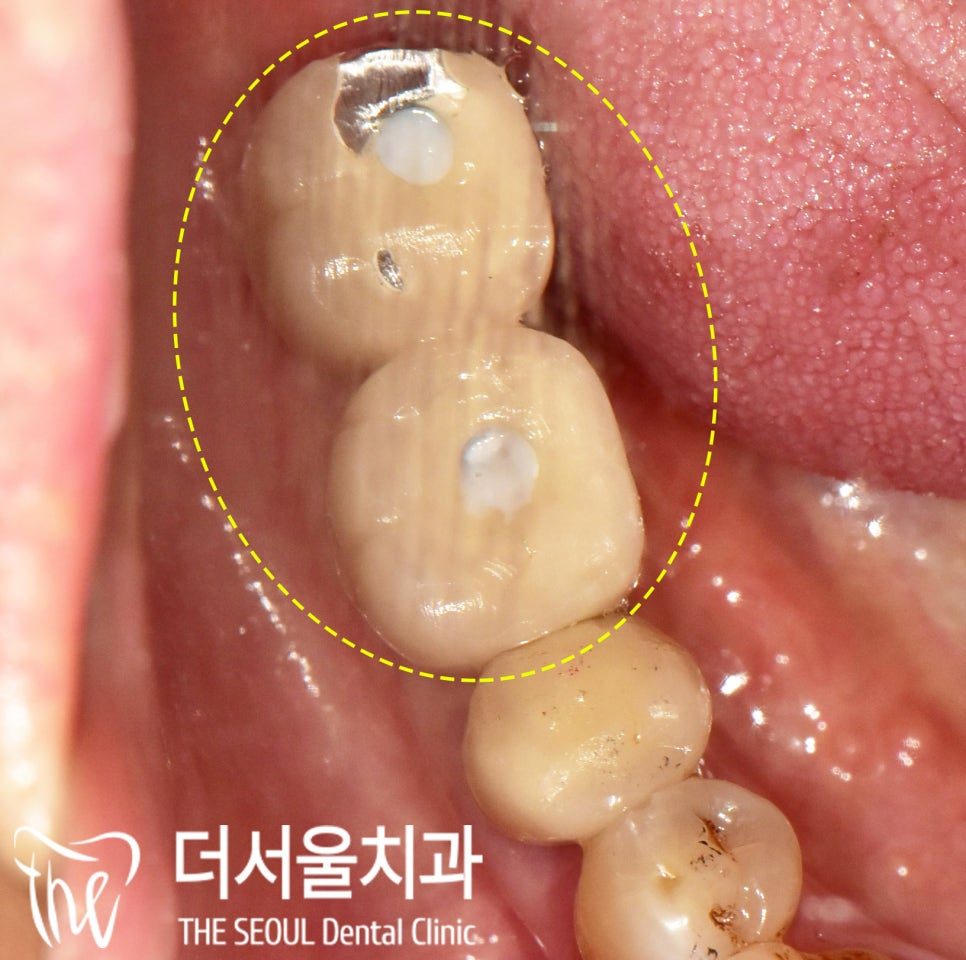
- The rear portion of the crown was made in metal rather than ceramic, with the patient’s agreement. Metal tolerates heavy occlusal load better than ceramic, and at the very back of the arch it is not visible.
Function was restored on both the upper and lower right.
Timeline
From 20 April 2024 to 15 September 2024 — about five months for the lower side, following the upper treatment that preceded it.
What happens if treatment is delayed?
Two things were avoidable and one was not.
The bone loss around the lower molar progressed measurably during the months the patient was waiting to finish the other side. That is not a criticism of the decision — it was made with the information available — but it is worth knowing that periodontal bone loss does not pause while you decide.
And a worn-through crown is worth acting on when it is found, not when the tooth beneath it starts to move. By the time the mobility is noticeable, the question has usually changed from saving the tooth to replacing it.
Frequently asked questions
Can a loose tooth be saved?
It depends on how much supporting bone is left. Where loss has reached the furcation — the point at which a molar’s roots divide — the tooth no longer has the support to be stable, and removal followed by an implant is generally the realistic route. Earlier than that, periodontal treatment often can save it.
Can implants be placed where the bone is thin?
Frequently yes, with grafting alongside placement to build bone around the fixture. What determines it is what the CT shows, not what the tooth looks like, and the planning is done on that data before any surgery.
Why is a guide used for implant placement?
It transfers the position planned on the CT into the mouth. That matters most where bone is scarce and the nerve canal is close, because the margin for adjusting position during surgery is small.
Should implant crowns be metal or ceramic?
For most people, ceramic. Where the bite generates unusually heavy force — the sort that wears through a gold crown — a metal occlusal surface at the back of the arch stands up to it better and is not visible. It is a decision made per case, and one the patient should be part of.
Why treat one side at a time?
It keeps a functional side available for eating throughout, and it keeps each surgical site manageable. The trade-off is total time, and any condition on the untreated side continues to progress in the meantime.
Read more: bone grafting and sinus lift · digital implants · dental implants