
Most articles about crown materials are about picking the better one. This case is about deliberately picking the cheaper one, and why that was the right call.
The part that happened before the treatment
These two upper molars had been flagged at earlier check-ups. The decay was known about and treatment was recommended more than once.
It was deferred each time, on the reasoning most people use: it does not hurt yet.
What could and could not be seen
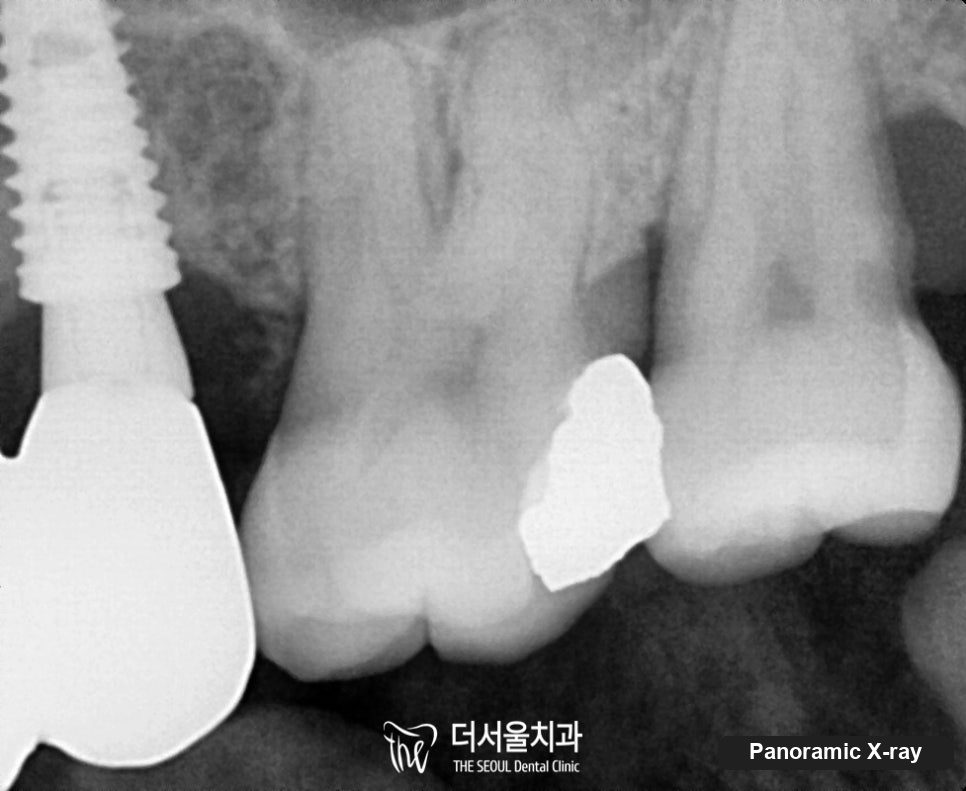
By the time the patient came back with symptoms, the teeth had visibly darkened around the margins of old amalgam fillings.
How far the decay had gone underneath was not visible — the amalgam covered it, and the panoramic X-ray did not resolve it either. This happens: metal restorations obscure what is beneath them on imaging, and decay can be difficult to identify even when it is looked for directly.
Which is why both are used, visual examination and radiographs, and why neither is a guarantee on its own.
What was found under the old fillings?
With the amalgam removed, the extent was obvious both directly and on a repeat X-ray: deep decay, well past the point where a filling would have been the answer.
The assessment given to the patient was blunt — there was a real chance these teeth would need to be extracted.
The patient asked for them to be kept for as long as possible, even if that was not long. Root canal treatment followed by crowns was the way to attempt that.
What does root canal treatment involve?
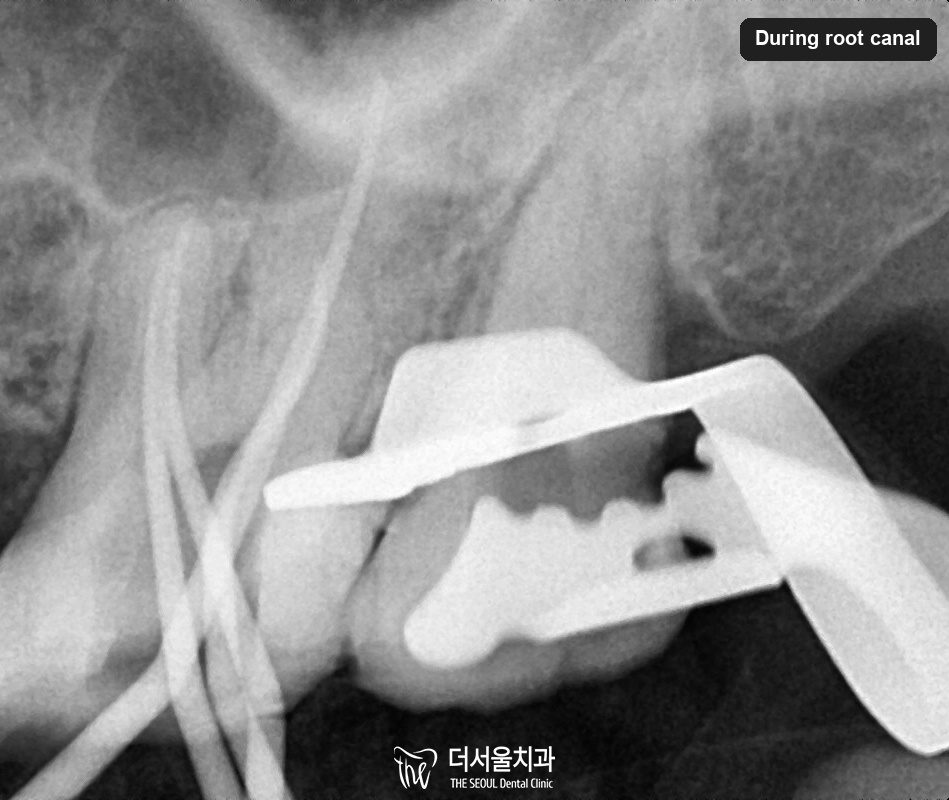
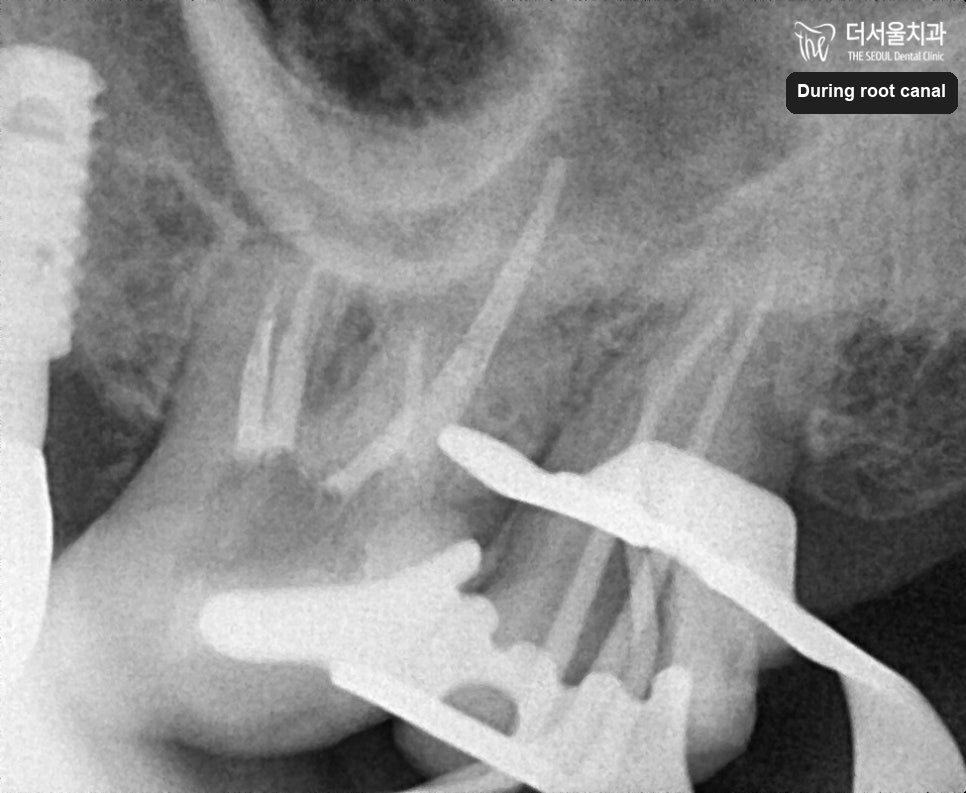
The infected tissue was removed and the canals disinfected across several passes, to reduce the chance of recurrence in teeth that were already compromised.
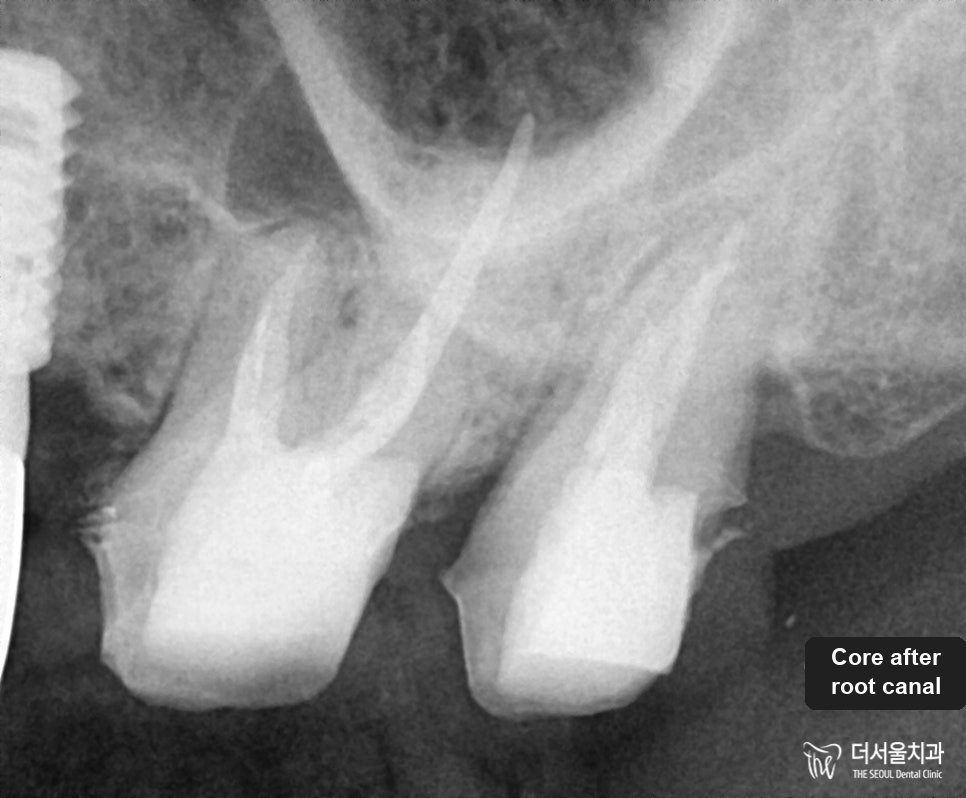
The canals were then filled with gutta-percha points, the standard sealing material, and the remaining structure built up with a resin core.
Temporary crowns were fitted so the patient could eat normally while the permanent ones were made.

Why fit a simpler crown on a tooth that may not last?
The crowns were made in PFM — porcelain fused to metal — rather than zirconia, and this was discussed with the patient rather than simply done.
The reasoning: these teeth were not expected to have a long remaining life. Fitting the more expensive restoration onto a tooth with a limited prognosis is not better care; it is more money spent on the same outcome.
That is a decision that has to be made openly, because it involves telling a patient their tooth may not last and letting them weigh what to spend on it. It is also the sort of decision that quietly goes the other way in a clinic paid by the restoration.
Treatment ran from 3 February 2023 to 9 March 2023.
How long will a crowned tooth last?
A prognosis is an estimate. How the tooth is cleaned and how consistently it is reviewed genuinely affects whether it outlives that estimate, which is why the aftercare instructions at the end of this treatment were given more time than usual.
Could all this have been avoided?
Everything above followed from decay that was found early and treated late.
Caught at the check-up where it was first flagged, it would have been a filling or an inlay. Instead it became root canal treatment, two crowns, and a conversation about how long the teeth would last. Left longer still, it becomes extraction and implants.
An examination once or twice a year is what keeps the decision in the cheap part of that sequence.
Frequently asked questions
Why can’t decay under a filling be seen on an X-ray?
Metal restorations such as amalgam block the image beneath them, so decay underneath can be hidden. It is one reason old metal fillings with darkening at the margins are worth investigating rather than watching, and why visual examination and imaging are used together.
Is PFM worse than zirconia?
Not worse — different. Zirconia looks better and is harder; PFM costs less and performs well on back teeth. Where a tooth has a limited remaining life, the cheaper restoration is often the more sensible one, and that should be a conversation rather than an assumption.
Should I keep a tooth that might not last?
That is your call, and a legitimate one. What we owe you is an honest estimate of how long it might last and what the alternative would cost, so the decision is made with the numbers rather than around them.
My dentist said I need a filling but it doesn’t hurt. Can I wait?
You can, and the cost of waiting is that the treatment gets bigger. Decay does not pause, and pain arrives only once the nerve is involved — which is the point at which a filling becomes root canal treatment and a crown.
What is gutta-percha?
The material used to fill and seal root canals once they have been cleaned and disinfected. It is placed as tapered points that are compacted into the canal space.
Read more: root canal treatment · cavities and fillings · crowns and veneers