
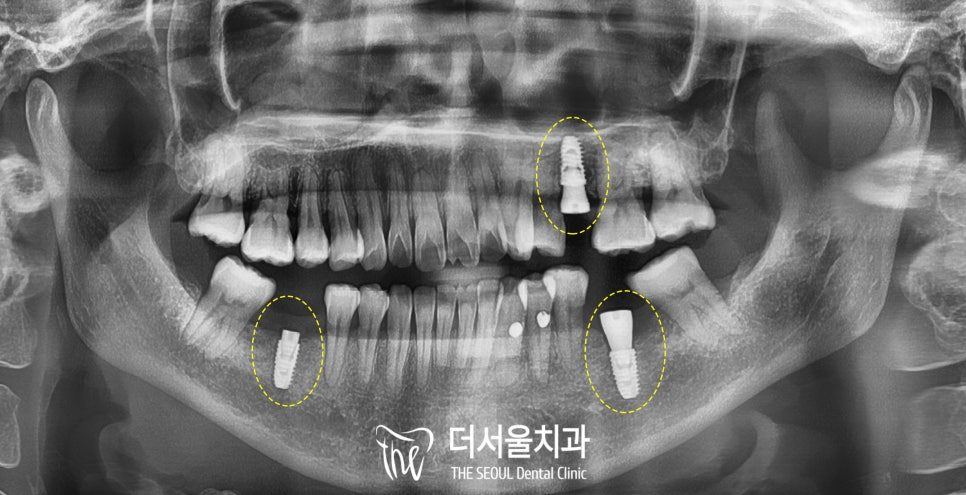
When several things are wrong at once — decay in multiple teeth, a fractured root, a gap left too long — the treatment itself is rarely the hard part. The order you do it in is. Sequenced well, this case finished in four months.
What the examination found
The patient came to us with decay in several places. Two findings needed decisions rather than routine treatment:
- One tooth had decay that was both deep and wide, and needed resolving quickly.
- Another had fractured at the root, with the remaining fragment still embedded in the gum. Extraction and replacement with an implant was the appropriate option.
The lower jaw showed the same pattern: a retained root fragment on the right, and on the left a site where a tooth had been missing long enough that the alveolar ridge had narrowed. Bone does not stay where a tooth used to be. Left alone, the ridge recedes, becoming thinner and lower — which is why a delayed implant is often more complicated than an early one.
Why does the treatment order matter?
When multiple problems exist in one mouth, how the clinician sequences them determines how long the patient spends in treatment.
If implants are needed, diagnosing quickly and placing the fixtures first means the months of osseointegration — the fixture bonding to bone — are not dead time. The cavities are treated during that window instead of after it. The same work finishes considerably sooner.
That was the plan here, agreed with the patient: implants first, restorative work in parallel.
Can three implants go in on one day?
Three sites needed fixtures, in different parts of the mouth. They were placed in a single day under conscious sedation.
Digital planning is what makes a day like that reasonable. Position, direction and angle are established on computer before surgery, and the simulated result is carried into the actual procedure. Less time in the chair generally means less swelling and discomfort afterwards. The placements were completed clear of the anatomical structures in both jaws.
When is the decay treated?
While the fixtures integrated, the decayed teeth were addressed — but not all of them. Decay being visible does not automatically mean it must be drilled. Only the teeth that genuinely required treatment were treated.
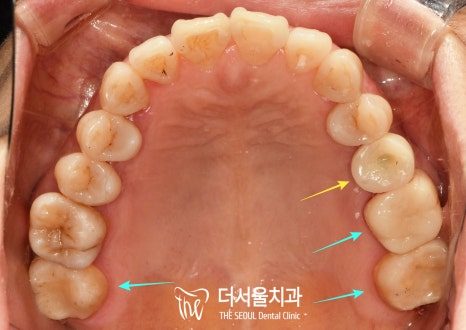
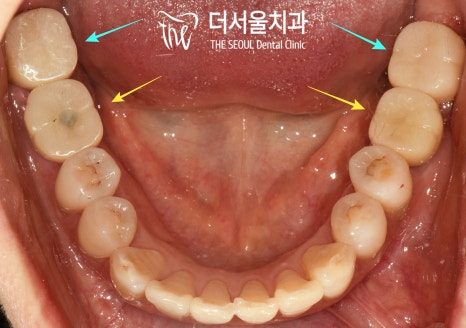
Final prosthetics
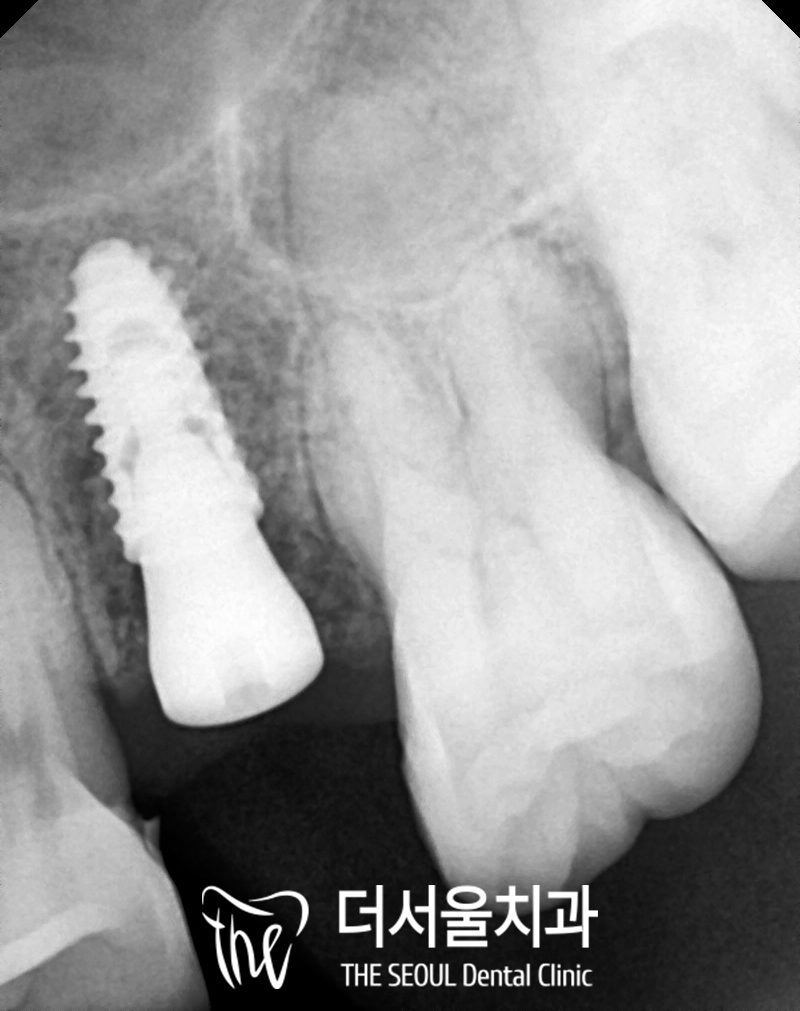
Once the fixtures had stabilised, the bond was measured with a stability meter rather than estimated, and the surrounding bone was checked radiographically. From there: impressions for custom abutments, a gum healing stage, then the final crowns.
Two decisions were made for the long term:
- The implant prosthetics were made as SCRP type, so they can be retrieved and maintained at future visits rather than needing to be cut off.
- Where bone quality warranted it, prosthetics were bridged to distribute chewing load.
Teeth with extensive decay were crowned to protect the remaining structure. Because the plan was set carefully at diagnosis, everything was completed within four months.
For patients travelling from abroad, this is the practical point: a mouth needing several kinds of work does not automatically mean a long stay, but it does mean the sequence has to be planned before you arrive. Send us your imaging and your travel dates and the stages can be arranged around them.

Frequently asked questions
Can implants and cavity treatment be done at the same time?
They can be run in parallel rather than one after the other. Implants are usually placed first, and the restorative work is carried out during the months the fixture needs to integrate with bone. This shortens total treatment time noticeably compared with treating everything in sequence.
How many implants can be placed in one day?
Three were placed in a single session in this case, in different areas of the mouth, under conscious sedation. What is reasonable in one day depends on the sites involved, bone condition and your general health — it is a clinical decision, not a fixed number.
Does every visible cavity need to be treated?
No. Decay varies in depth and extent, and not all of it requires intervention. Only teeth that genuinely need treatment should be treated — the rest are monitored.
What is an SCRP prosthetic and why does it matter?
SCRP (screw-and-cement-retained prosthesis) can be removed and refitted by the clinic later. If maintenance is ever needed, the crown does not have to be destroyed to reach the implant beneath — useful over a prosthetic’s lifetime.
Read more: digital guided implants · cavities and fillings · crowns and veneers