
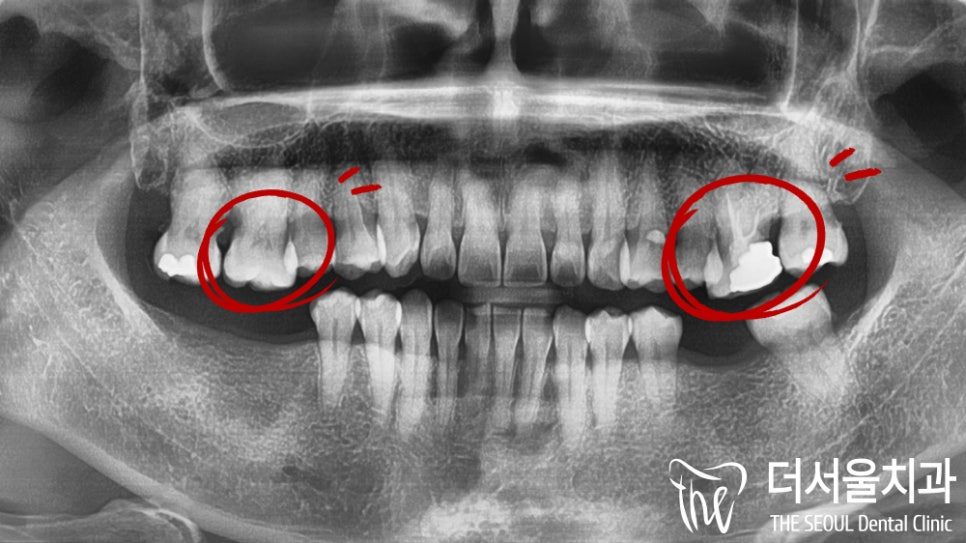
How long does a dental implant last? Honestly — it varies enormously between patients, and maintenance is the largest reason why. This case is useful because we can answer the question with evidence rather than an estimate: the patient was treated in 2019 and came back for a check-up six years later.
Can I even have the surgery?
That was the patient’s first question on arriving. They had been told elsewhere that there was not enough bone for implants to be possible — six years ago, when grafting techniques were less developed than they are now — and had been going from clinic to clinic on recommendations from people they knew.
The examination confirmed a narrowed ridge. Living for a long time with missing teeth had allowed the alveolar bone to resorb, which is the ordinary consequence of leaving a gap rather than anything unusual.
It was not the only problem. Both upper molar regions had severe decay extending close to the root, needing treatment of their own.
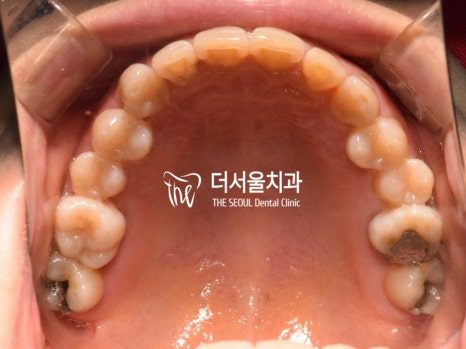
The plan
Bone was indeed insufficient — but not so insufficient that bone grafting could not make placement possible. Being told “there isn’t enough bone” is often a statement about what a particular clinic will attempt, not a verdict on your mouth.
So: implant placement in the lower jaw with grafting, and for the decayed upper molars, extraction, root canal treatment and remade prosthetics as appropriate.
What actually determines how long an implant lasts?
Published survival figures give a reference point for what “lasts” means in practice. A systematic review in the Journal of Dentistry, pooling eighteen prospective studies, put 10-year survival at the implant level at 96.4%, and at 93.2% under a sensitivity analysis that accounts for patients lost to follow-up (Howe, Keys and Richards, 2019). The same analysis found survival lower in patients aged 65 and over, at 91.5%. These are averages across many clinics and many patients rather than a prediction for any one implant.
Three things, in our experience:
1. Accuracy of the plan
The mouth has to be understood precisely before a plan is made. We used computer analysis to examine areas that are difficult to assess by eye, then rebuilt the treatment plan on that data before starting.
2. Accuracy of placement
Angle and direction have to be correct, and there has to be adequate space for the prosthetic that will sit on top. These are decided before the fixture goes in — a fixture placed at a compromised angle carries a compromised prosthetic for its entire life.
3. Not rushing the prosthetic
Patients often ask whether the crown goes on immediately after placement. It does not. Several months are allowed for osseointegration, and then the ISQ (implant stability quotient) is measured before the final prosthetic is fitted. Loading a fixture that has not bonded firmly shortens its life — this is one of the few places where waiting is the active decision.
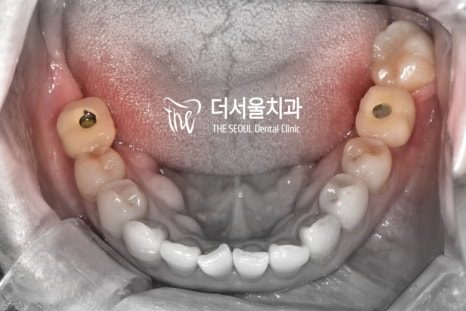
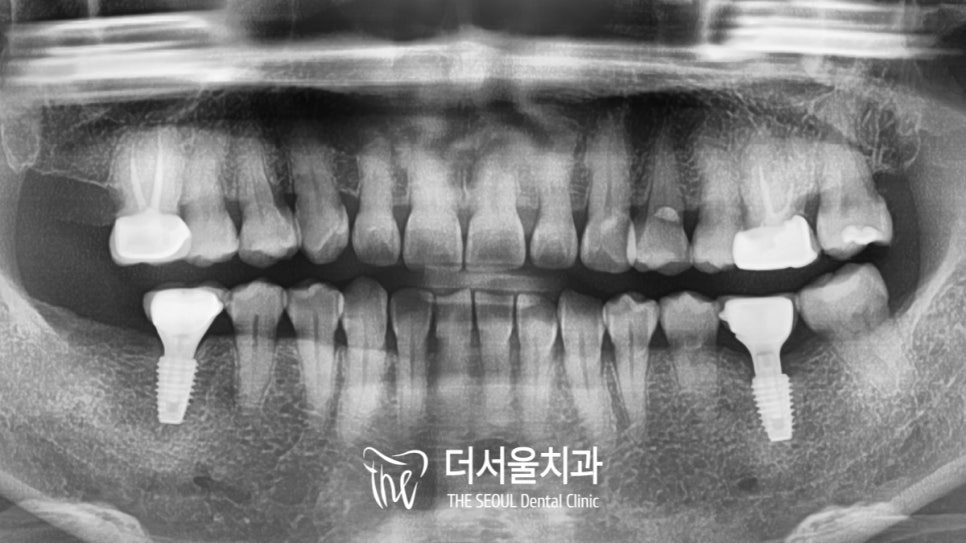
What did the implant look like six years later?
Treatment ran from May to November 2019. The patient then did not return — because nothing had gone wrong, which is also why we had no way of knowing how the implants were doing.
They came back recently for a check-up, having heard from others that implants should be inspected periodically. Six years on, everything was in the same condition as at completion: the implants, the grafted site and the crowns on the previously decayed teeth.
Well maintained, implants can serve for a very long time. That is not a guarantee — outcomes differ between individuals, and hygiene, systemic health and habits all affect them. But the difference between patients who maintain their implants and patients who do not is not subtle.
If you had implants placed in Korea and now live abroad, this is the practical takeaway: no symptoms is not the same as no problem. Implants have no nerve, so peri-implant issues develop without pain to warn you. Arrange periodic check-ups wherever you are, and have imaging sent to us if you would like it reviewed against your original records.
Frequently asked questions
How long do dental implants last?
There is no single number. With good maintenance they can last a very long time — the case here was unchanged at six years, and longer service is common. What shortens implant life is peri-implant inflammation from inadequate cleaning, a compromised placement angle, or loading the fixture before it has integrated.
I was told I do not have enough bone for implants. Is that final?
Often not. Bone grafting can rebuild a site so that placement becomes possible, as it did here. Whether it applies to you is determined from a CT scan — it is worth getting a second assessment rather than accepting that implants are impossible.
Why can’t the crown be fitted straight after the implant is placed?
Because the fixture has to bond with bone first. Several months are allowed for that, and stability is then measured with an ISQ reading rather than assumed. Fitting a prosthetic onto a fixture that has not integrated firmly is one of the more reliable ways to shorten its life.
How often should implants be checked?
Periodically, even when nothing hurts. Implants lack the nerve that warns you about problems in a natural tooth, so peri-implant bone loss can progress a long way before you notice anything. Regular check-ups and scaling are what keep small problems small.
Read more: bone grafting and sinus lift · dental implants overview · implant revision