
An implant does not fail on the day it is placed. It fails months or years later, and almost always for reasons that had nothing to do with the surgery. This case shows why the tooth next door cracked, and what the three aftercare habits actually are.
What does a missing molar do to the teeth next to it?
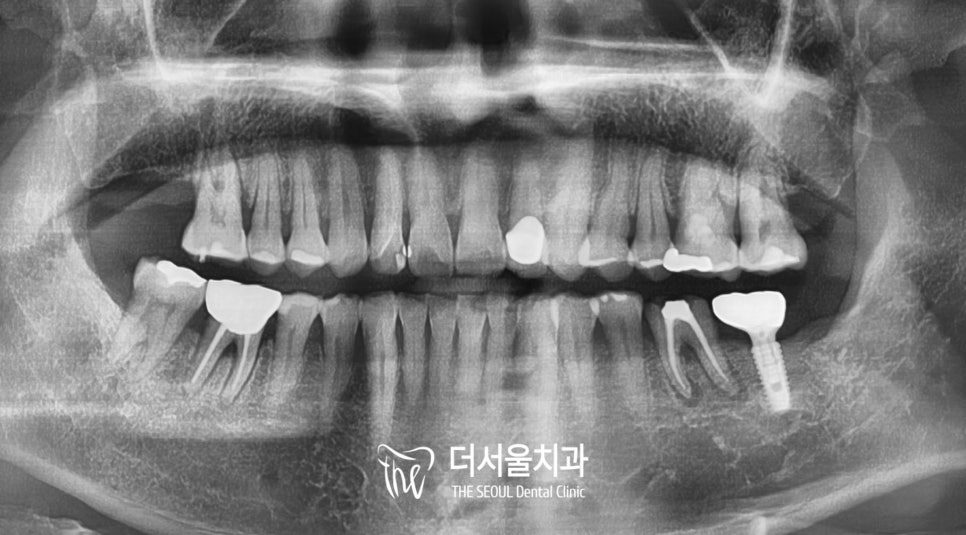
The patient came in describing a sharp, intermittent twinge in the upper right back teeth. A panoramic X-ray showed the upper right second molar was missing — the tooth clinicians call #17.
That absence had two consequences. The patient had been chewing on the opposite side for a long time, which had made the jaw ache. And the first molar in front of the gap had been absorbing most of the chewing load on that side by itself.
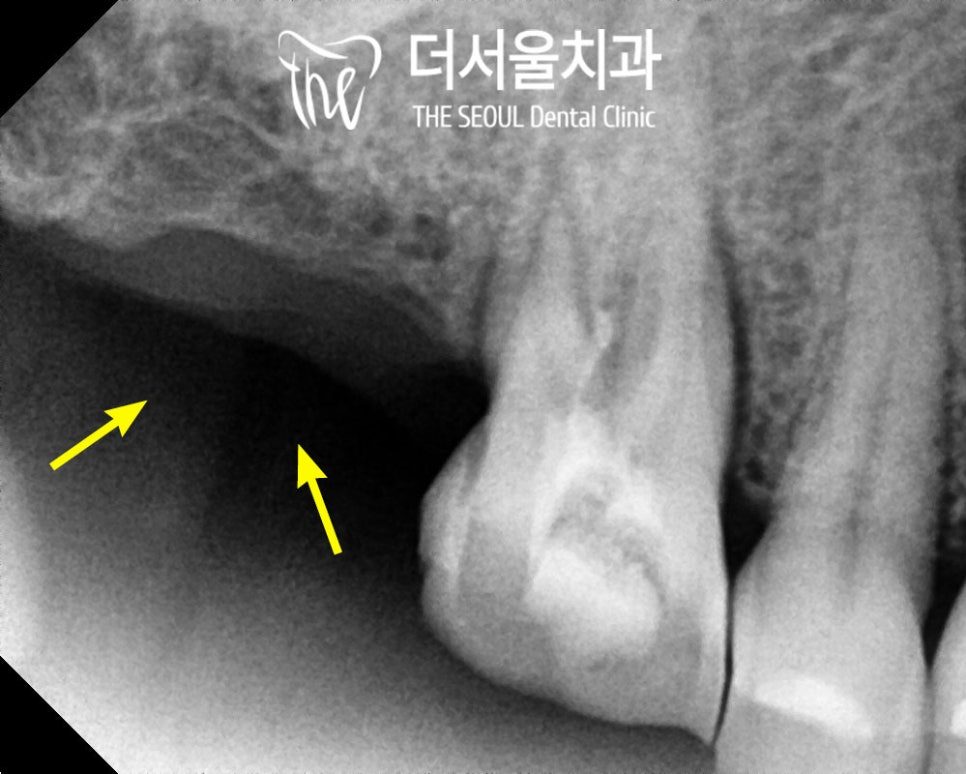
A periapical X-ray of that first molar explained the twinge. The tooth had developed a crack under the extra load.
Why does a cracked tooth twinge rather than ache?
Everyone has microscopic lines in their enamel; those are normal and cause nothing. A sharp twinge is different. It means a fine crack is flexing open under pressure, and as it opens it tears at the periodontal ligament around the root. The sensation is brief and sharp rather than a steady ache, and it comes on with biting.
A crack that has reached this stage does not heal. The tooth needs to be protected with a crown so the segments cannot flex apart, and where the pulp has become involved, root canal treatment first.
Planning the implant
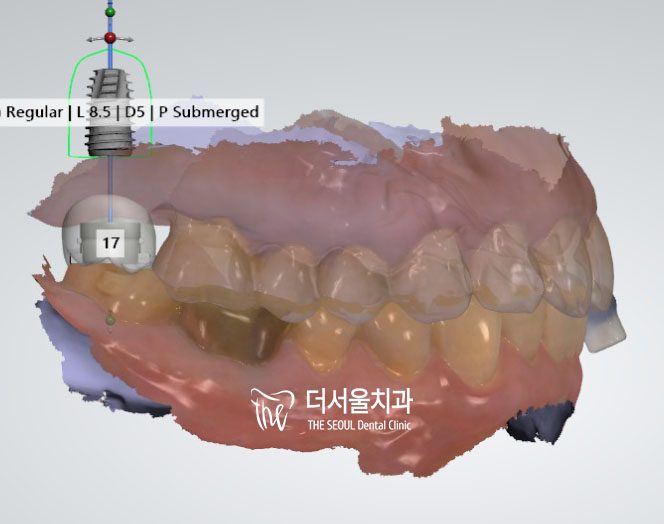
Before placing a fixture in the upper back region, the position has to be planned around the maxillary sinus — the air-filled cavity beside the nose that sits above the upper molars. A three-dimensional CT scan is used to predict where the fixture will sit and in which direction, and to select a fixture length and diameter that work within the available bone without disturbing the sinus.
The site was also the furthest back position in the arch, where instrument access is restricted. Planning the approach in advance matters more here than in the middle of the mouth, and it helps considerably if the patient can open wide and hold it.
Root canal treatment on the cracked tooth
The cracked first molar needed the inflamed pulp removed. The pulp tissue was cleaned out with sterile instruments and the emptied canals sealed with filling material. A core was then built up on top — a hard foundation that gives the crown something solid to sit on and lets the treated tooth withstand chewing forces again.
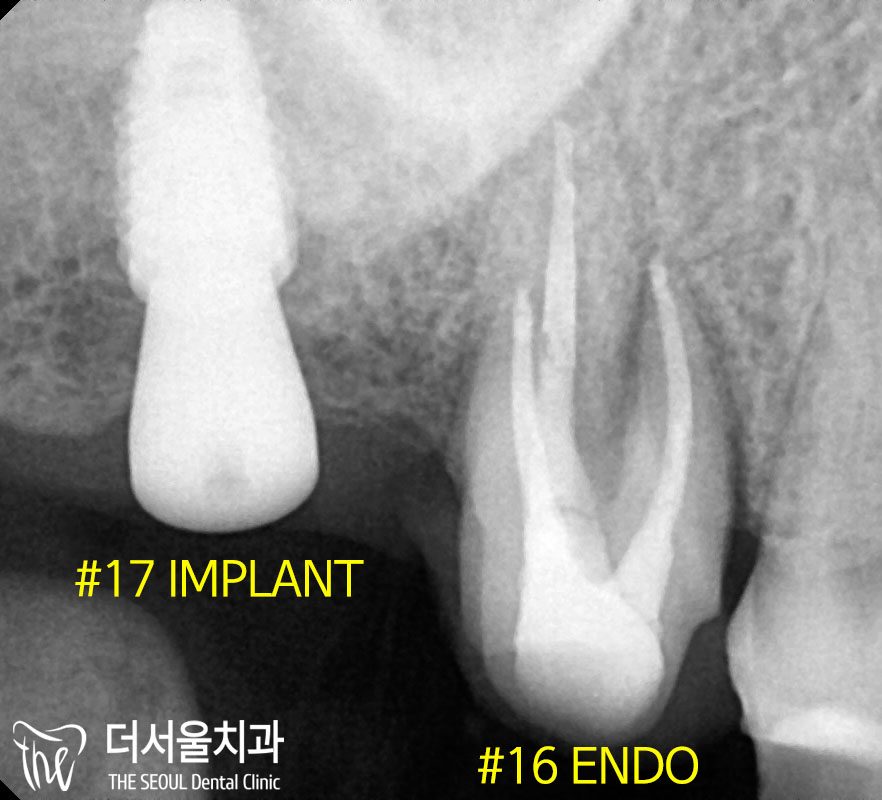
Follow-up X-rays confirmed two things: the canals were filled to their ends, and the fixture was well seated in the alveolar bone.
The restorations
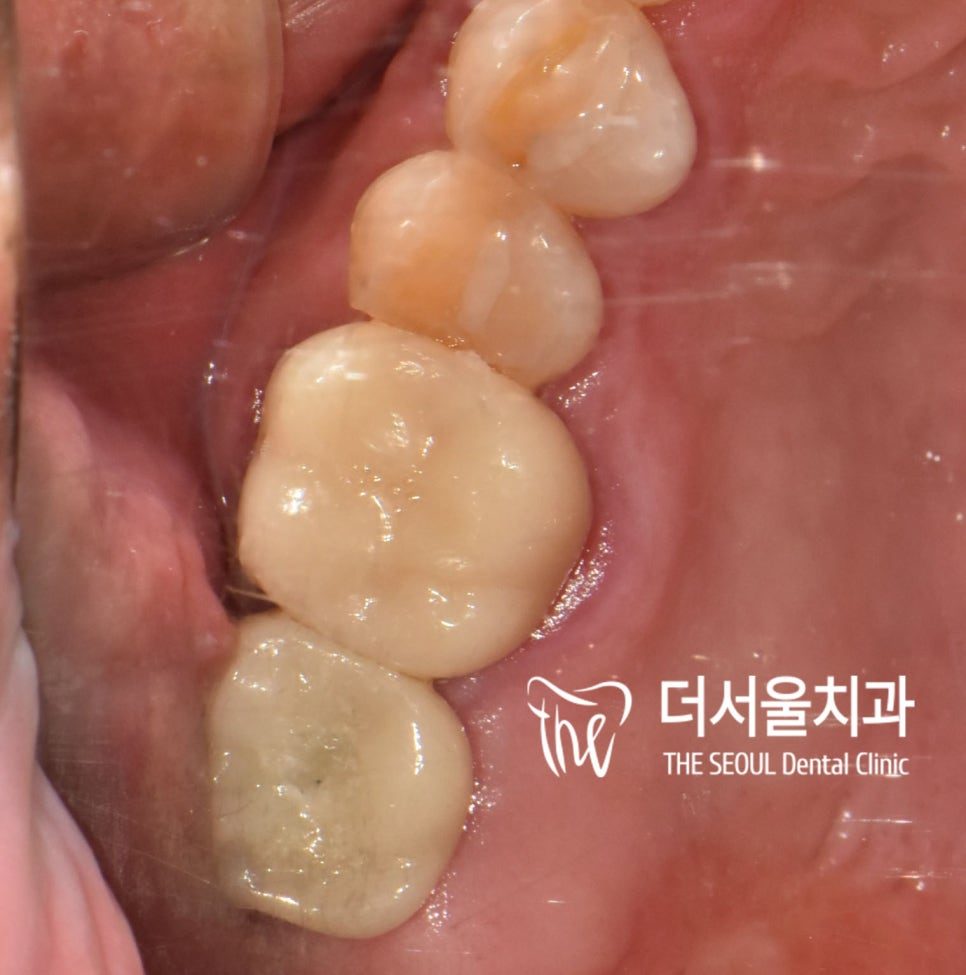
After two to three months, once the fixture had bonded firmly into the bone, custom restorations were fitted. Both the implant crown and the crown over the root-treated tooth were made from zirconia, a high-strength ceramic.
They were made to the patient’s own oral anatomy and bite relationship rather than adapted from a stock shape, and the bite was adjusted in fine increments so the load is shared correctly across the arch. That adjustment is not cosmetic detail — a restoration left slightly high concentrates force on itself and on whatever is opposite it.
What three things decide an implant’s lifespan?
Gum disease is the thread running through all three. The World Health Organization estimates severe periodontal disease at more than a billion cases worldwide, and names poor oral hygiene and tobacco use as its main risk factors — the same two habits that decide how the bone around an implant holds up. Source: WHO, Oral health fact sheet.
Prevalence figures give a sense of the stakes. A 2025 systematic review in the Journal of Dentistry, pooling twenty studies, found peri-implantitis at 18.0% of implants overall and 5.2% of implants in non-smokers (Reis et al., 2025). A subgroup figure does not prove cause on its own, but it matches what is seen in the chair: the sites that stay healthy are the ones that are kept clean.
This applies equally to the implant crown and to the crown over the root-treated tooth, since both are zirconia and both are subject to the same forces.
1. Cleaning
After meals, use floss and an interdental brush to keep the area around the restoration clean. Neglect here leads to gum disease around the implant and to bad breath. An implant cannot decay, but the gum and bone holding it can be lost the same way they are around a natural tooth — and that is what loses the implant.
2. Habits
Cut down on hard and chewy foods. If you clench or grind your teeth, a night guard reduces the force and stress reaching the restorations. Grinding is one of the more common reasons a technically sound restoration fails early.
3. Regular check-ups
Come in every three to six months. A check-up is looking for specific things: inflammation or gum disease that could compromise the implant, whether the left and right molars are sharing the chewing load properly, and whether your brushing is reaching everywhere it needs to. Problems found at this stage are usually still small.
Timeline
Treatment ran from June to late October 2020 — about four and a half months, with the middle stage being the wait for the fixture to bond into bone. That waiting period is biological and cannot be compressed by scheduling appointments closer together.
Frequently asked questions
Does a missing back tooth really matter if I can still chew?
It matters because the load it used to carry is redistributed to the teeth that remain. In this case the tooth in front took most of it and cracked. You can chew perfectly well right up until the point that something gives way.
Can an implant get a cavity?
No — the fixture and crown are not tooth structure, so decay is not the risk. The risk is inflammation in the gum and bone around the implant, which behaves much like gum disease and can loosen the implant if it is left to progress.
How often should an implant be checked?
Every three to six months. That interval exists so problems are found while they are still reversible, and so the bite can be checked before an imbalance damages something.
Why does a cracked tooth need a crown rather than a filling?
A filling sits inside the tooth and does nothing to stop the segments flexing apart under a bite. A crown wraps around the outside and holds them together, which is what a cracked tooth actually needs.
Do I need a night guard?
If you clench or grind, it is worth discussing. It does not stop the habit, but it absorbs force that would otherwise reach your teeth and restorations. We can usually tell from wear patterns whether it is likely to be relevant for you.
Read more: digital guided implants · root canal treatment · crowns and veneers