
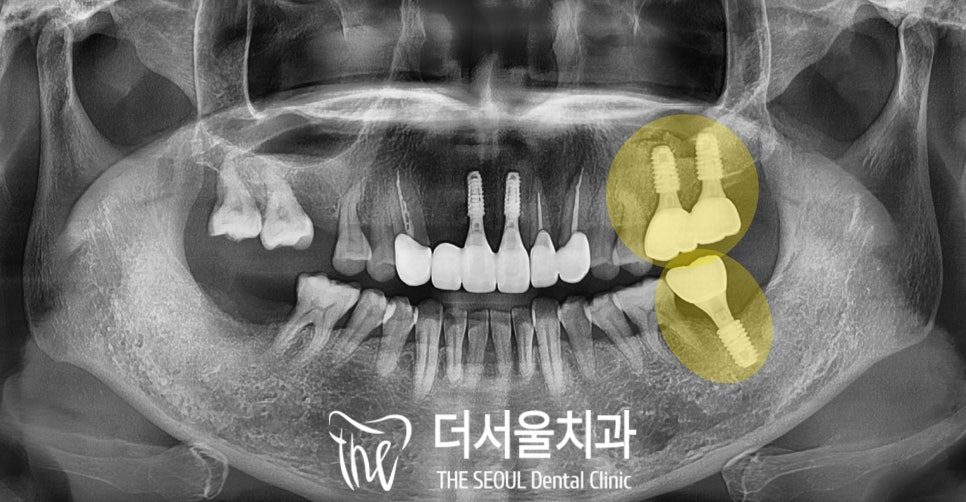
You came looking for an implant and were told you also need a sinus lift. It is a common and reasonable thing to be confused by — here is what that extra procedure is for, and how a case needing it on one side but not the other was staged.
What the examination found
The patient travelled a considerable distance for treatment, which shaped the plan: visits would be infrequent, so as much as possible had to be achieved in each one.
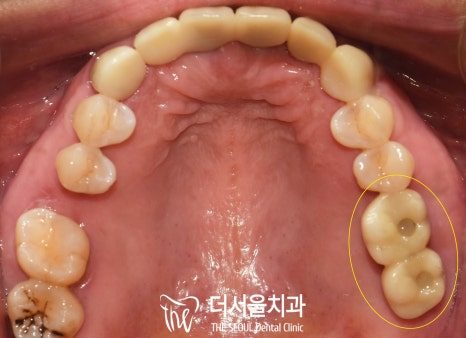
Intraoral photographs showed missing teeth in both jaws, and a heavily decayed wisdom tooth at the very back. On the lower right, what looked at first like a second molar turned out on closer inspection to be a wisdom tooth.
How does a tilted wisdom tooth damage the tooth in front?
The X-ray explained the confusion. The wisdom tooth had erupted at an angle, pointing forwards into the second molar rather than upright. Over time this caused the second molar — the tooth that should have been doing the chewing — to resorb and eventually be lost. The wisdom tooth then continued to drift forwards into the space it had created.
A wisdom tooth lying on its side like this cannot do the job of the tooth it replaced. Worse, the gap between it and the tooth in front traps food and plaque, so it actively works against oral health rather than simply being useless.
Left side: same-day extraction and immediate placement
Because return visits would be difficult, as much as possible was done at the first appointment.
The lower right wisdom tooth was extracted that day. Extracting early matters here: the sooner it comes out, the more chance there is for the jawbone to recover in the site before anything is placed into it.
The upper and lower molar sites on the left had reasonably intact alveolar bone, so fixtures were placed the same day. Most implant surgery here is planned digitally with a surgical guide, but for a patient who cannot attend frequently, same-day placement is offered where the bone condition allows it.
Because placement happened early, the final restorations on the left were completed correspondingly early, and chewing function on that side was restored well before the right side was addressed.
Why did the right side need a sinus lift?
By the time the right side was treated, the bone in the extracted wisdom tooth site had filled in well enough that a fixture could be placed there without additional grafting.
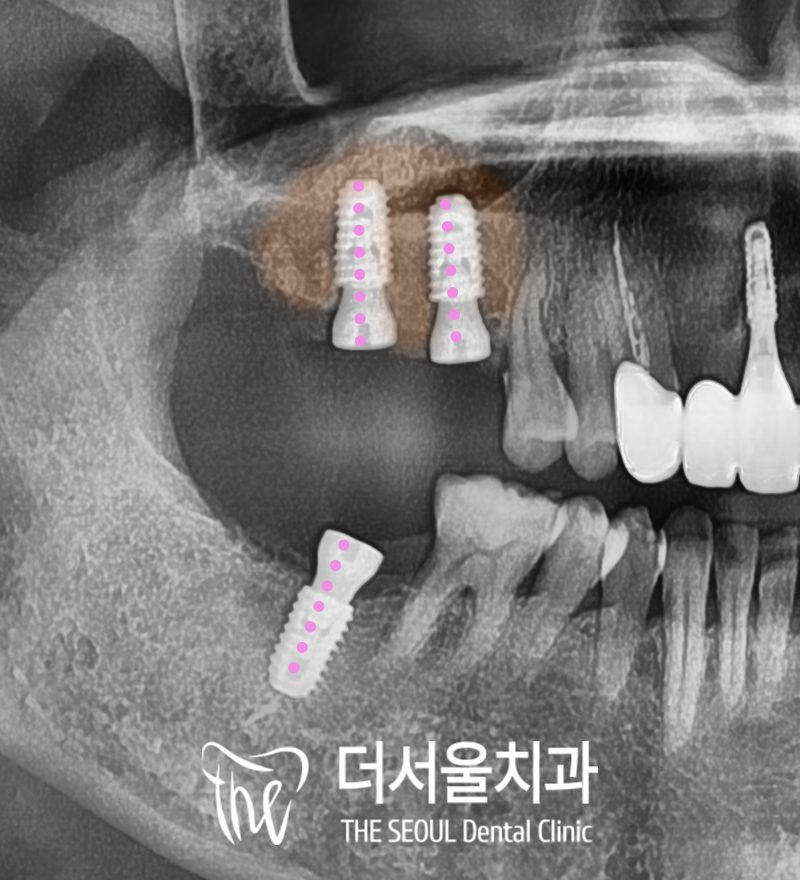
The upper right molar was a different matter. It needed extraction followed by a sinus lift with bone grafting.
What the maxillary sinus has to do with your teeth
The upper jaw has a structure the lower jaw does not. Dentists call it the maxillary sinus; ENT specialists call it the paranasal sinus. It is an air-filled space inside the cheekbones on each side, lined by a very thin membrane.
The problem is what happens when an upper molar is lost. The jawbone beneath the sinus resorbs, and the sinus floor effectively drops down into the space. The longer a missing upper molar is left, the further the membrane descends and the less bone height remains.
In this case there was not enough bone volume, and not enough vertical height to accommodate a fixture of adequate length. A sinus lift raises the membrane to create space, and bone graft material is placed into that space. Lifting the membrane alone achieves nothing — it is the graft that eventually gives the fixture something to anchor into.
The fixture was placed at a carefully considered angle and direction, the membrane was raised without perforation, and generous grafting was placed around the site.
Why were the implant crowns made retrievable?
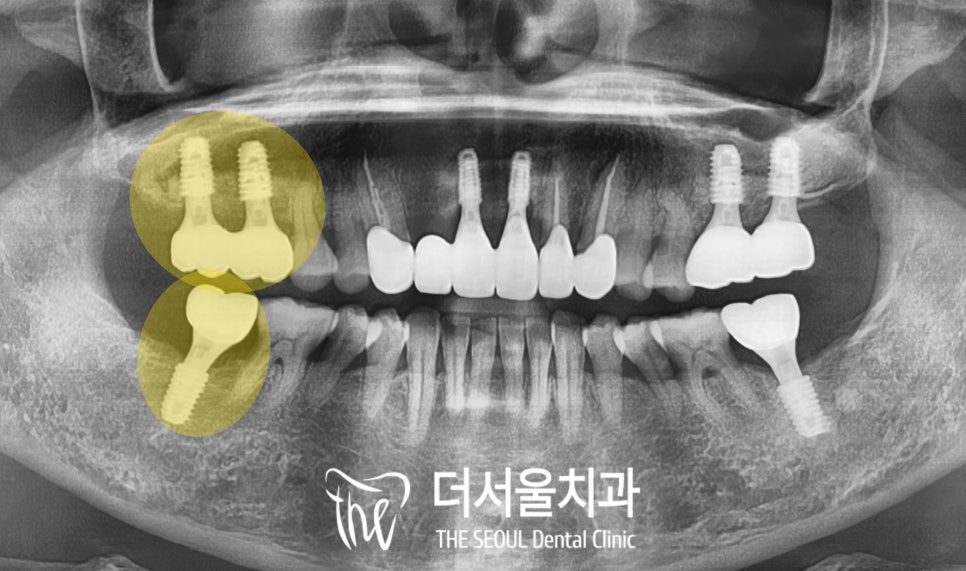
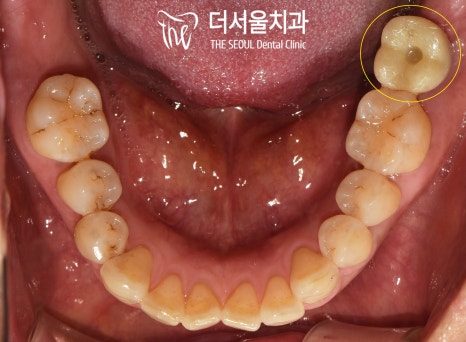
Final restorations were fitted on the right side once healing was complete. Custom abutments and crowns were made to the axis along which each fixture had been placed.
The implants were made as SCRP-type restorations — screw-and-cement retained. The practical advantage is retrievability: the restoration can be removed for maintenance or repair later without destroying it, which matters for a patient who intends to keep coming back for years.
With the restorations in place, food trapping between the teeth is much reduced. Flossing keeps it that way.
The point worth taking away
Whether you need an additional procedure depends entirely on your own oral condition, not on the category of treatment.
- If there is already sufficient jawbone, no bone graft is needed
- If the distance between the sinus and the planned fixture is adequate, no sinus lift is needed
- If the bone has resorbed, one or both may be unavoidable — and no amount of shopping around changes that
The same patient needed neither on one side and both on the other. This is why a diagnosis has to precede a quotation, rather than the other way round.
How long does a staged sinus lift case take?
Treatment ran from late June 2023 to early February 2024 — a little over seven months in total, with the two sides staged rather than treated at once. Sinus lift cases need longer healing than straightforward placements, because the graft has to consolidate before it can carry load. Overseas patients should plan for two trips and raise their travel dates at the first consultation.
Frequently asked questions
What is a sinus lift, in plain terms?
The maxillary sinus is an air cavity above your upper molars. When there is not enough bone height below it for an implant, the sinus membrane is lifted to make room and bone graft material is placed in the space created. The graft is what the implant eventually anchors into.
Will I definitely need a bone graft for an upper molar implant?
Not necessarily. It depends on how much bone height remains, which depends largely on how long the tooth has been missing. A CT scan measures this directly — it is not something that can be judged by looking.
Does a sinus lift affect my sinuses or my breathing?
The membrane is lifted rather than opened, and the aim throughout is to avoid perforating it. Some congestion or minor nasal symptoms in the days afterwards are not unusual. Tell us in advance if you have a history of sinusitis, as it affects planning.
Should a tilted wisdom tooth be removed even if it does not hurt?
Often yes. A wisdom tooth lying against the tooth in front traps food and plaque in a space you cannot clean, and it can damage that neighbouring tooth long before it causes any pain itself. Pain is a late signal here, not an early one.
Why treat one side at a time instead of everything at once?
So you can keep chewing. Restoring one side first means you have a functioning side to eat on while the other heals. It also spreads the surgical load, which matters when one side needs grafting and the other does not.
Read more: bone grafting and sinus lift · dental implants overview · digital guided implants