
The three questions people actually ask about clear aligners are how long, how much it hurts, and what it costs. This case — crowded, protruding upper front teeth corrected without extractions — is a reasonable basis for answering all three.
Why are crowded teeth a hygiene problem?
The complaint was crooked, protruding front teeth.
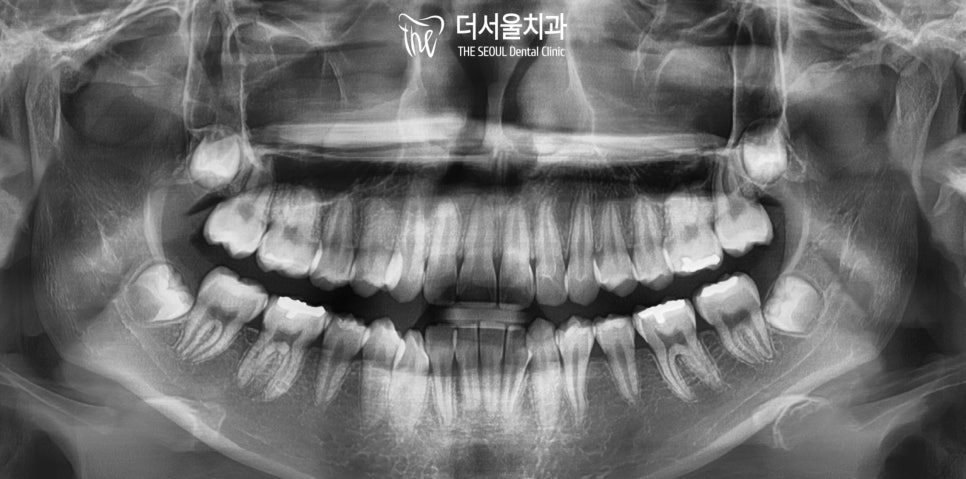
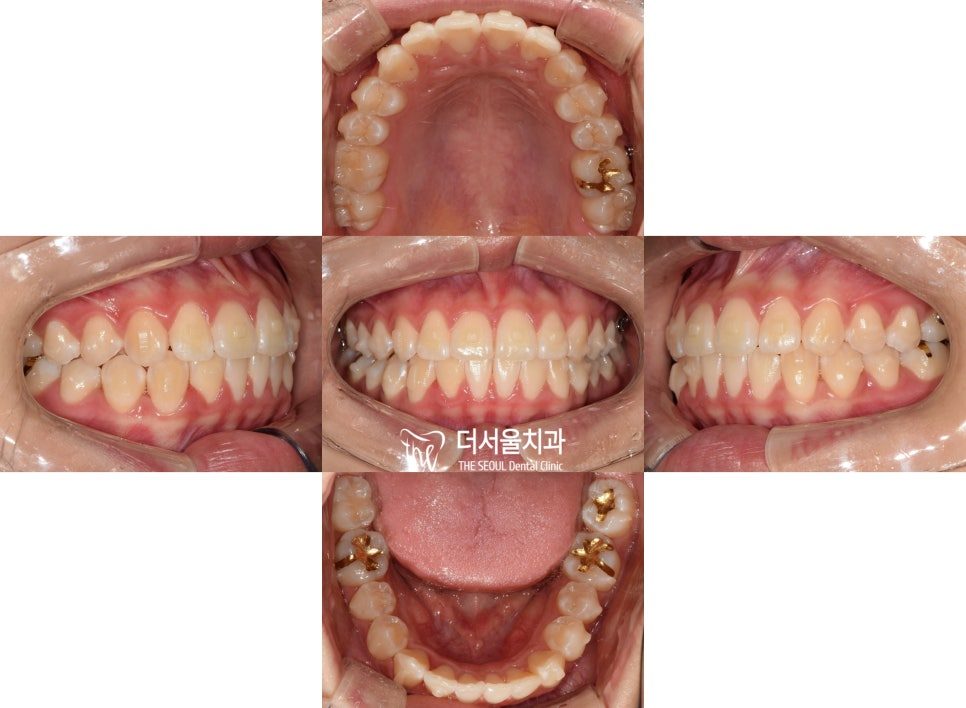
Examination found crowding in both arches — teeth overlapping for want of space. Crowded teeth accumulate plaque and calculus because the overlapping surfaces cannot be cleaned properly, so this is a hygiene problem as much as an appearance one. The displaced teeth also produced a sense of fullness in the mouth.
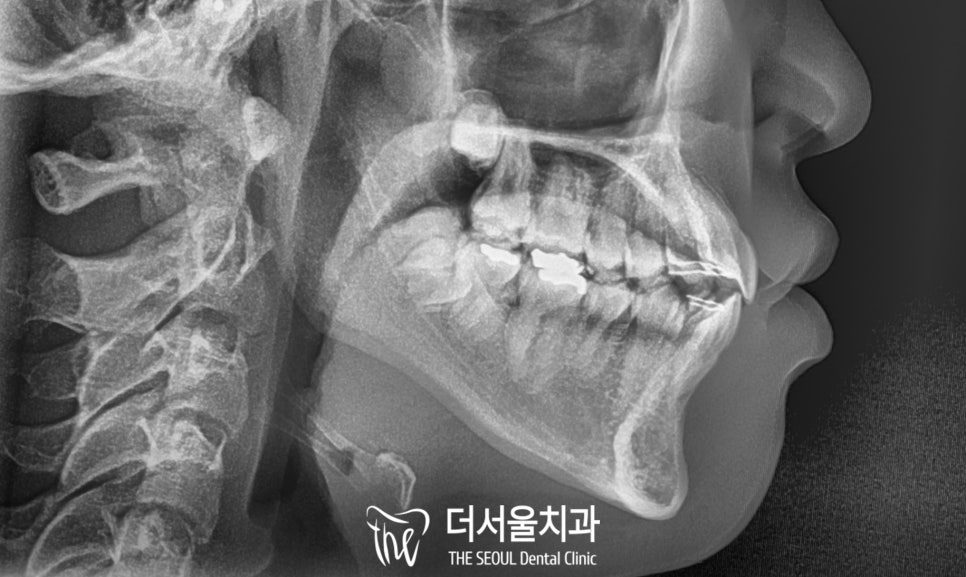
A lateral X-ray showed the upper front teeth angled forwards. The panoramic view confirmed the irregular alignment, with teeth overlapping one another.
Why were aligners chosen for this case?
Clear aligners move teeth in increments of about 0.1 mm, which makes them well suited to resolving crowding without extractions — the small, controlled movements can recover space that would otherwise have to be created by removing a tooth.
Non-extraction is not always possible; it depends on how much space is missing. Where it is possible, it is generally preferable.
Treatment time
A common assumption is that treatment without fixed brackets must take longer. In practice aligner treatment is often shorter, and the reason is in how the movement is organised.
Bracket treatment generally proceeds in stages: align the teeth first, then adjust the relationships between them. Aligner treatment can move teeth in three dimensions and correct the alignment at the same time, so those stages overlap rather than run in sequence.
That said, this is a general tendency and not a rule for every case. Which approach is faster for you depends on what has to move and how far, and it is a question for the consultation rather than one with a universal answer.
How does an aligner actually move teeth?
The mouth was analysed in detail first, planning how each tooth would need to rotate and at what angle and inclination to reach the target alignment.
Attachments were then bonded to the tooth surfaces. These are small shapes in tooth-coloured composite that give the aligner something to grip, so it can apply force in a controlled direction rather than simply squeezing. They are small and closely matched in shade, so they are not conspicuous.
The aligners were then changed in sequence, each moving the teeth a small increment further.
Discomfort
Aligners apply comparatively light force, continuously, over short intervals, rather than larger adjustments at each visit. Patients generally describe this as easier than expected — typically a feeling of pressure or tightness for a day or two after changing to a new aligner rather than pain.
How much you feel still varies between people, and we will not promise you a particular experience. But if discomfort is your main reason for hesitating, it is worth raising at the consultation, because there is more control over it than most people assume.
What it costs
Clear aligner treatment is sold in packages, and which one you need is the main driver of cost:
- First — for growing patients and simple cases. The smallest scope, the lowest cost.
- Lite — a limited number of aligners, suited to mild crowding where the teeth need only modest movement. This patient was treated with Lite.
- Comprehensive — no limit on the number of aligners. Used for malocclusion needing several stages of correction rather than alignment alone. It takes longer and costs correspondingly more.
Our published fee range for Invisalign is on the fee schedule, in Korean won, and it is the same range quoted to patients in Korea. Where your case falls within it depends on which package your alignment actually requires, which is established at the consultation — you receive an itemised written estimate before anything begins.
What changed by the end of treatment?
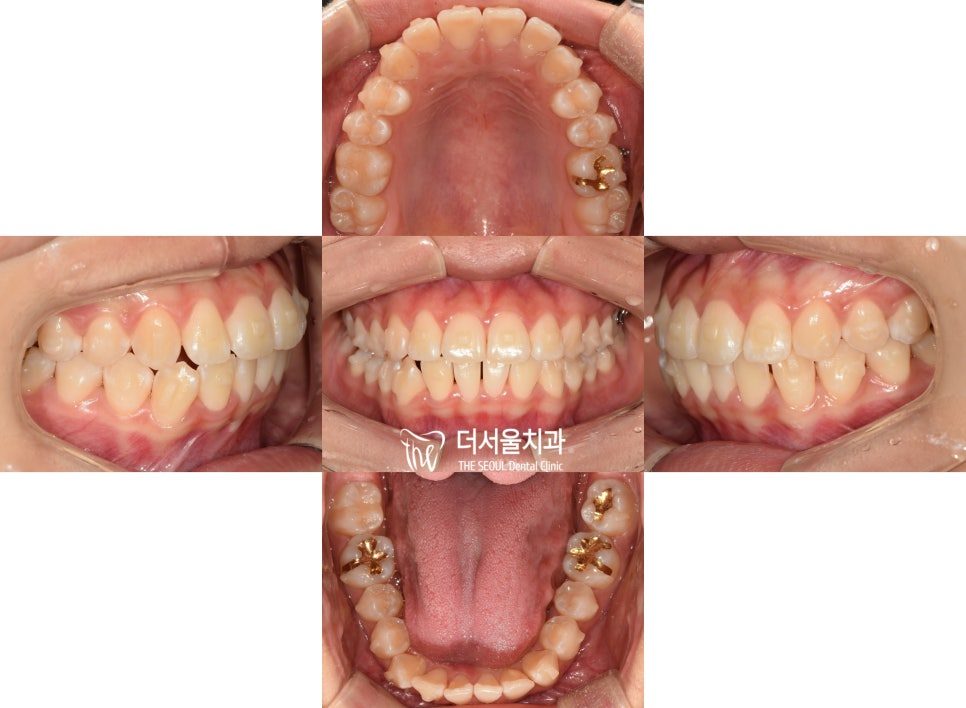
The alignment was completed without extractions.
The protruding upper front teeth were retracted, but deliberately only to a point — over-retraction produces its own problem, with the front teeth tipped too far inwards. Knowing where to stop is part of the plan rather than an afterthought.
The bite relationship was maintained without significant change, and the midline was corrected.

How long does Invisalign take?
Treatment ran from late April 2022 to early May 2024 — about two years. Plans differ between patients, and so do treatment time and the degree of discomfort. Orthodontic treatment of any kind is difficult to complete on a short visit to Korea; if you are considering it from overseas, raise your circumstances at the consultation so the appointment intervals can be planned realistically.
Frequently asked questions
How much does Invisalign cost in Korea?
It depends on which package your case needs. The published range is on our fee schedule and is the same for international and Korean patients. You get an itemised written estimate after the consultation, before treatment starts.
Is Invisalign faster than braces?
Often, because aligners can move teeth three-dimensionally and correct alignment at the same time, whereas bracket treatment tends to run in stages. It is a tendency rather than a rule, and which is faster for you depends on what needs to move.
Does Invisalign hurt?
Most people describe pressure or tightness for a day or two after switching to a new aligner rather than pain, because the force applied is lighter and more continuous than with brackets. Individual experience varies.
What are the attachments, and are they visible?
Small tooth-coloured composite shapes bonded to the teeth so the aligner can grip and direct force precisely. They are small and shade-matched, so they are not obvious in normal conversation.
Can crowded teeth be treated without extractions?
Often yes. Small controlled movements can recover space that would otherwise require removing a tooth. Whether it works for you depends on how much space is missing, which is measured at the consultation rather than assumed.
Read more: Invisalign and clear aligners · braces · what treatment costs