
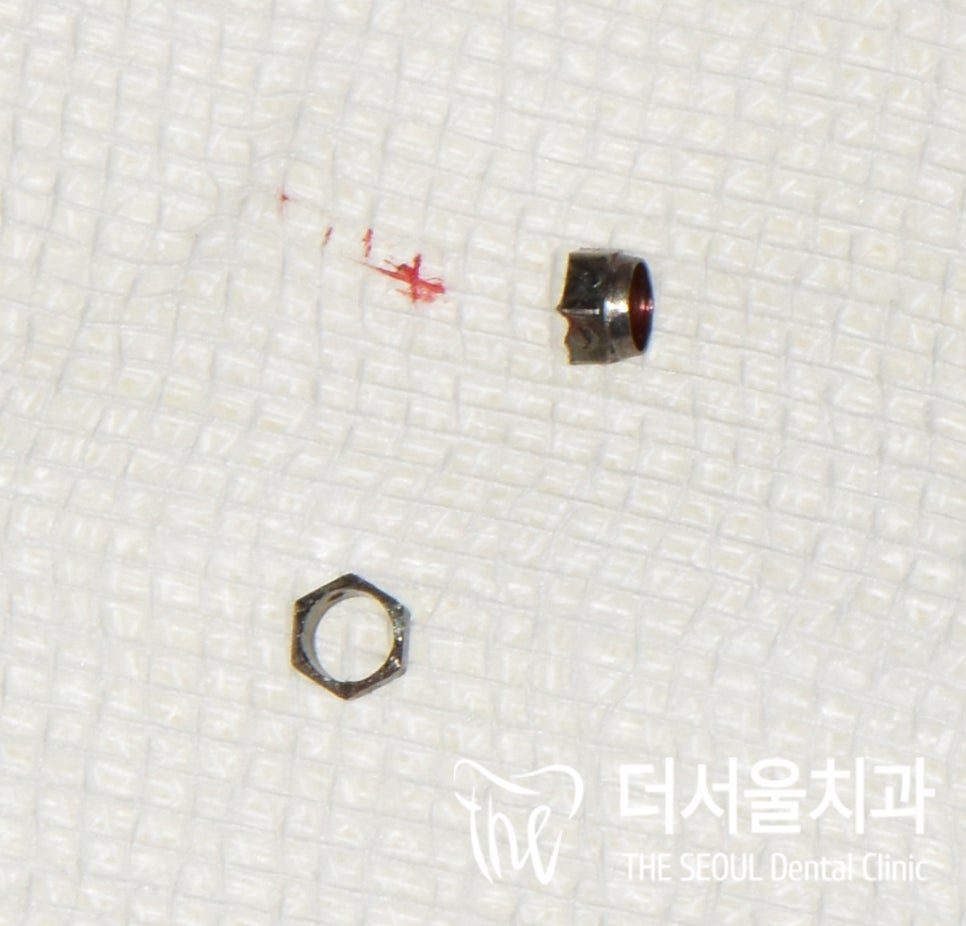
This case did not go to plan, and that is why it is worth writing up. A single implant was placed where two had been recommended, it carried the load meant for two, and five years later it fractured.
What was found at the first visit
The second molars on both sides had already been extracted. Inflammation had caused bone loss at both sites, so bone grafting was needed to rebuild enough thickness before anything could be placed.
Two implants were recommended, one on each side. The patient asked for one.
That request was accepted and the work done carefully, but the reservation was explained at the time: the second molar carries a large share of the chewing load. However well a single implant is placed, if it is left to absorb force meant for two, it may not withstand it.
The comparison that makes this concrete: lifting a heavy rock alone and lifting it with someone else are not the same task, even if you can manage the first one for a while.
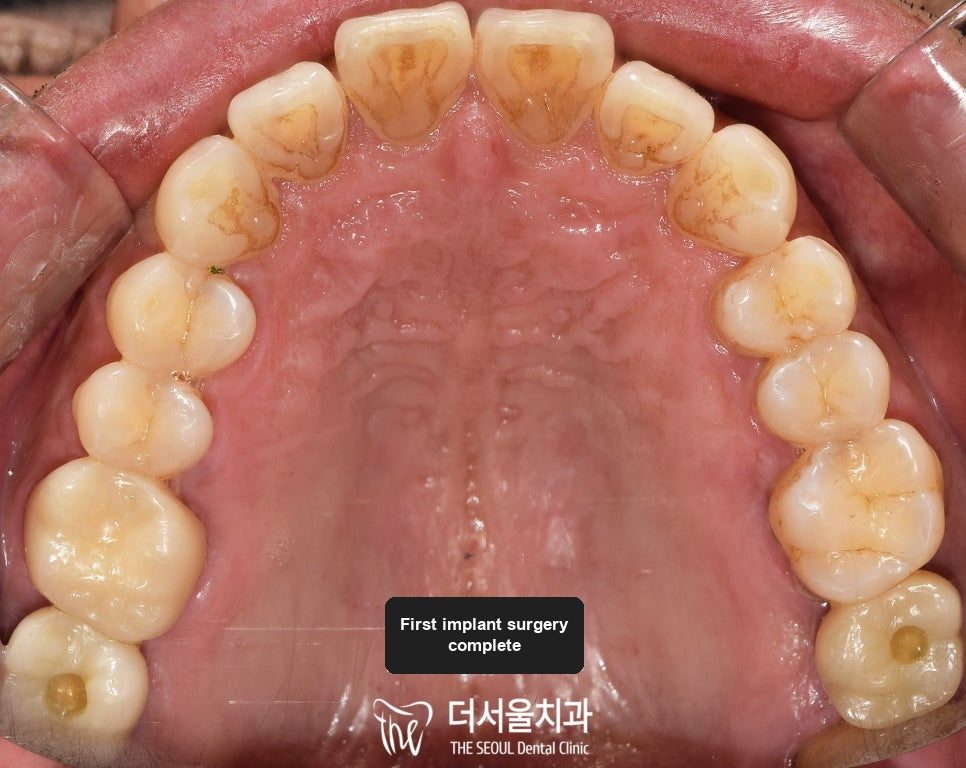
What did the X-rays show after surgery?
Post-operative imaging showed the implant well placed and the graft material well integrated with the surrounding bone. The surgery itself was uneventful.
The advice given at that point was to attend regular check-ups, precisely because a single implant in that position needed monitoring.
The patient did not return for five years.
What happens if an implant fractures?
The implant fractured, as had been the concern, and the patient came back at that point.
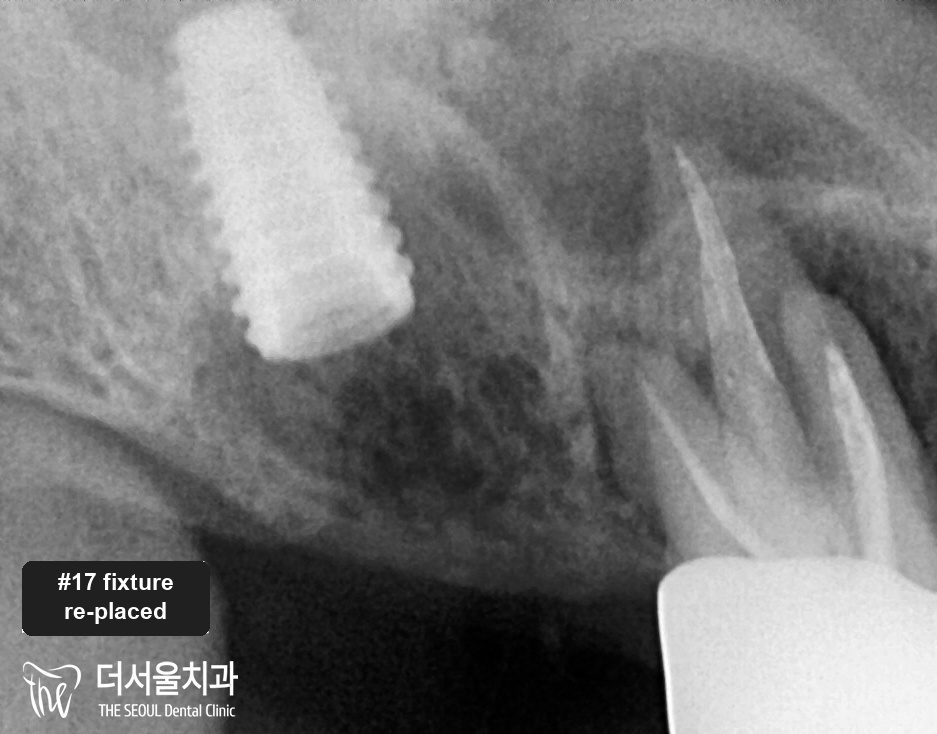
Once an implant fractures there is no repair. The fixture has to be removed and the site re-implanted.
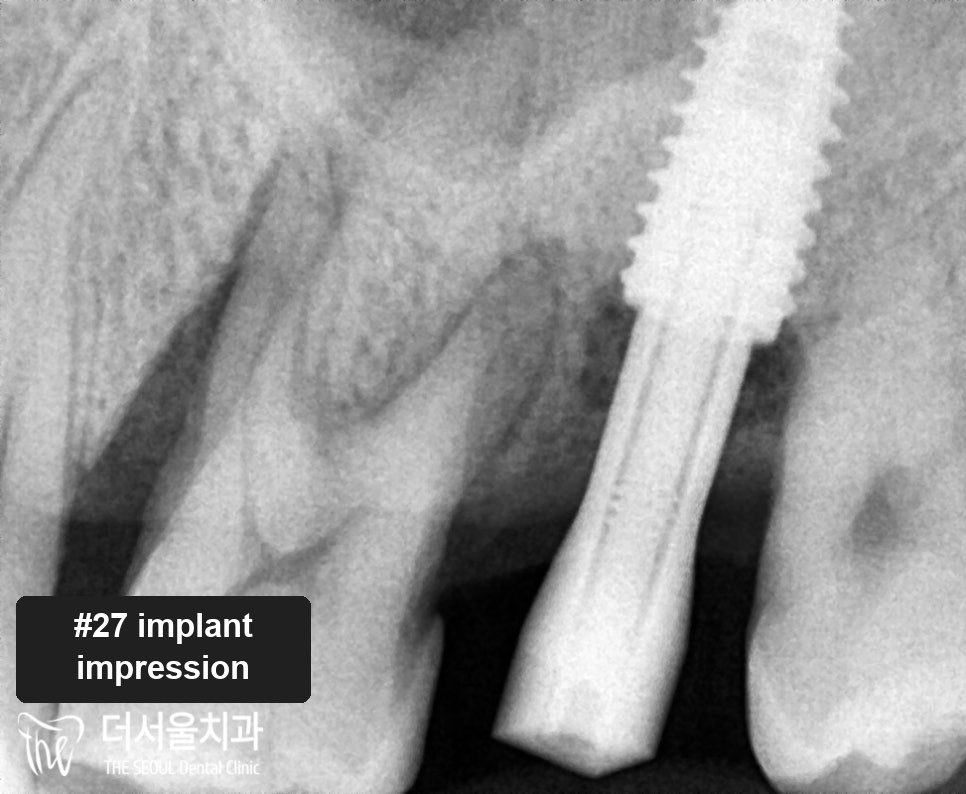
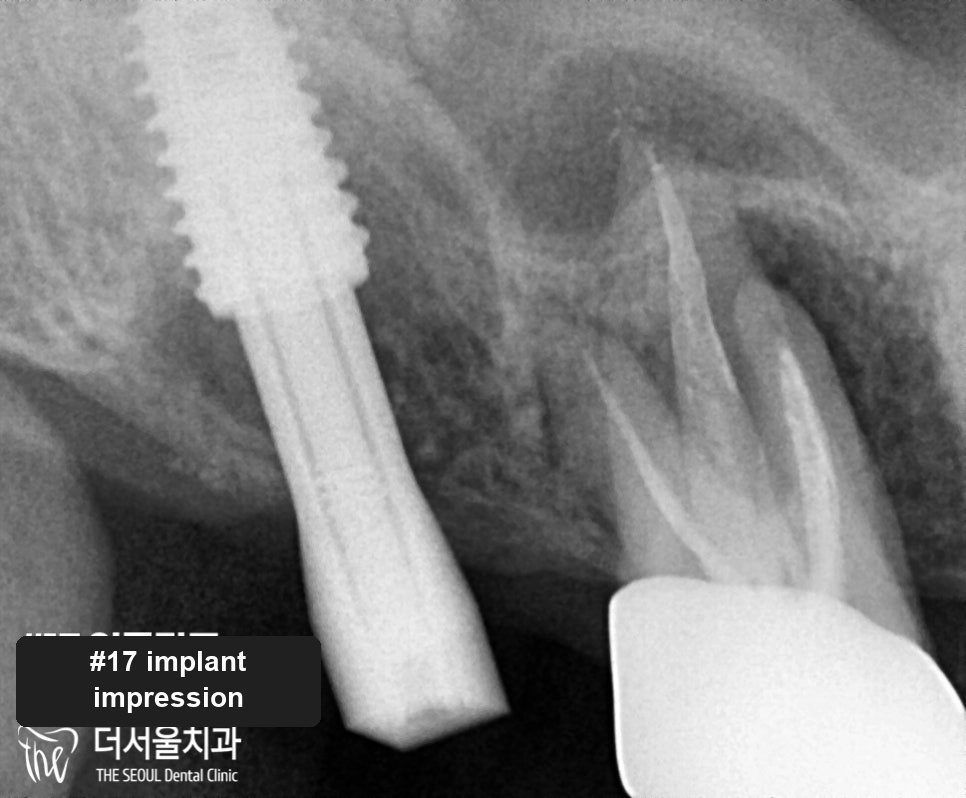
The revision was planned and carried out with particular care, since a re-placement has to hold in a site that has already failed once. Impressions were taken for both sides, and the restoration was fitted at the following appointment once integration was confirmed.
Why implants fracture more readily than natural teeth
Molars take heavy loads by position — that part applies to natural teeth too.
The difference is in how force is absorbed. A natural tooth sits in bone with a periodontal ligament between the two, which gives slightly and distributes shock. An implant is fused directly to bone with no ligament and no give. When a strong force arrives, there is nothing to absorb it, so more of it reaches the fixture and the restoration.
That is the whole reason the three measures below matter.
How can I stop an implant from fracturing?
1. Splint two restorations together
Where two implants are placed adjacently, joining the restorations shares the load across both fixtures rather than concentrating it on one. This is the measure that would have applied in this case, and it is why two implants were recommended in the first place.
2. Attend regular check-ups
Bite balance shifts over time, and a restoration taking more force than it should can be identified and adjusted before anything breaks. Five years without a check-up is how a manageable imbalance becomes a fracture.
3. Reduce the biting force itself
For patients whose chewing muscles generate unusually strong force — often those who clench or grind — botulinum toxin injection into the masseter muscle can reduce the force reaching the restorations. A night guard works on the same problem from the other direction.
Any one of these meaningfully improves the odds. They are not alternatives to each other so much as three points at which the same failure can be interrupted.
How long does implant revision take?
Treatment for the revision ran from November 2021 to June 2022 — about seven months, which is longer than the original placement took. Revision usually is.
The point of writing this one up
Cost is a legitimate consideration and patients are entitled to decline part of a treatment plan. What this case shows is what the trade-off actually was: the second implant was not an upsell, it was load sharing, and the load did not go away because one implant was declined.
If you are being advised to place more than one implant and are weighing whether to, the question worth asking is not “do I need both” but “what carries the force if I only have one”.
Frequently asked questions
Can a fractured implant be repaired?
No. A fractured fixture has to be removed and the site re-implanted. That is why prevention matters more here than with a natural tooth, where a crack can sometimes be managed with a crown.
Why are implants more likely to fracture than natural teeth?
A natural tooth has a periodontal ligament between root and bone that gives slightly and absorbs shock. An implant is fused directly to bone with no such cushioning, so more of any strong force reaches the fixture itself.
Do I really need two implants instead of one?
Where two teeth are missing side by side, two fixtures share the chewing load and can be splinted together. One fixture carrying the load meant for two is a known failure mode — this case is an example of it. Ask specifically what will carry the force if you place only one.
Can Botox help protect implants?
For patients who clench or grind, reducing masseter muscle force lowers the load reaching the restorations. It treats the force rather than the teeth, and it is one option among several — a night guard addresses the same problem differently.
How often should I have an implant checked?
Every three to six months. The check is looking for inflammation around the implant and for bite imbalance — both of which are straightforward to correct when found early and expensive when found late.
Read more: digital guided implants · failed implant revision · bone grafting and sinus lift