
A tooth that has served you for decades can break without warning, and the first question is always whether it can be saved. Where it cannot, the next one is whether the implant can go in the same day — and here it could.
What the patient came in with
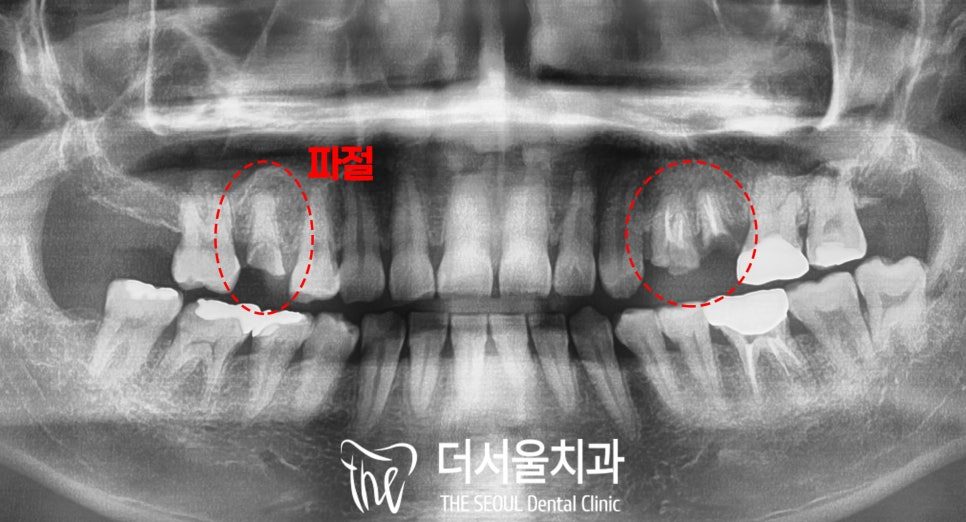
Molars had fractured on both sides, and the patient wanted to know whether treatment could happen on the day of extraction.
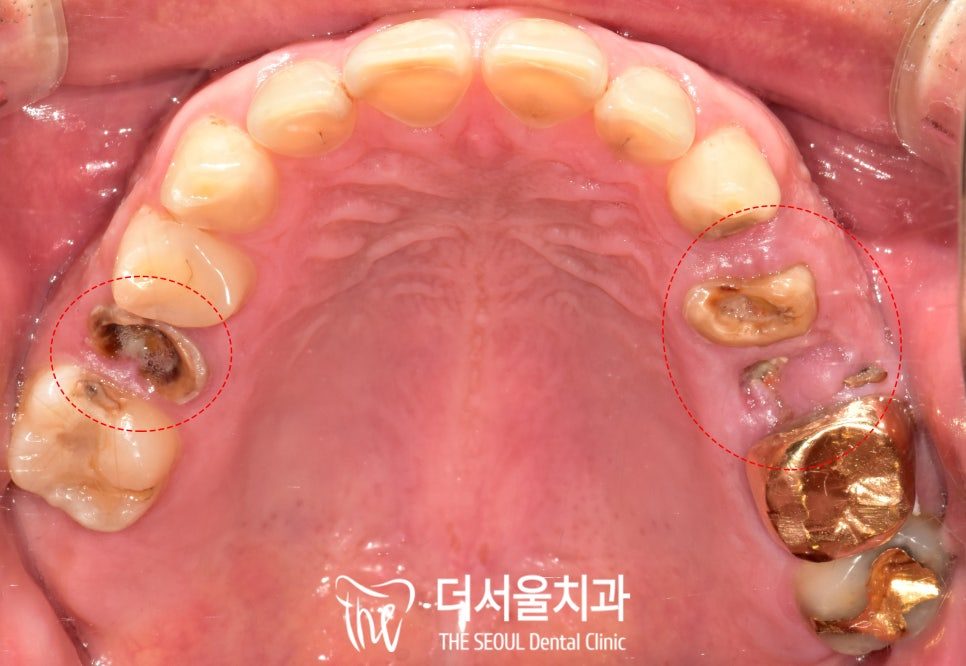
Examination found several upper teeth with portions broken away. The fractures were not recent, and the patient had been unsure where to go or what the treatment would involve.
Deciding between saving and replacing
A fractured tooth is not automatically lost. How much has broken away determines whether preserving it is realistic.
A rough working line: with about a third of the crown still intact, there is generally something to build on.
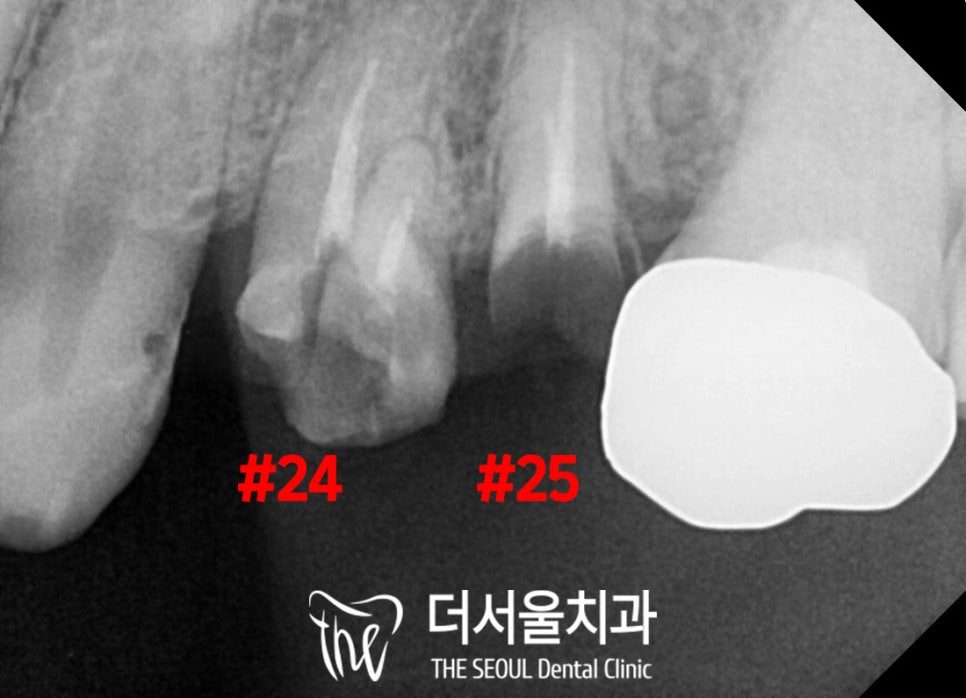
This case was past it. The fractures extended beyond the gum margin and into part of the root, and the tooth structure inside was extensively damaged. Three fractured molars across both sides needed replacing rather than repairing.

Why place the implant on the same day?
The patient had not had implant treatment before and was apprehensive, so the surgery was planned with a digital guide for placement immediately following extraction.
Placing a fixture directly into the socket where the tooth came out has four practical advantages:
- It uses the healing potential of the extraction socket — the site is already in a biologically active state after extraction, and placement takes advantage of it
- Total treatment time is shorter, because the separate healing period between extraction and placement is removed
- Less time without a tooth, which protects the neighbouring teeth from drifting into the space
- Less anaesthetic overall, since extraction and placement happen under one administration rather than two
Immediate placement is not appropriate for every case. It depends on the condition of the socket after extraction and on whether infection is present, and both are assessed before it is offered.
What if there is not enough bone?
Once the fractured teeth were out, some sites showed insufficient bone around the sockets.
So during placement, a sinus lift raised the maxillary sinus membrane and bone grafting was carried out at the same time. Graft material was packed around the fixtures to improve their stability.
Over roughly three months, new bone forms alongside the graft material and the fixtures become considerably more firmly seated than they are at placement.
How stable were the implants at the end?
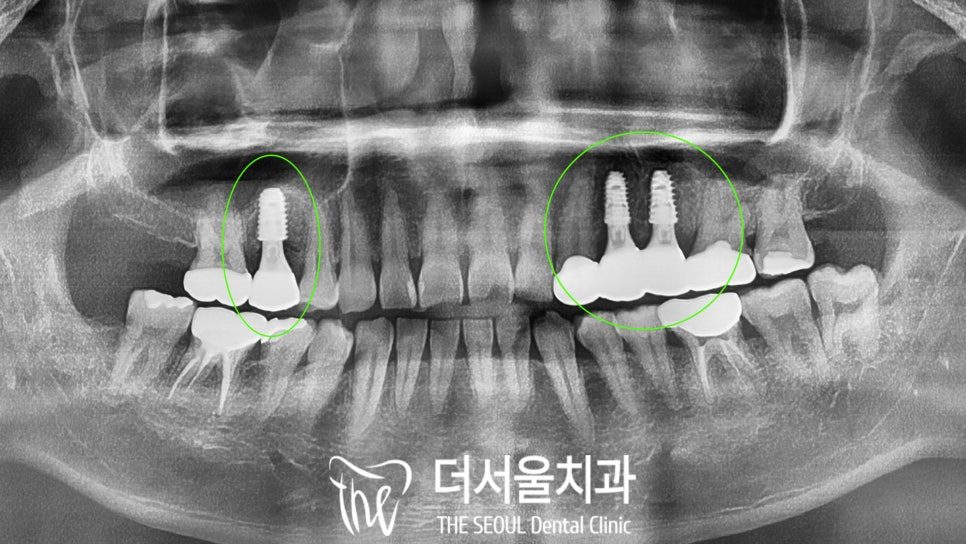
The final restorations replaced the fractured crowns and were fitted without difficulty.
At the grafted sinus lift sites, bone filled in well around the fixtures, and stability measured ISQ 85 — implant stability quotient, a scale that measures how firmly a fixture is anchored. That is a comfortable figure for a site that required grafting.
Measuring rather than estimating stability matters here, because a grafted site is exactly where you want objective confirmation before loading the fixture with a restoration.
How long did same-day implants take?
Treatment ran from the end of May to early September 2024 — about three months from same-day extraction and placement to the final restorations. Immediate placement is what kept it to three months; staged treatment at these sites would have added the socket healing period on top.
What should I do if a tooth breaks?
Get it assessed promptly rather than waiting to see whether it settles. What can be done depends on how much structure remains and on the state of the socket, and both deteriorate while a fractured tooth is left in place.
If the prospect of surgery is what is stopping you, conscious sedation is available for this kind of treatment. It is worth raising at the consultation rather than postponing.
Frequently asked questions
Can an implant be placed the same day the tooth is extracted?
Often, yes. It depends on the condition of the socket after extraction and whether infection is present. Where it is possible it shortens overall treatment time considerably, because the separate socket-healing period is removed.
Can a fractured tooth be saved?
It depends how much is left. With roughly a third of the crown still intact there is usually something to build on. Where the fracture runs below the gum and into the root, as here, replacement is generally the realistic option.
What is ISQ?
Implant stability quotient — a measured value for how firmly a fixture is anchored in bone. It is particularly worth measuring at grafted sites, where you want objective confirmation of stability before fitting a restoration rather than a judgement call.
Why is a sinus lift needed for upper molars?
The maxillary sinus is an air cavity above the upper molars. Where bone height beneath it is insufficient for a fixture, the membrane is lifted and graft material placed in the space created. The graft is what the implant eventually anchors into.
How long until the implant is fully stable?
Roughly three months for new bone to form alongside graft material, though it varies with the site and the extent of grafting. Stability can be measured rather than assumed, which is what the ISQ reading is for.
Read more: bone grafting and sinus lift · digital guided implants · emergency dental care