
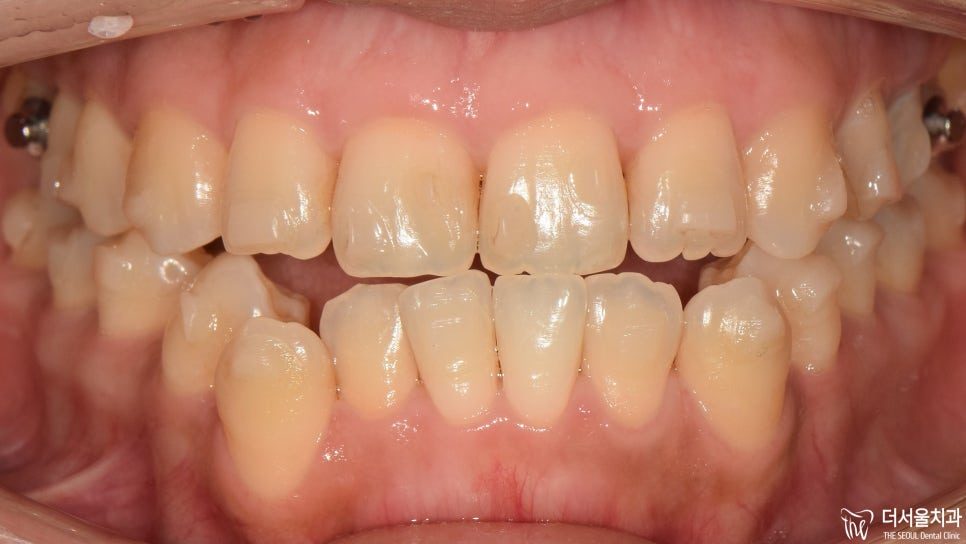
An underbite has two parts: where the teeth sit, and where the jaw sits. Aligners can move the first. They cannot move the second. Knowing which part is causing your bite to close the wrong way is what decides whether treatment without surgery is realistic.
What is an underbite, in dental terms?
In a normal bite the upper front teeth close slightly in front of the lower ones. In an underbite the lower teeth close in front of the upper — the relationship is reversed, which is why it is also called a reverse bite or anterior crossbite.
Where the lower jaw itself is larger or set further forward than the upper, this is classified as a Class III malocclusion. Class III describes the jaw relationship, not the teeth alone, and that distinction matters for what follows.
What problems does an underbite cause?
The front teeth are the ones that cut food. When they close in the reverse relationship they cannot meet edge to edge, so biting through food at the front does not work — the patient compensates by tearing or by using the back teeth.
Two further consequences follow from the same misalignment. Lips that do not close without effort leave the mouth dry, and speech sounds formed at the front teeth become harder to produce cleanly. Teeth that do not line up are also harder to clean at the crowded contact points, which raises the risk of decay and gum disease at those specific sites.
The case: an adult with a Class III underbite
A patient in their thirties attended about a lower jaw that visibly protruded. The concern had been present for over a decade without treatment.
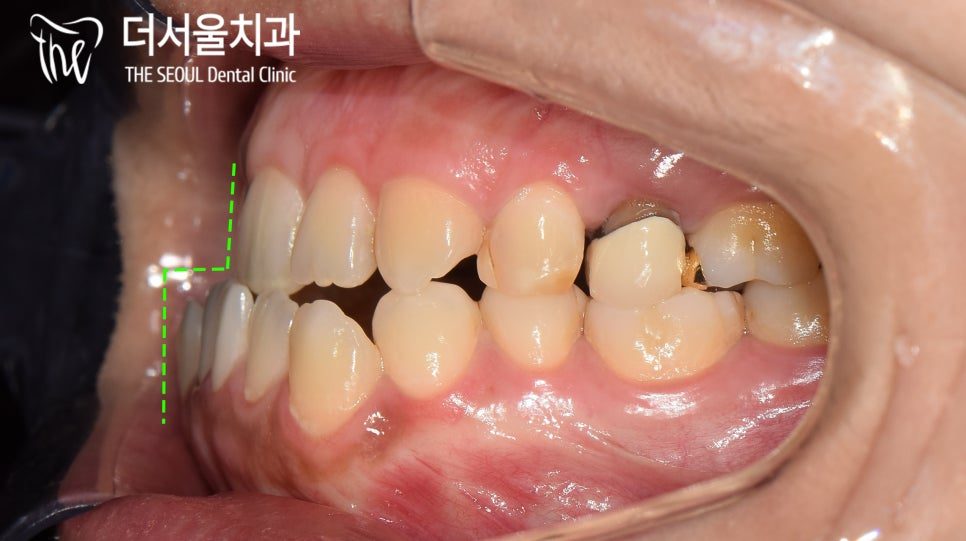
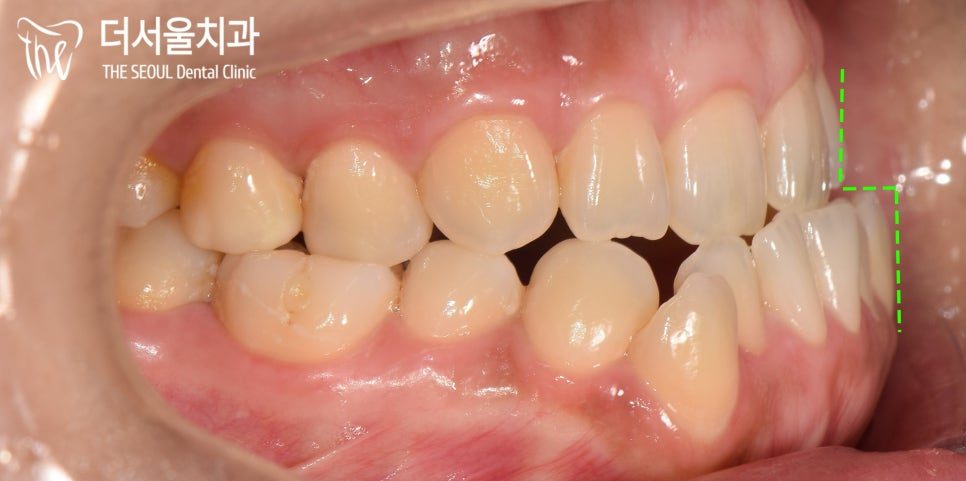
Examination confirmed a Class III malocclusion: the lower jaw was developed forward relative to the upper. The front teeth closed in reverse, and the lips did not meet at rest without conscious effort.
What can aligners actually change here?
This is the part worth being exact about, because it is where expectations are usually set wrongly.
In a growing child, orthodontic treatment can influence how the jaws develop, and the jaw relationship itself can be guided. Once growth is complete, that option has closed. In an adult, orthodontics moves teeth within the jaws; it does not reposition the jaws relative to each other. Changing the skeletal relationship in an adult requires jaw surgery.
So the honest description of this treatment is: the teeth were rearranged to close correctly despite the underlying skeletal pattern, which remained Class III. That is a real functional improvement and it is not the same thing as correcting the jaw.
How the space was created
To bring the lower teeth back into a correct relationship with the uppers, the lower arch had to move backwards. That movement needs somewhere to go.
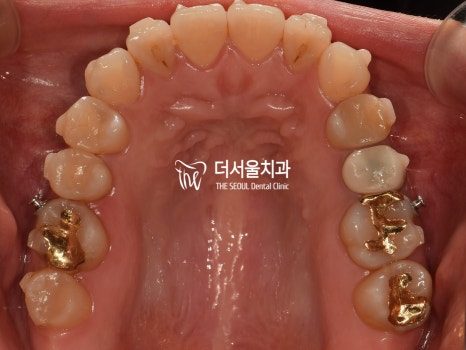
Here the space came from extracting the lower third molars (wisdom teeth). With those removed, the lower teeth on both sides could be moved back far enough for the upper front teeth to close in front of the lower ones, as they should.
Why clear aligners rather than fixed braces?
The patient worked in a role involving daily contact with other people and had specifically postponed treatment because of the visibility of fixed brackets and wires. Clear aligners were used for that reason.
Aligner treatment also includes a planning stage in which the intended tooth positions are simulated before treatment begins. That was used here to show the patient what the teeth could and could not be expected to do — which, in a case where the jaw relationship was not going to change, was the more important half of the conversation.
Attachments — small tooth-coloured shapes bonded to specific teeth — were used so the aligners could grip and apply the intended movements rather than simply slide.
What the result was, and what it was not
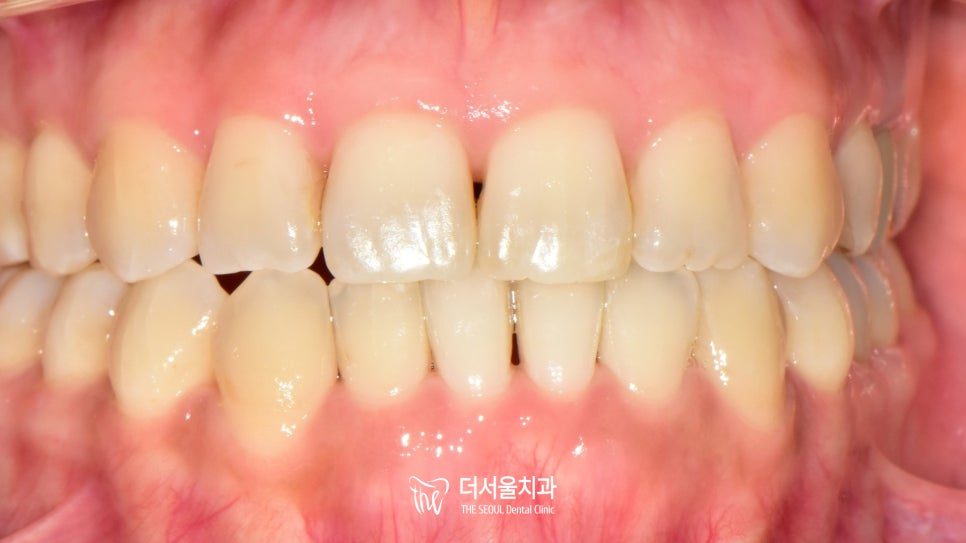
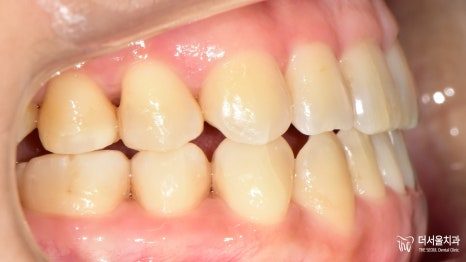
At the end of treatment the front teeth closed in the correct relationship, with the upper teeth in front of the lower. The lips met at rest without effort.
The molar relationship remained Class III. A textbook molar interdigitation was not achievable, because that depends on the jaw relationship, which orthodontics alone does not alter in an adult. This was expected and was explained before treatment started.
Treatment ran from June 2021 to May 2022.
How to tell which situation you are in
You cannot tell from the mirror, because a dental crossbite and a skeletal Class III can look similar from the outside. The distinction is made from radiographs and a clinical examination that measures the jaw relationship rather than the tooth positions.
What that assessment produces is a straight answer to one question: can this bite be corrected by moving teeth alone, or does correcting it require surgery? Both answers are legitimate outcomes of an examination, and a consultation that only offers the first is not answering the question.
Frequently asked questions
Can clear aligners correct an underbite?
They can correct the tooth positions so that the front teeth close in the right relationship, as in this case. They do not change the position of the jaws. Whether that is enough depends on how much of your underbite is dental and how much is skeletal.
Will I need jaw surgery?
Only if the skeletal discrepancy is the dominant cause and correcting the teeth alone would not produce a functional bite. That is determined by examination and radiographs, not by how the underbite looks.
Do wisdom teeth have to come out?
Not always. In this case they were removed because the lower teeth needed room to move backwards. Where the required movement is different, the space may be created differently or not needed at all.
Does treatment take longer with aligners than with braces?
Duration is driven by how far the teeth have to move and how the bite has to be reorganised, not by which appliance is used. This case ran for about eleven months. A different case with the same appliance can run considerably longer or shorter.
Is it too late to treat an underbite as an adult?
No, but the options change. In a growing patient the jaw relationship itself can be influenced; in an adult it cannot, so treatment addresses the teeth and, where the skeletal component is large, is combined with surgery.