
Many people assume a dental implant is permanent. It is not. An implant can loosen, the bone around it can recede, and it can need replacing — and when the clinic that placed it has closed down, patients often have no idea where to turn. This is what implant revision actually involves.
Why does an implant become loose?
A natural tooth sits in bone with a periodontal ligament between the two, so a small amount of movement is normal. An implant is different: the fixture bonds directly to bone. If the surrounding alveolar bone is lost, the implant loses its anchorage, and there is no ligament to compensate.
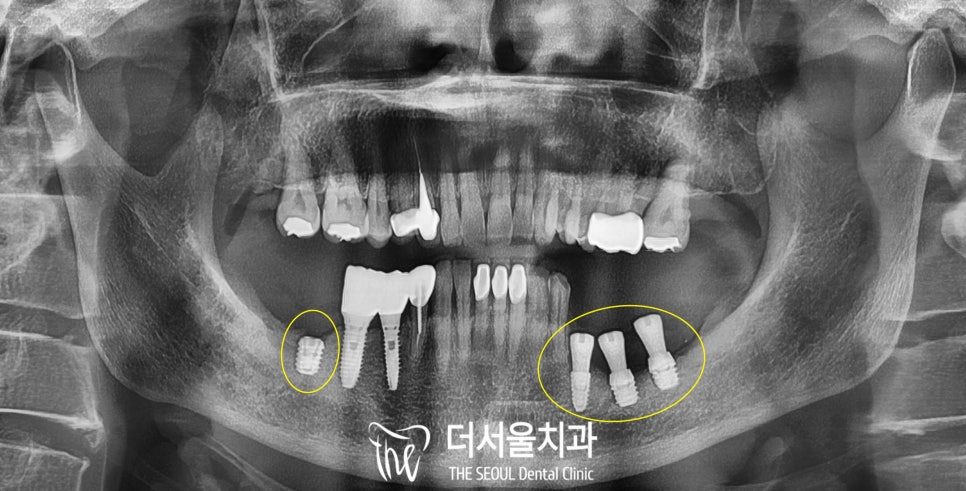
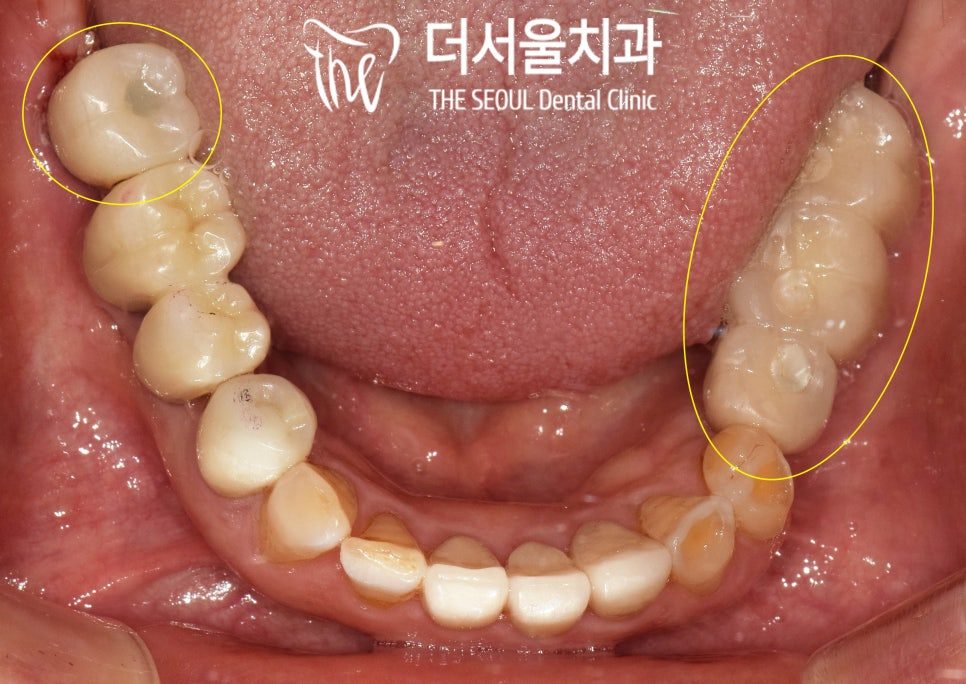
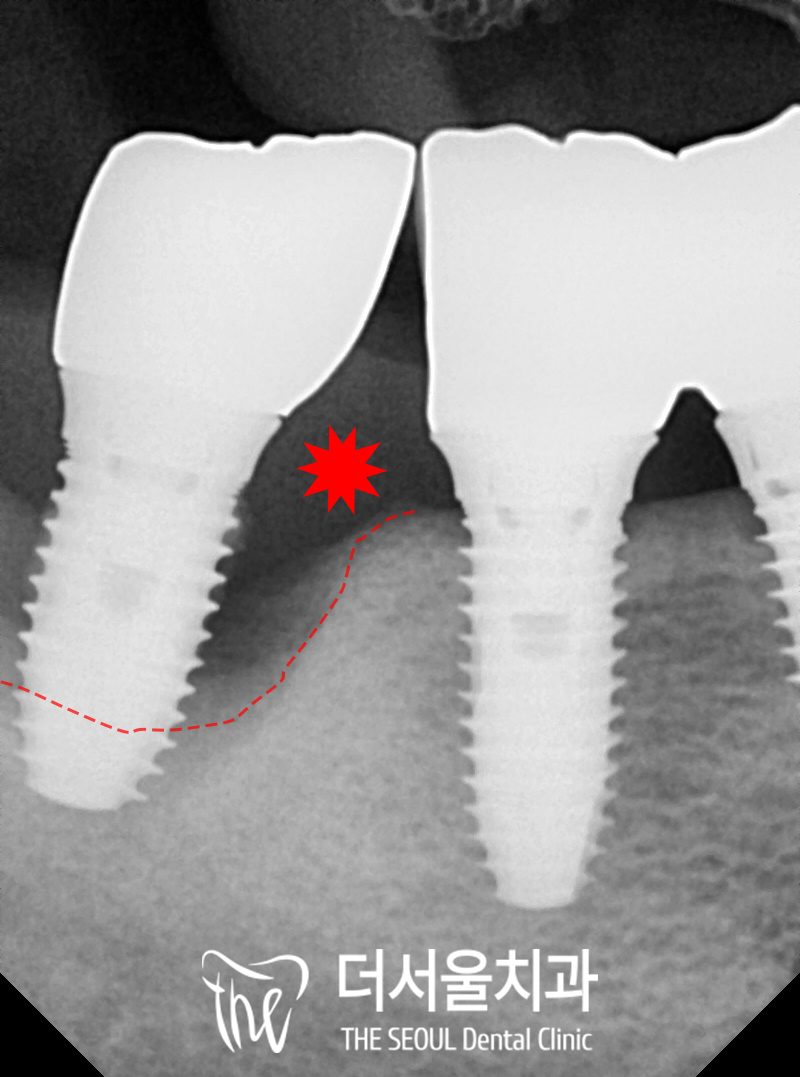
In the case described here, a patient came to us because both lower molar implants, placed years earlier at another clinic, felt loose. Clinical examination confirmed the movement, and a panoramic X-ray showed severe bone loss around both sites — on one fixture, only about a quarter of the root portion was still held in bone, with pus discharge and badly swollen gum tissue.
What makes an implant fail?
Inflammation in the tissue around a fixture is common enough to be treated as a public health problem rather than bad luck. A 2025 systematic review in the Journal of Dentistry, pooling twenty studies under the 2017 World Workshop criteria, put peri-implantitis at 25.0% of patients and 18.0% of implants (Reis et al., 2025). That is why revision is an established procedure with a known sequence rather than an improvised repair.
When a previously placed implant starts to hurt or move, the cause is usually one of the following:
- Inadequate cleaning around the implant over a long period
- An unfavourable fixture angle
- Wide gaps between the prosthetic and the neighbouring teeth, trapping food
In this case it was the third. The gaps left after the original surgery were large enough that food packed in constantly and plaque control became very difficult. The gum weakened and swelled, and peri-implantitis followed. Once bone loss reaches that stage, stable fixation is no longer possible and the fixture has to come out.
Removing the old fixture
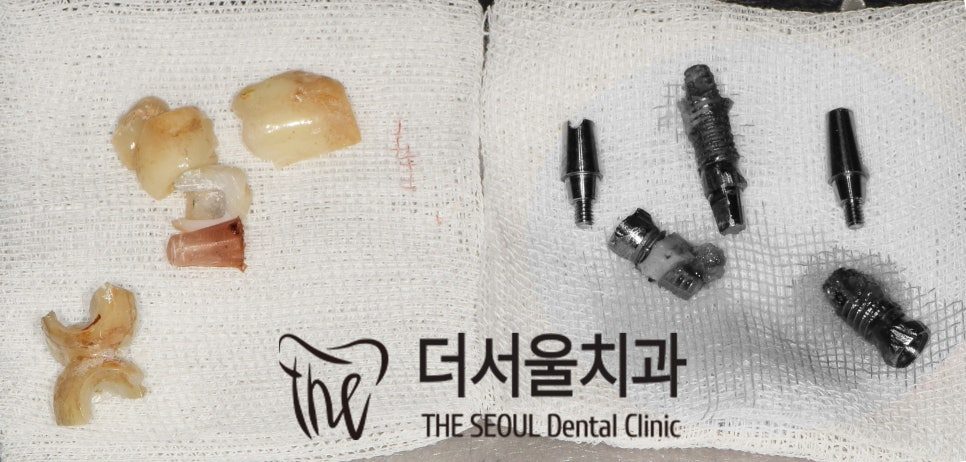
Removal matters as much as placement. We use a dedicated removal kit so the surrounding tissue is disturbed as little as possible. In this case the inflammation was severe enough that the fixtures were already mobile and came out quickly. The bridge prosthetic connecting them was dismantled and removed separately.
Bone graft and guided re-placement
Where bone is badly depleted, two things decide the outcome: identifying exactly where grafting is needed, and placing the new fixture in a position that will give good initial stability. We plan this digitally — position, angle, direction and depth are simulated before surgery.
This patient’s posterior ridge height was low, so the plan was built around placing safely clear of the inferior alveolar nerve, with grafting to reinforce the deficient areas. We do not perform bone grafting where it is not needed; in difficult cases like this one, digital navigation is used alongside it.
How long it takes
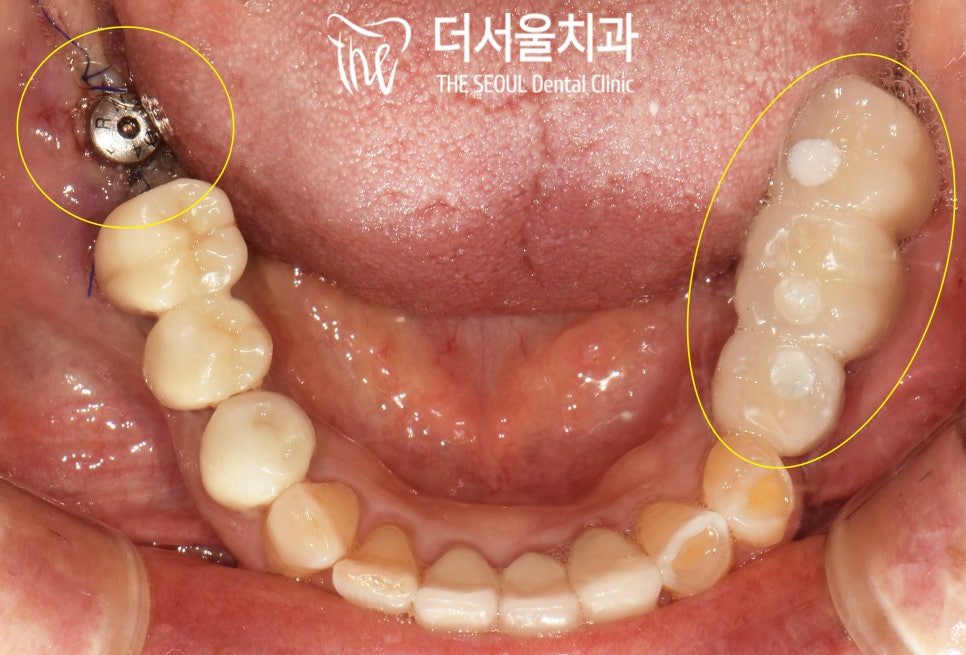
Treatment time varies considerably with each patient’s oral condition. Here the more severely affected right side was treated first, then the left, with roughly four to six months per site. The full course ran from September 2023 to May 2024.
That is not a short timeline, and it was deliberate: an area that has already been through peri-implantitis is weakened, and rushing it is how the second attempt fails too. Once all the prosthetics were fitted, chewing function in the posterior region was restored, with no movement and a properly balanced bite.
If you are travelling from abroad, plan for this. Bone healing cannot be compressed into a single short trip. Revision cases in particular are usually split across more than one visit, with months in between. Tell us your travel constraints at the consultation stage and we will map the stages around them.
What does implant revision cost?
Costs differ depending on what actually needs replacing:
- Prosthetic only — if just the crown or bridge needs changing, it can be done from around KRW 500,000.
- Full replacement — if both the fixture (the root portion) and the abutment (the part connecting fixture to prosthetic) are compromised, everything is replaced. Re-placement is priced much like a first-time implant, on average around KRW 800,000–1,200,000.
- Bone grafting may be needed on top of this, depending on the state of the jawbone.
These are ranges, not quotes. What any individual case costs depends on diagnosis, and it varies between clinics. Have the case assessed properly before committing.
Looking after a replaced implant
Having surgery once does not mean the problem cannot return. Without thorough hygiene it can recur, and implants are harder to catch early than natural teeth — there is no nerve, so there is no pain to warn you. Many patients only notice a problem after it has been developing for a long time. Regular check-ups are not optional.
Frequently asked questions
Can a failed implant always be replaced?
Not automatically. It depends on how much alveolar bone remains and whether the surrounding tissue is healthy enough to support a new fixture. Where bone is insufficient, grafting can often rebuild the site first. This is decided from a CT scan and clinical examination, not from a photograph.
How long does implant revision take?
In the case described here, roughly four to six months per site, treated one side at a time, for a total of about eight months. Your own timeline depends on how much bone loss there is and whether grafting is needed.
What does it cost to replace a failed implant?
Replacing the prosthetic alone can start from around KRW 500,000. Replacing the fixture and abutment as well is comparable to a first implant, around KRW 800,000–1,200,000 on average, with bone grafting charged separately if required.
Why did my implant fail if I looked after it?
Cleaning is only one factor. Fixture angle and gaps between the prosthetic and adjacent teeth also determine how much food packs into the area and how easy it is to keep clean. Sometimes the original design, rather than the patient, is the reason plaque control was difficult.
Can you treat me if the clinic that placed my implant has closed?
Yes. Patients frequently come to us in exactly that situation. We do not need records from the original clinic — a new CT scan and examination give us what we need to plan the revision.
Read more: implant revision · bone grafting and sinus lift · digital guided implants