
If you need implants and fillings and root canal work all at once, the order is not arbitrary. There is a reason implants usually go first, and it has to do with what the healing period can be used for.
How does one decayed tooth become a mouthful of problems?
This patient had put off treatment for a long time for reasons of cost and time. It had started with one or two problem teeth and spread from there.
That progression is the usual one. Delay does not hold a problem still; it enlarges it, and the time and cost of dealing with it later are greater than they would have been. A single decayed tooth is a short appointment. The same tooth two years on may need root canal treatment and a crown, or extraction and an implant.
What the examination found
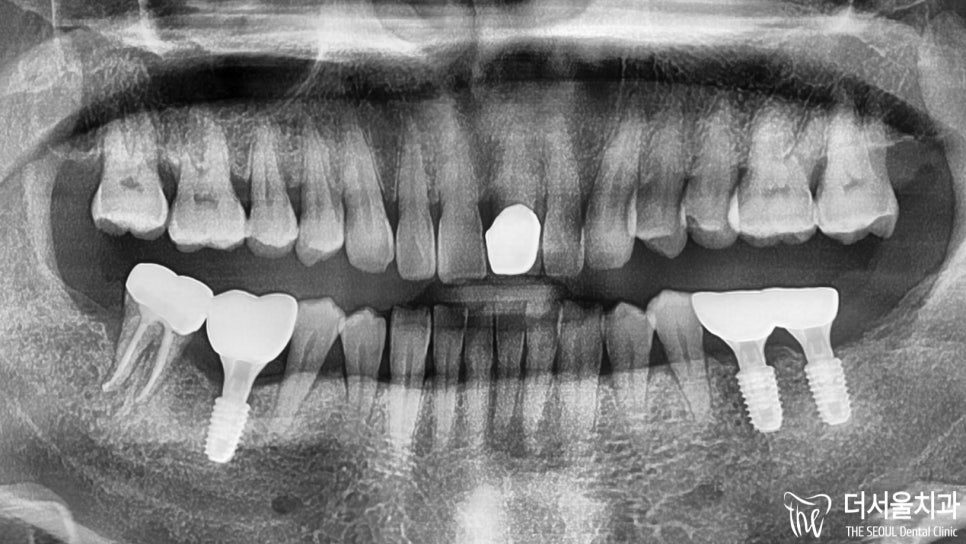
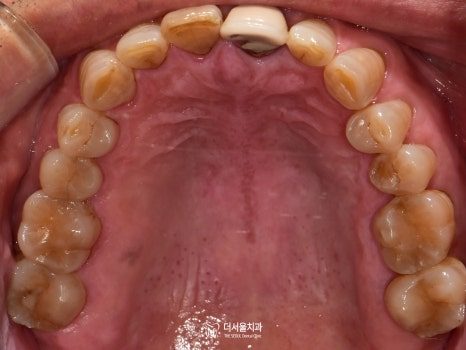
The examination confirmed a combination of problems: multiple missing teeth, decay, restorations that no longer fitted properly, and periodontal disease.
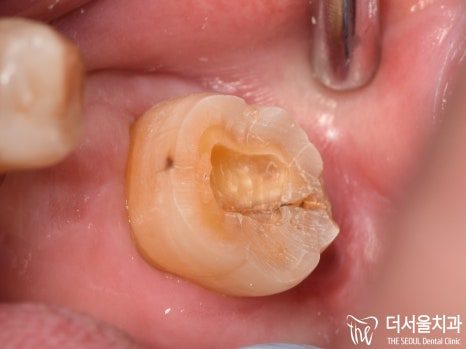
X-rays added the decisive detail. On the lower right, the remaining molar had decay severe enough that the lesion had reached the pulp. That tooth needed root canal treatment, not a filling.
The plan
- Sites where teeth were missing — implants
- Teeth with decay into the pulp — root canal treatment, then restoration
Why implants go first
Where circumstances allow, implants are placed first and everything else follows.
The reason is the healing period. A fixture needs a minimum of about two months to bond into the bone, and during that time nothing further can be done at that site. Rather than leave the patient waiting, that window is used for the other treatment — the fillings, the root canal work, the periodontal treatment.
Sequenced the other way round, the fillings would be completed first and then the implant healing period would still have to be waited out afterwards, adding months to the overall plan for no benefit. The same logic applies when orthodontic treatment and implants are both needed.
How was each implant position decided?
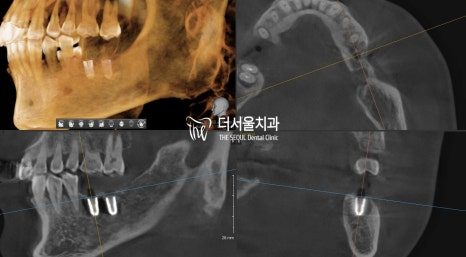
Three lower molar sites were restored with implants. For each, the relationship to the surrounding tissue and to the adjacent teeth was assessed individually, and an optimal path of placement was set for each site.
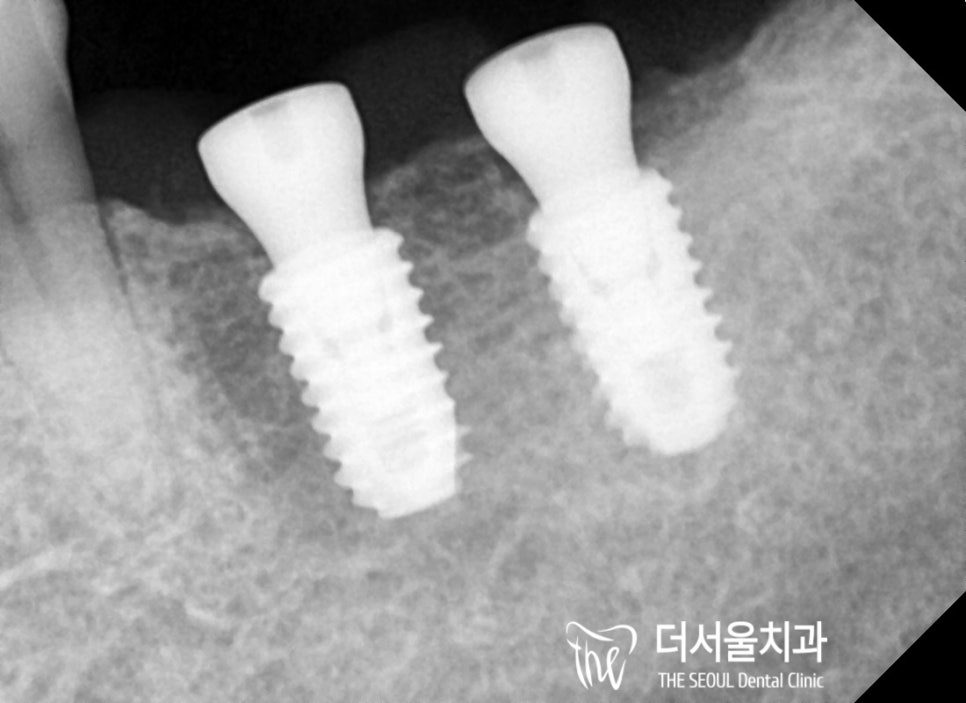
A surgical guide was produced from that plan and used to place the fixtures using a flapless technique — without cutting and lifting the gum. Post-operative checks confirmed the fixtures were in the planned positions, and that the junctions between abutments and fixtures were seated cleanly.
Flapless placement is only possible where the plan has been made accurately in advance. Without a guide, the gum has to be opened to see what you are doing.
Can root canal treatment be done while implants heal?
With the implants placed, attention moved to the decayed teeth. A small access opening was made to reach the pulp chamber, and through it the canals were cleaned and disinfected.
The canals were then sealed with filling material to their full length, and a core was built up to complete the foundation for a crown.
All of this happened while the fixtures were bonding to bone. By the time the implants were ready for their restorations, the rest of the mouth was ready too.
What difference does restoring several sites at once make?
All restorations were made in zirconia, for both the implant sites and the root-treated teeth. Shape and shade were matched to the natural teeth around them.
Restoring several sites at once has an effect beyond those sites: the remaining natural teeth are no longer carrying loads they were never meant to carry, and the arch works as a whole again.
Timeline
Treatment ran from March to mid-September 2022 — about six months for a plan combining implants at three sites, root canal treatment and restorations. Sequencing the implants first is precisely what kept it to six months rather than eight or nine.
Overseas patients should expect this kind of combined plan to need two trips. Tell us your travel dates at the first consultation and we will set out what can be completed on each.
Frequently asked questions
Should implants or fillings be done first?
Usually implants, where the situation allows it. The fixture needs about two months to bond to bone, and that waiting period is used for the fillings and root canal work. Doing it the other way round adds the healing time on at the end instead of overlapping it.
Can implants and orthodontic treatment be combined?
Yes, and the sequencing question is similar — but the answer depends on whether teeth need to move through or into the space where an implant would go. An implant does not move once placed, so anything that has to shift must be planned before it goes in.
What does “flapless” implant surgery mean?
The fixture is placed through a small opening in the gum rather than by cutting and lifting a flap of tissue. It generally means less bleeding and a faster recovery. It requires a guide made from CT and scan data, because you cannot see the bone directly during surgery.
How long does the whole treatment take if I need several things done?
For a combined plan like this one, around six months. Most of that is bonding and healing time rather than appointments. What varies is how well the stages can be overlapped, which is what the sequencing decision is about.
Is it too late if I have put off dental treatment for years?
Almost never too late, but the treatment needed will be more extensive than it would have been. This patient needed implants at three sites plus root canal work; earlier, it would have been fillings. It is worth being examined and finding out where you actually stand.
Read more: digital guided implants · root canal treatment · cavities and fillings