
This case covers three things patients ask about constantly and rarely find explained together: what a sinus lift is and when you need one, how long you wait after placement, and what conscious sedation costs in Korea.
What the X-ray showed
At the first visit we work through a medical questionnaire — existing conditions, current medication, insurance — alongside the examination, so that the patient’s chief complaint is understood in context rather than in isolation.
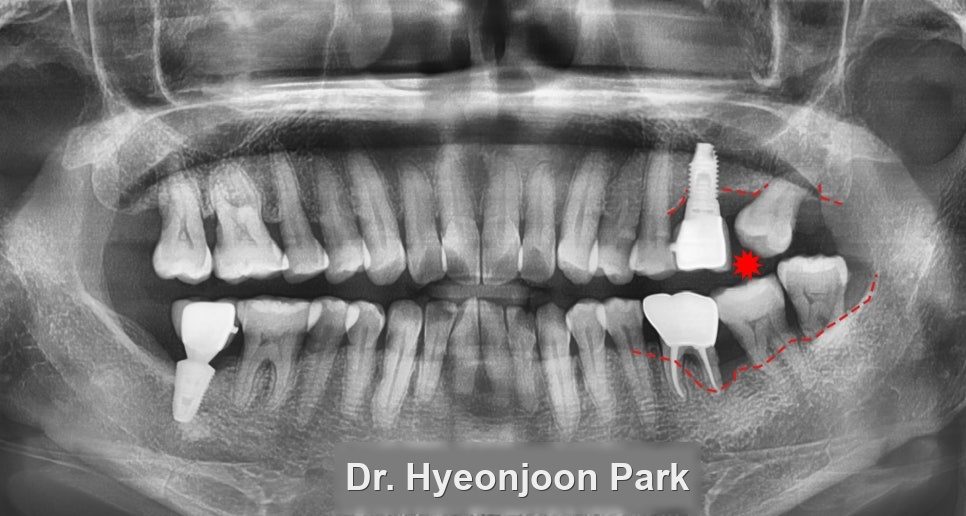
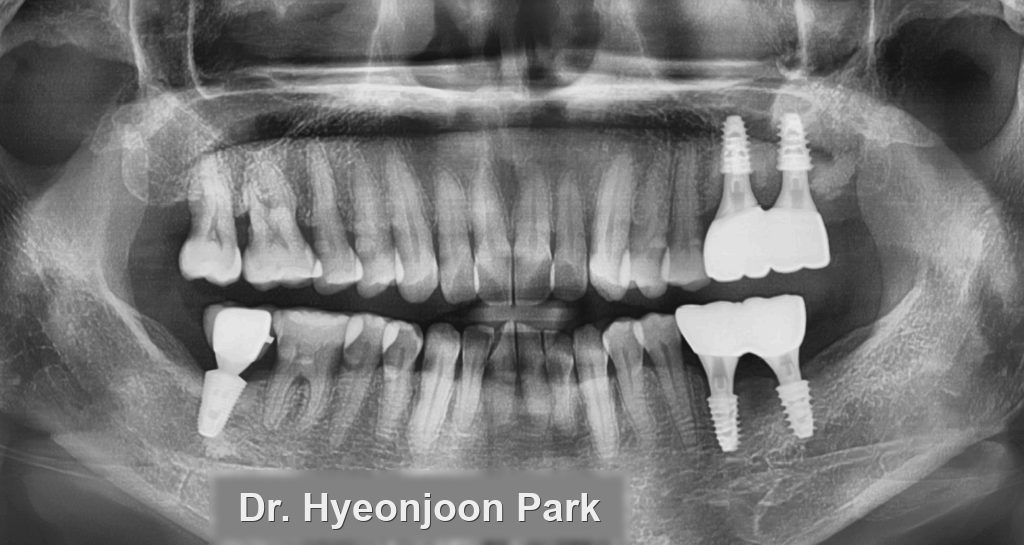
The panoramic X-ray pointed to problems in the upper and lower left posterior region:
- Around a previously placed implant fixture, bone had receded as far down as the root portion.
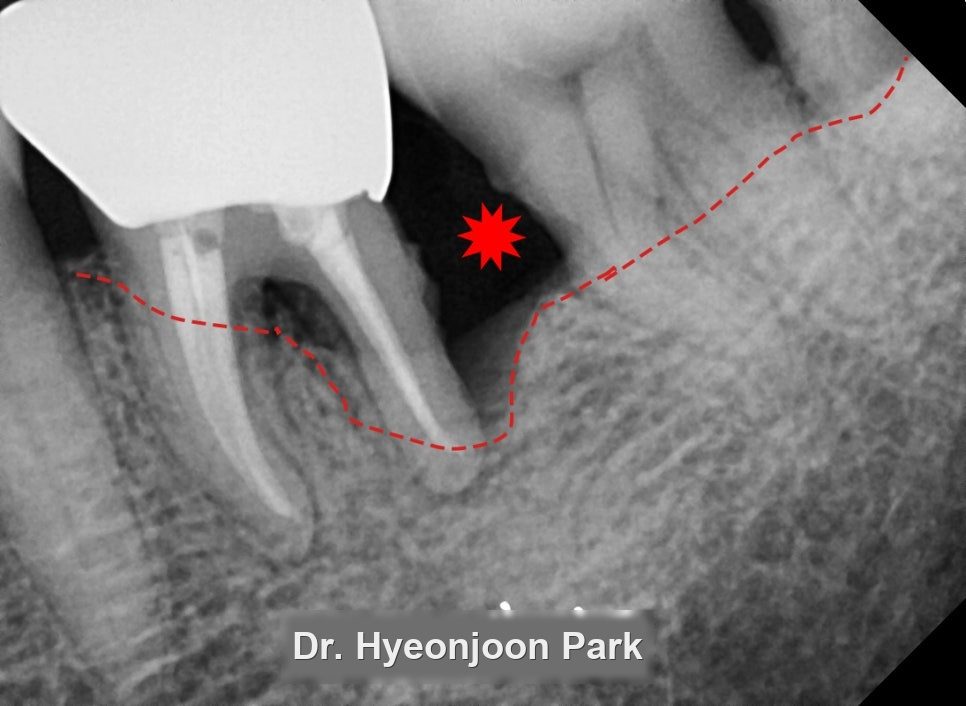
- A molar that had been root-treated and crowned years earlier had lost alveolar bone all the way to the root tip.
When bone drops like this, food packs into the space between the exposed roots. Periodontitis becomes considerably more likely, and bleeding while brushing often follows.
The plan
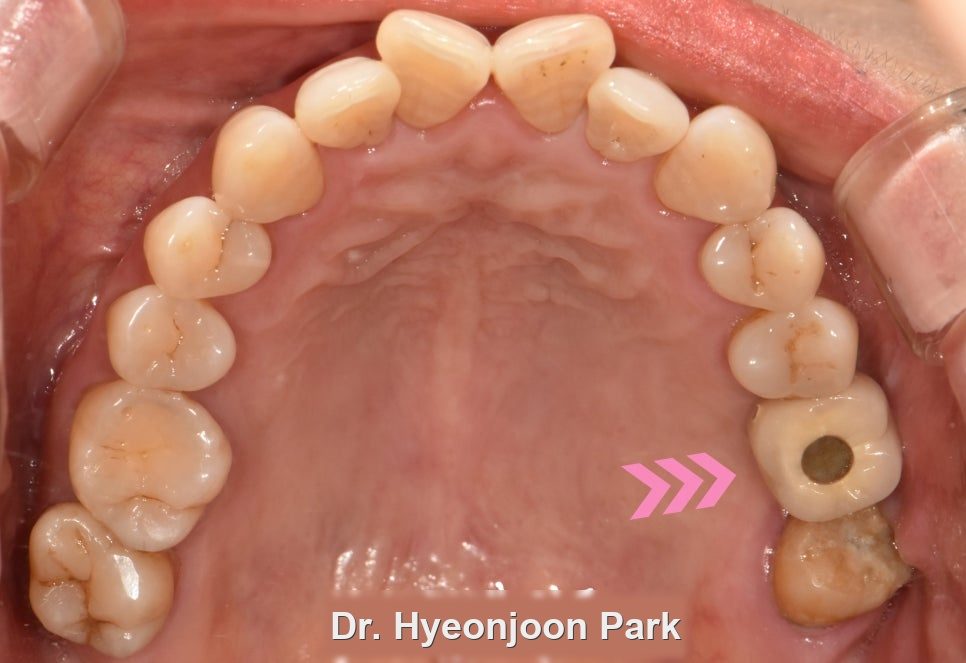
The previously placed implant was already infected and mobile, so it had to be removed and a new fixture placed — revision surgery rather than repair. The distance to the maxillary sinus was short, so a sinus lift with bone grafting would be needed as well.
The diagnosis and planning stage is where the outcome is decided. The method chosen at this point determines the result and the prognosis; everything afterwards is execution.
What is a sinus lift?
Everyone has an air cavity beside the nasal bone — the maxillary sinus. It filters and circulates air as you breathe through your nose.
It also sits directly above the upper molars, and that is where it becomes a dental question. Whether you need a sinus lift depends on one measurement: is there enough bone height for the fixture?
If a 10 mm fixture is required for adequate stability, but the distance from the alveolar bone to the sinus membrane is less than that, the membrane is lifted to create the space, and bone graft material fills it. This is one of the checks that must be made before any surgical work in the upper jaw.
How the surgery went
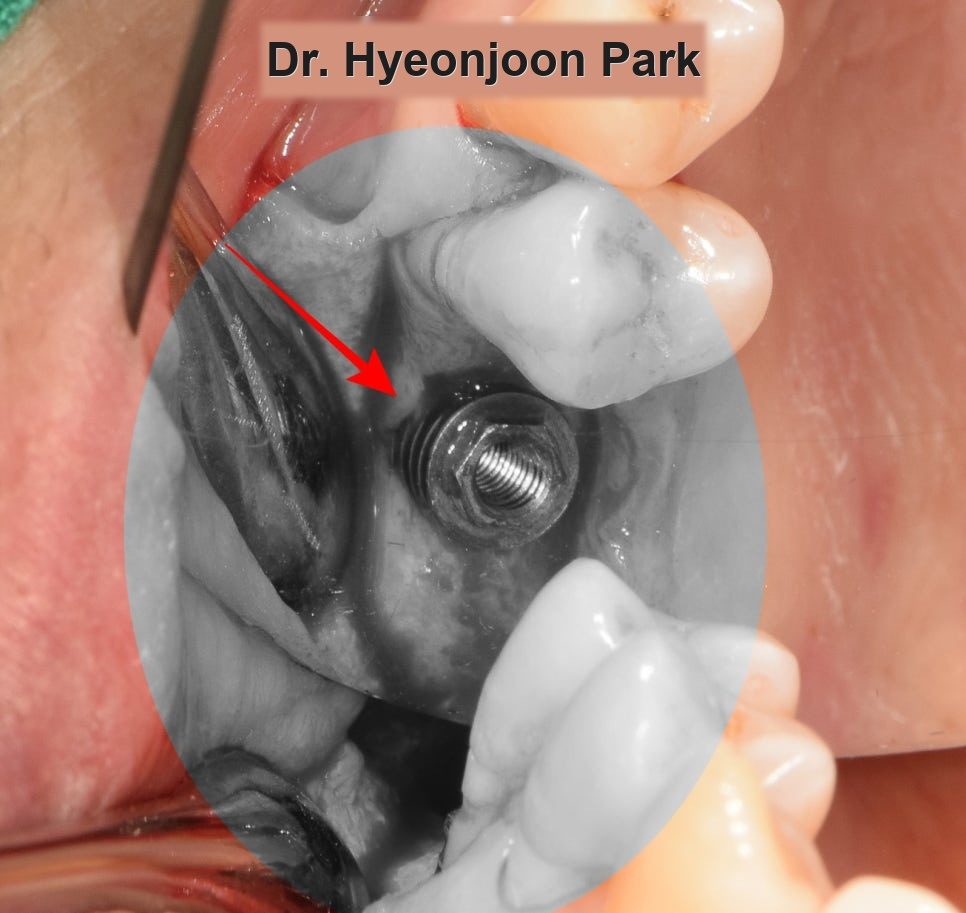
Planning was built on CT data. Around the existing upper fixture, infection had progressed far enough that the threads were exposed. That fixture was removed, the site thoroughly curetted, and a new fixture placed.
Removing an existing implant and re-placing into the same site is not the easy route. But an infected fixture will loosen further and eventually fail, so after a full discussion the patient consented to the revision. The problem teeth were extracted — including the wisdom teeth — and the new fixtures placed carefully clear of the inferior alveolar nerve.
How long do you wait after placement?
The honest answer is that it varies. The largest single factor is whether a sinus lift was performed; after that, the thickness, width and density of the jawbone.
As a working range, three to six months covers most cases. Where stability develops sooner, the next stage can be brought forward. This case ran from June to December 2024, reflecting the revision and grafting involved.
Conscious sedation
Fear of dental treatment is not unusual at any age. Where a patient has significant trauma or a phobia around clinics, conscious sedation is an option — broadly similar to sedation for a screening endoscopy.
A line is placed intravenously and midazolam is administered, bringing on a sedated state within roughly one to five minutes. Because the drug has an amnesic effect, memory of the procedure is hazy. Local anaesthetic is then given, so discomfort and fear during treatment are reduced.
It was used here because the upper and lower left were treated together, allowing multiple fixtures to be placed in a single day.
What does conscious sedation cost?
Sedation is billed as a non-covered management item, so it differs between clinics. Across Korea the range appears to sit at roughly KRW 50,000–300,000 per session. The spread reflects the area treated and the length of the procedure, so confirm the figure with the clinic you intend to visit.
Because repeating sedation at every appointment is a burden, the usual principle is to complete as much treatment as possible in one sedated session. Whether that suits you depends on your available time, your level of anxiety and the treatments involved.
Frequently asked questions
How do I know if I need a sinus lift?
It comes down to bone height between the alveolar ridge and the sinus membrane, measured from a CT scan. If that height is less than the length of fixture needed for stability, the sinus is lifted and grafted to create the space. It is not a preference — it is a measurement.
How long after implant placement until the final tooth?
Generally three to six months. A sinus lift lengthens it; dense, thick bone shortens it. Stability is measured rather than assumed, so if integration is ahead of schedule the next stage can start earlier.
What does conscious sedation cost in Korea?
It is a non-covered item, so it varies by clinic. Nationally the range is around KRW 50,000–300,000 per session, depending on the extent of treatment and how long it takes. Ask the specific clinic for their figure.
Is sedation the same as general anaesthesia?
No. Conscious sedation keeps you breathing on your own and responsive, similar to sedation used for endoscopy. Local anaesthetic is still given for the treatment itself; the sedation addresses anxiety and awareness, not pain.
Can wisdom teeth be removed at the same time as implant surgery?
They were in this case. Combining extractions with implant placement in one sedated session reduces the number of separate appointments, which matters particularly if you are travelling for treatment.
Read more: dental implants overview · bone grafting and sinus lift · implant revision