
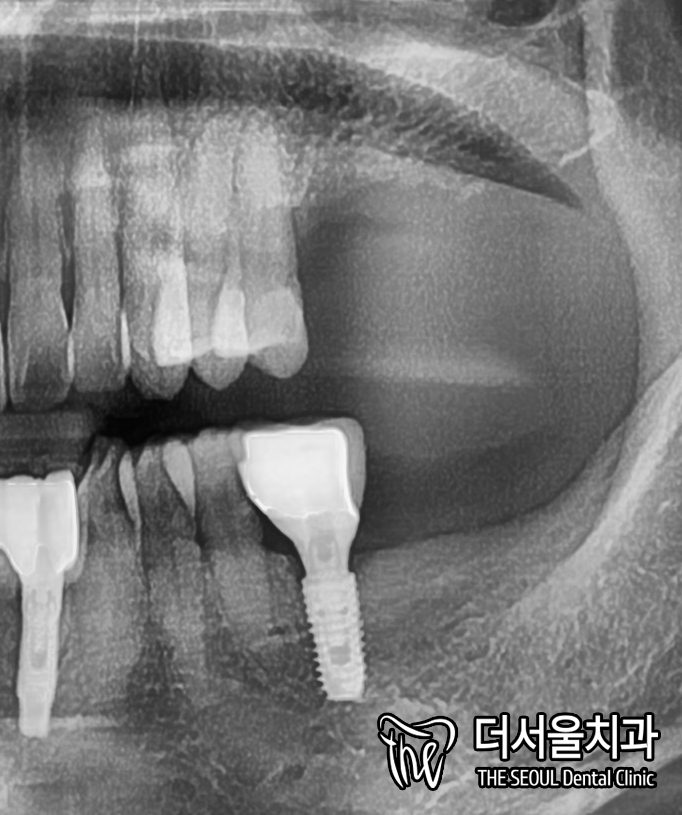
A tooth can look completely normal and still be failing. This one had nothing visible wrong with it — the problem was that almost none of the bone holding it was left.
What did the patient notice first?
The complaint was pain and mobility in a left molar.
On visual examination the tooth looked unremarkable. There was no obvious decay, no visible fracture, nothing that stood out. But it moved when tested, and the patient was in pain.
That combination — a normal-looking tooth that moves — points to the supporting bone rather than the tooth itself, so an X-ray was taken to establish the cause.
What did the X-ray show?
Substantial bone loss around the tooth.
Comparing the bone height against the neighbouring teeth made the extent clear: bone remained only at the very tip of the root. Everything above it had been lost.
At that point the question of saving the tooth answers itself. There was nothing left to anchor it, and no treatment directed at the tooth restores bone that is already gone. Extraction and an implant were the realistic option, and doing it promptly mattered — continued inflammation costs more of the bone the implant will eventually need.
What happens after the tooth is extracted?
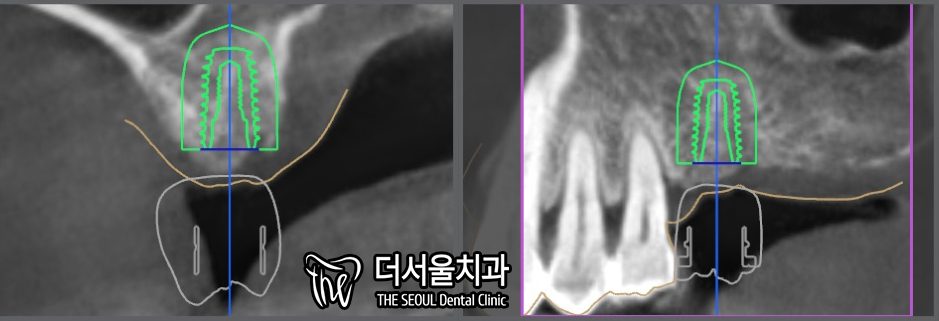
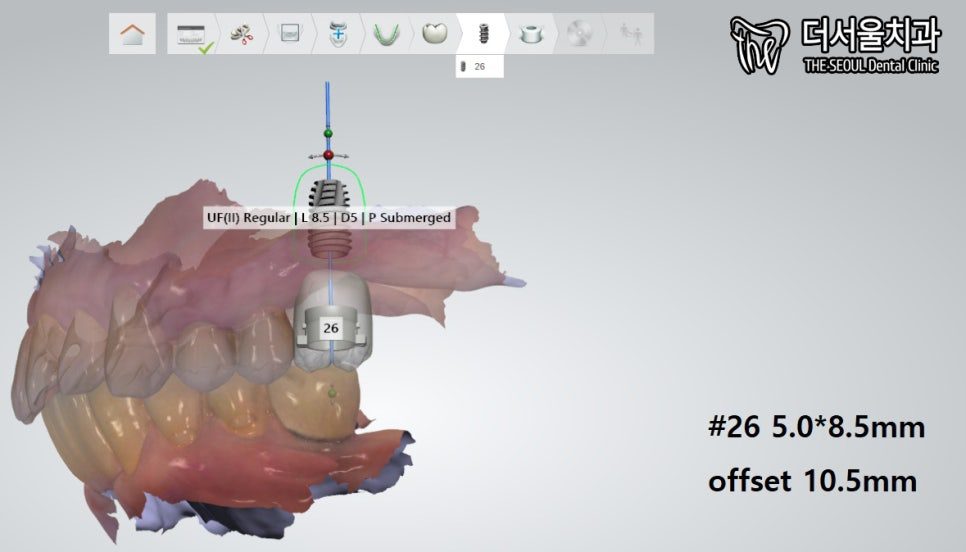
The molar was extracted cleanly, and planning proceeded on a digital program.
What that stage establishes, before any drilling:
- How deep the fixture can be seated in the bone that is actually there
- Whether it will achieve stable contact with bone along its length
- What anatomy has to be avoided in that region
Working through the placement in simulation is how the difficult decisions get made where they can be reviewed and revised, rather than during surgery with limited visibility.
What was the final crown like?
A zirconia crown was fitted, matched in form and shade to the natural teeth around it.
The bite against the opposing lower teeth was checked and adjusted so that chewing force is shared across the arch rather than concentrated on the new restoration. Post-operative imaging confirmed the fixture was well positioned in the bone.
From that point the priority is careful use while integration completes.
How long does an implant take after extraction?
Treatment ran from mid-July to mid-December 2023 — about five months from extraction to the final crown, most of it the waiting period for the fixture to bond into bone.
Why this one is worth reading
Nothing about this tooth looked wrong. If the patient had waited for a visible sign — a dark spot, a broken edge — there would have been considerably less bone left by the time they came in, and the implant would have needed grafting to make the site usable.
Bone loss is silent until the tooth starts to move, and by then it is well advanced. A check-up every six months, or annually if your home care is consistently good, is what finds it while it is still a small problem.
Frequently asked questions
Why is my tooth loose if it looks healthy?
Usually because the bone supporting it has been lost, most often to periodontal inflammation. The tooth itself can be entirely intact. An X-ray shows the bone level, which is what a visual examination cannot.
Can a tooth with severe bone loss be saved?
Where bone remains only at the root tip, generally no — there is nothing left to hold it, and treating the tooth does not regrow bone. Where loss is partial, periodontal treatment can sometimes stabilise it. The X-ray is what distinguishes the two.
Why extract promptly rather than wait?
Because ongoing inflammation continues to destroy the bone around the site — the same bone the implant will need. Waiting often converts a straightforward placement into one requiring a bone graft.
Why plan an implant digitally?
To establish the depth, angle and fixture size against the bone that is actually present, before surgery. Where bone has been lost, the margin for error is smaller, and those decisions are better made on screen than in the mouth.
How often should I have a check-up?
Every six months as a default, or annually if your home care is consistently good. Bone loss causes no symptoms until the tooth moves, so the check-up is doing the detecting rather than you.
Read more: digital guided implants · dental implants overview · bone grafting and sinus lift