
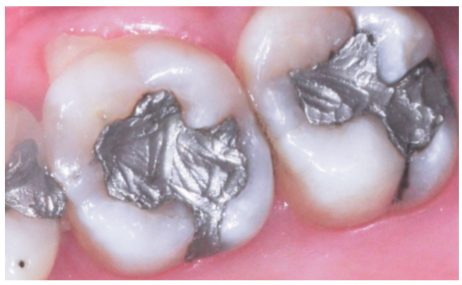
An amalgam filling can sit quietly for years and then crack. When it does, decay spreads underneath it where nothing can be seen — and by the time it hurts, it is usually into the nerve.
Two terms worth knowing first
Amalgam
The silver-coloured filling material used to restore cavities for decades. You have probably seen one. It was widely used because it was inexpensive and strong.
It is now largely out of use, because it releases small amounts of mercury — a concern for both health and the environment.
Its typical service life is around five years. Beyond that the likelihood of fracture or defects rises, and once either occurs, bacteria and debris penetrate underneath.
Secondary caries
Decay appearing again at a site that has already been treated. It is what an aged, cracked filling tends to produce, and the filling itself conceals it.
What does a cracked old filling feel like?
The complaint was severe pain in an upper molar, described as a throbbing, sharp sensation — like being struck on the tooth.
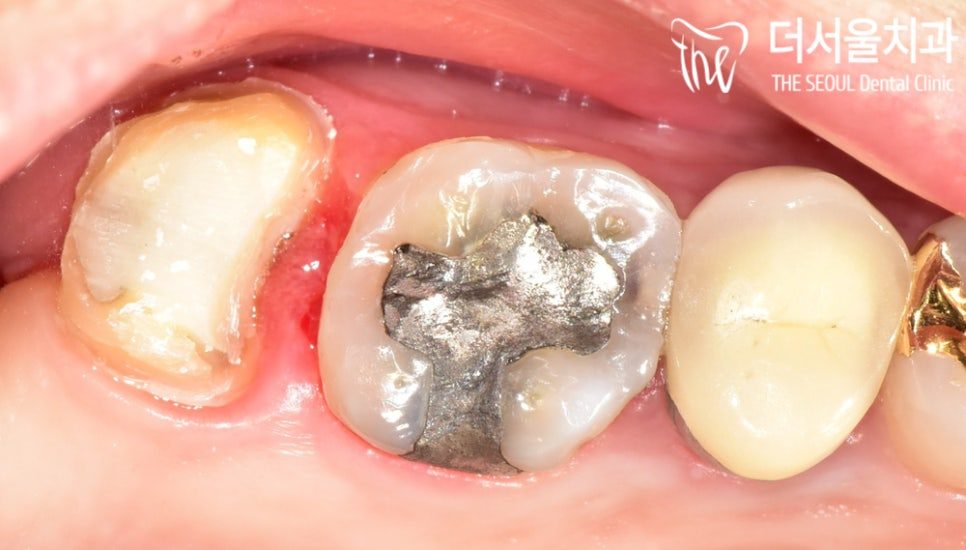
Visual examination found what appeared to be an amalgam restoration at the painful site, and part of it had fractured.
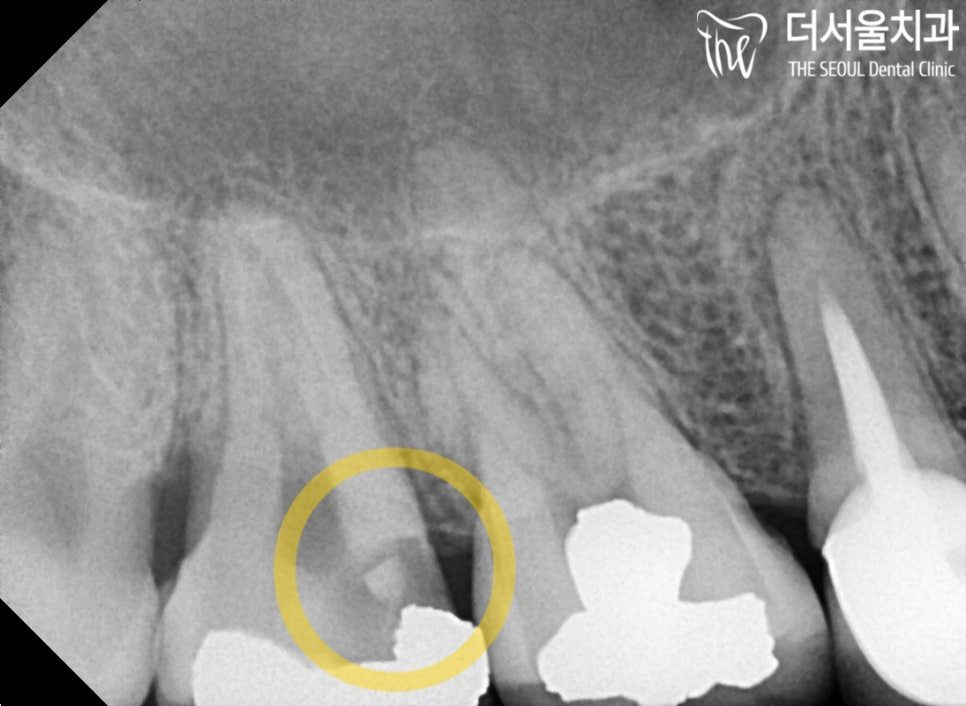
Severe pain plus an old restoration is a combination that points to secondary decay before any imaging is done. The imaging then confirmed it: a lesion had spread beneath the restoration, and the fracture had let it progress further than it otherwise would have.
The restoration had been in place for close to seven years.
The plan
The situation was worse than the visual examination suggested. The lesion had reached the pulp — the nerve tissue inside the tooth.
Once infection is in the pulp, a filling is no longer an option. The infected pulp has to be removed, the space cleaned, and new filling material placed. That is root canal treatment.
The relevant point about timing: had this progressed further, the tooth would have needed extraction and an implant. It had not reached that stage, which is why treatment was carried out promptly rather than scheduled at leisure.
What happens during root canal treatment?
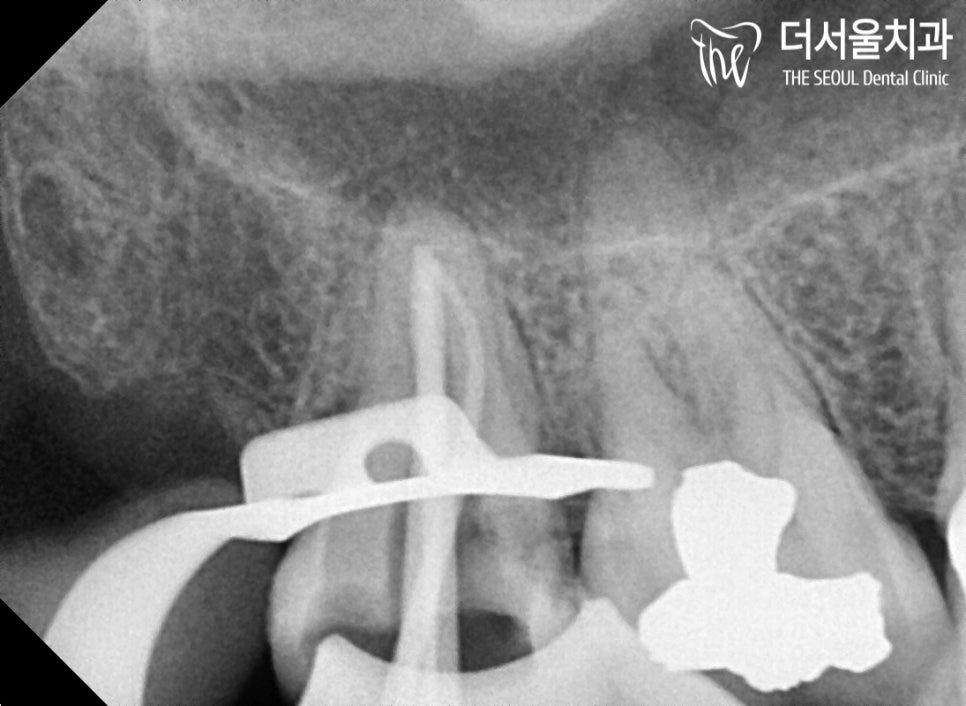
A clamp and rubber dam were placed first to establish a dry, isolated field. This keeps saliva and its bacteria away from the opened tooth; contamination during treatment is a common reason root canal work fails later.
The canals were then cleaned, disinfected and filled.
The decay had progressed deeper than expected, so the interior was re-examined several times to confirm no infected tissue remained. That repetition is where the outcome is largely decided.
Why is the crown designed digitally?
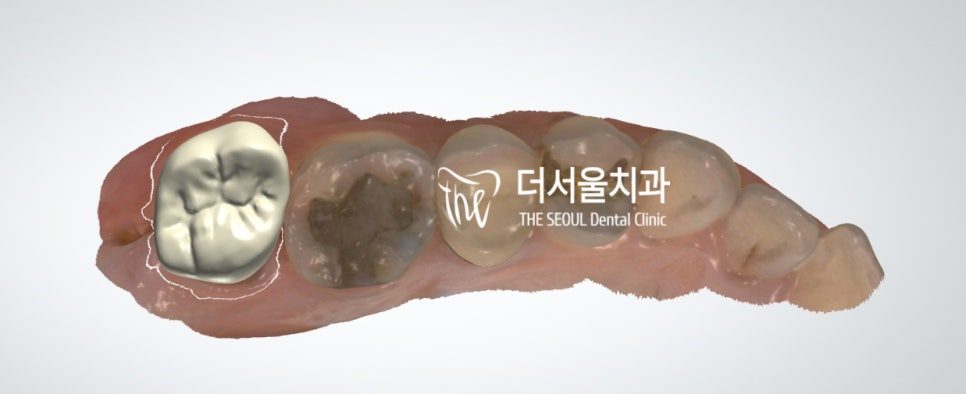
Once the infection was confirmed cleared, the tooth was prepared for its final restoration.
The restoration was designed digitally — the same approach used for implant restorations. Scanning and designing on the data allows the bite, size and width to be determined more precisely than by hand, which matters because a crown left slightly high concentrates force on itself and on the tooth opposite.
The zirconia crown was then made from that data and fitted.
Did the pain go away?
The crown seated correctly and the bite was adjusted. The pain that brought the patient in resolved once the infected pulp was removed and the tooth was sealed and protected.
A second aged restoration on an adjacent tooth was scheduled for assessment at a subsequent appointment.
How long did the treatment take?
Treatment ran from early March to early April 2023 — about four weeks across several appointments for root canal treatment and a crown.
If you have old amalgam fillings
Replacing an aged restoration before it fails is straightforward. Dealing with what happens after it fails is not — this case went from a filling to root canal treatment and a crown, and it was one stage away from extraction.
Ageing restorations are worth assessing whether or not anything hurts, because the decay underneath them is invisible and usually painless until it reaches the nerve. If you have fillings placed many years ago and have not had them looked at, that is the thing to book.
Frequently asked questions
Should I replace my old amalgam fillings?
They are worth assessing rather than replacing automatically. Their typical service life is around five years, after which fracture and secondary decay become more likely. An examination and X-ray establish whether yours are still sound.
What is secondary decay?
Decay that develops again at a site already treated — typically underneath an old filling or crown that has cracked or lost its seal. The restoration hides it, which is why it is often extensive by the time it is found.
Why does an old filling cause pain years later?
Because it has fractured or its seal has failed, letting bacteria in underneath. Decay then progresses towards the nerve out of sight. Pain usually arrives when it reaches the pulp, which is late.
Is amalgam dangerous?
It releases small amounts of mercury, which is why it has largely fallen out of use for health and environmental reasons. That is a reason not to place new ones rather than a reason to remove sound existing ones urgently — discuss your own situation at an examination.
Can a tooth with decay into the nerve still be saved?
Often yes, with root canal treatment and a crown — as here. What decides it is how much sound tooth structure remains and whether infection has spread into the bone around the root.
Read more: cavities and fillings · root canal treatment · crowns and veneers