
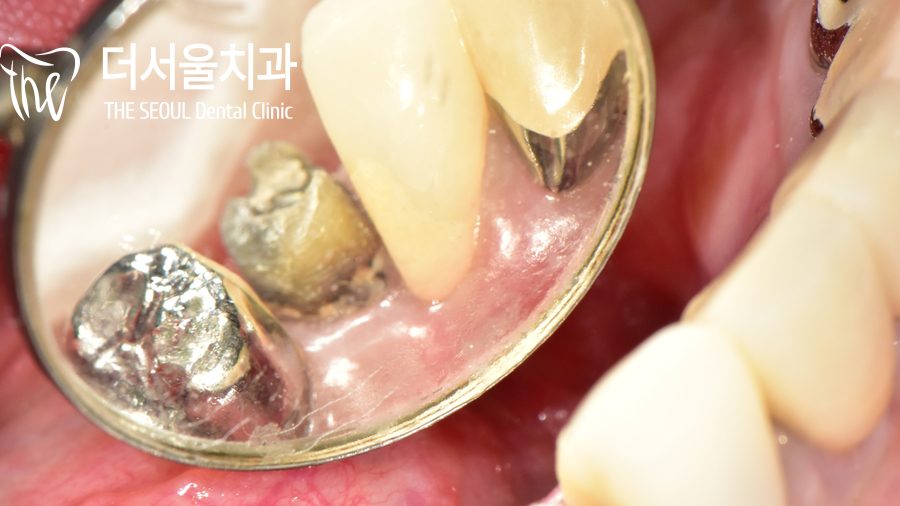
A crown does not last forever, and the way an old one fails is rarely dramatic. Here it announced itself as an ache and a smell — and the reason was a gap at the edge, half a millimetre wide.
What the patient came in with
Two complaints, given together: an upper tooth was aching, and there was a persistent bad smell coming from it.
The intraoral photograph showed an old gold crown, placed at another clinic years earlier, in a position visible when the patient spoke. Appearance was part of why it had been noticed at all. It was not the problem.
Where does an old crown usually fail?
The line where a crown meets the tooth underneath is called the margin. On a well-fitting crown it is a seal. On this one it had lifted, leaving a gap.
That gap is the whole story. Food, saliva and bacteria pass through it and sit against the tooth surface underneath, where no toothbrush reaches and where the crown hides the result. Decay that forms in that position is called secondary caries — new decay under existing restorative work.
Two things follow from it, and the patient had both. The decay produces the odour, because the debris is trapped rather than cleared. And once it reaches far enough in, it reaches the nerve, which is the ache.
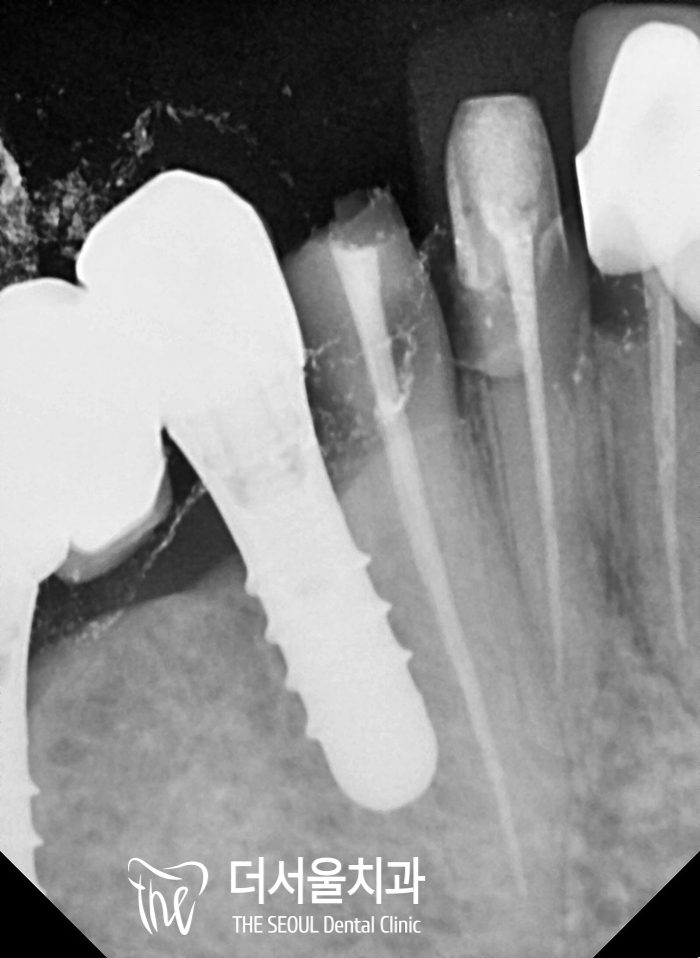
Why must the old crown come off first?
Nothing about the extent of the decay could be settled while the crown was in place. It was removed, and the inside was as expected: the decay had progressed into the root canal system.
This is the awkward part of crown problems for anyone weighing up treatment abroad. The examination narrows down what is likely, but the definitive assessment happens after the old crown comes off, and the treatment plan can change at that point. It is better to hear that at the consultation than at the chair.
What was explained, and what was decided
The findings put the options in a short list. The ache came from decay beneath the gold crown; the crown had to be replaced; and because the decay had reached the nerve, the nerve had to be treated at the same time.
Leaving it was not a neutral option. Untreated, the aching recurs, inflammation follows, and the tooth eventually loosens. Cleaning out the infected tissue and sealing the tooth under a new crown resolves the odour along with the cause of it.
What did the treatment involve?
With the crown off, the decayed tissue was cleared out. The extent of it meant root canal treatment was carried out at the same visit — cleaning the canal system inside the root rather than only the surface of the tooth.
The canals were then filled, the tooth was built up with restorative material, and the outer shape was prepared to receive a crown. That shaping step is called the preparation, and it decides how well the new crown seals — which is to say, it decides whether the same failure happens again.
A temporary crown was fitted so the tooth could be used normally while the permanent one was made.
Seven days later
At the second visit the tooth was checked for any sign of trouble during the week on the temporary crown; there was none.
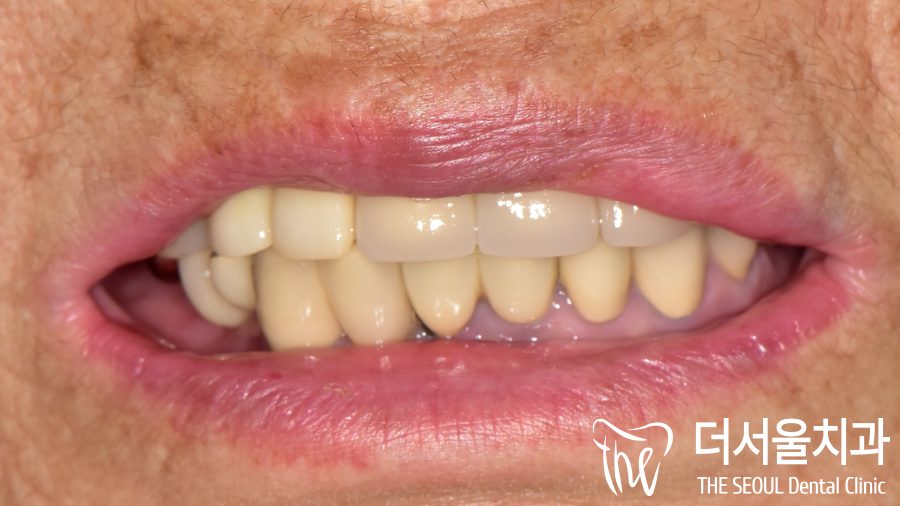
Before fitting, another X-ray was taken to confirm the root-treated area was settled. The final zirconia crown was then fitted.
Zirconia was chosen over gold here for the obvious reason — the tooth is visible — and because it is hard-wearing enough for the job. Gold is not a worse material; it is a less discreet one in this position.
How long did the whole treatment take?
The record runs from 23 July 2019 to 4 September 2019, the root canal treatment accounting for most of that interval.
Why this one is worth reading twice
Every restorative material has its own indications and its own maintenance. What they share is that none of them is permanent.
A crown fitted well can serve for many years, and the failure that ends it usually starts at the margin, where it cannot be seen and does not hurt until it has reached the nerve. A check every three to six months is what finds it in the window where a new crown is the whole treatment, rather than a new crown plus root canal treatment.
Frequently asked questions
Why does my crown smell?
Most often because the margin — the seal between crown and tooth — has opened, letting debris and bacteria collect underneath where brushing cannot reach. The odour is a symptom of decay in a place you cannot see, and it is worth having looked at rather than masked.
How long does a crown last?
There is no single number, and any clinic quoting one is guessing. It depends on the material, the fit, the bite forces on that tooth and how well the margin is maintained. What is reliable is that crowns are checked, not fitted and forgotten.
Can a crown be replaced without root canal treatment?
Yes, where the decay underneath has not reached the nerve. Whether it has can usually only be confirmed once the old crown is off, so a plan that covers both possibilities is the honest one to start from.
Should I replace a gold crown with zirconia?
Not on material grounds alone — gold performs well, particularly on back teeth. The usual reasons to change are appearance where the tooth shows, or a failure at the margin that requires replacement anyway. If your gold crown is sound and out of sight, there may be nothing to fix.
How many visits does a crown replacement take?
Two, if no root canal treatment is needed — preparation and temporary crown, then fitting about a week later. With root canal treatment involved it takes longer, since the canals must be cleaned and confirmed settled before the final crown goes on.
Read more: crowns and veneers · root canal treatment · cavities and fillings