
Root canal treatment takes several appointments, and the pain usually stops after the first one. That combination is why people stop coming — and it is the reason this case needed the whole thing done again, with the tooth behind it lost entirely.
What happens if a root canal is left unfinished?
Root canal treatment removes infected pulp from inside the tooth, disinfects the space and seals it. Each of those three steps matters, and stopping after the first two leaves the tooth in a worse position than before treatment began, not a better one.
Bacteria remaining inside continue to multiply, and can cause inflammation at the root tip. From there the surrounding bone can be destroyed and, uncommonly but seriously, the infection can reach the jawbone.
The misleading part is the timeline. Pain often decreases early on, which feels like improvement. Meanwhile the remaining infection is progressing quietly, and the pain returns later — usually worse, and usually with less tooth left to work with.
What the examination found
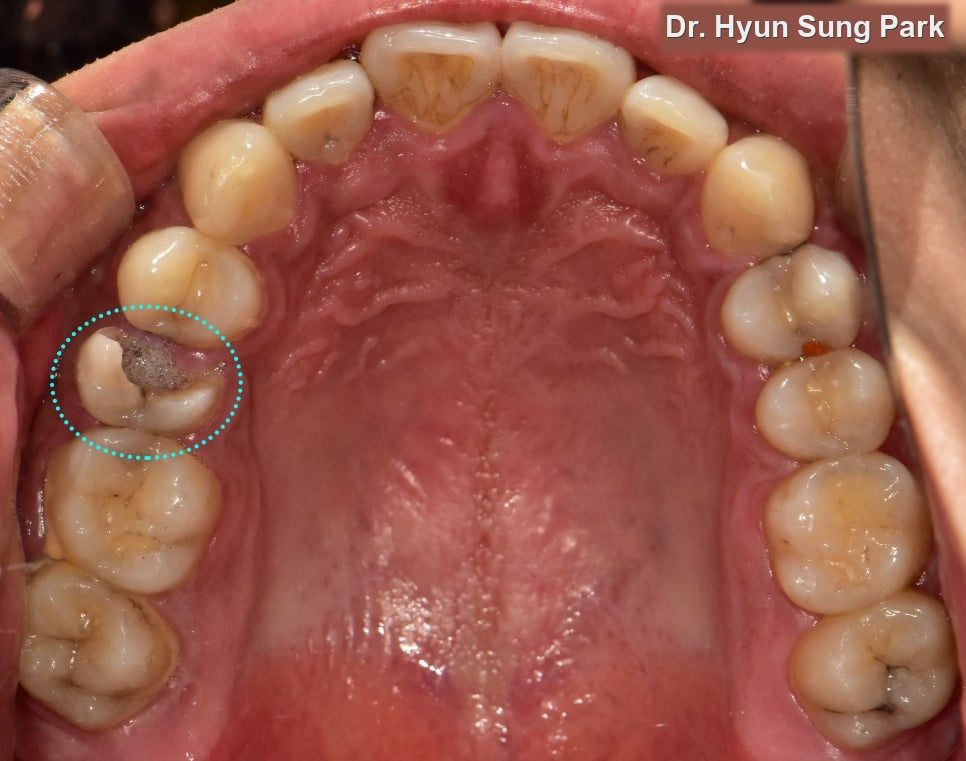
The patient came in with pain in an upper premolar that had been getting steadily worse.
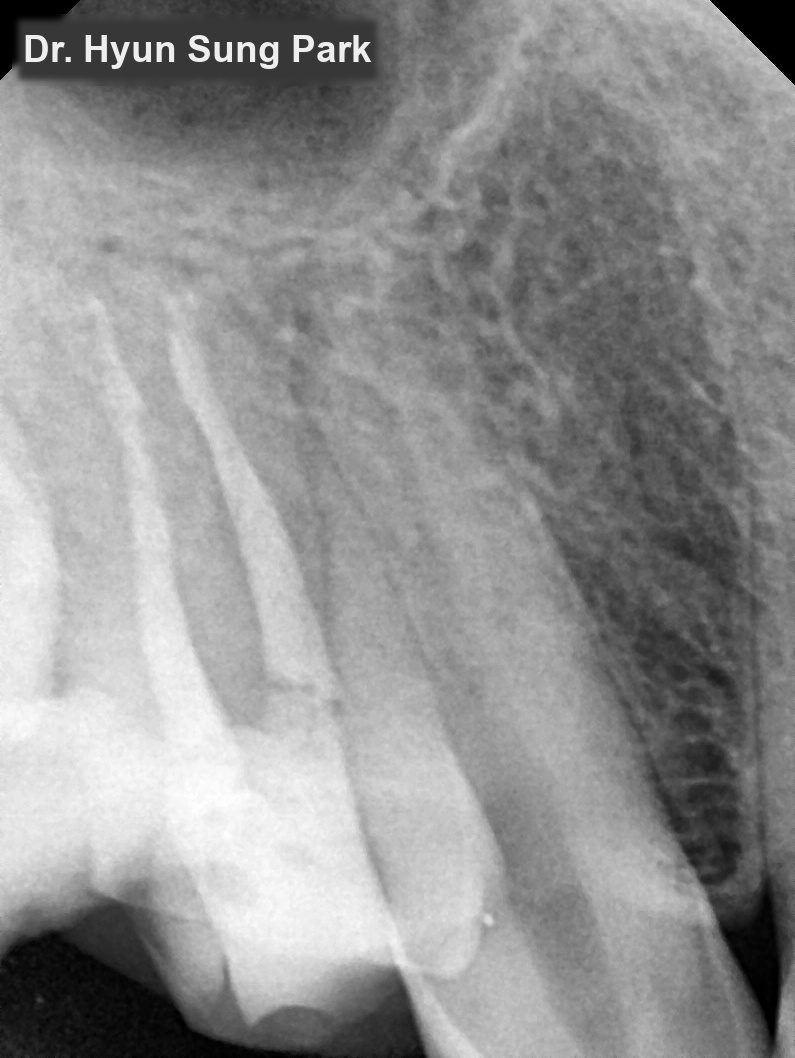
The examination found a badly broken-down tooth on the left. Looking into the fracture, an earlier temporary filling material was still sitting inside — Cavit, a temporary restorative.
Why a temporary filling is only temporary
Temporary filling material is designed to do a job for a short period. Over time it wears down, dissolves and disappears. How fast depends on diet and on how the tooth is used, but left for months the seal fails, and once it does, saliva and food debris contaminate the dentine underneath.
This is what happens when treatment stops partway. The tooth is open, incompletely sealed, and the inside becomes reinfected — which is exactly the situation the treatment was meant to resolve.
Retreatment of the premolar
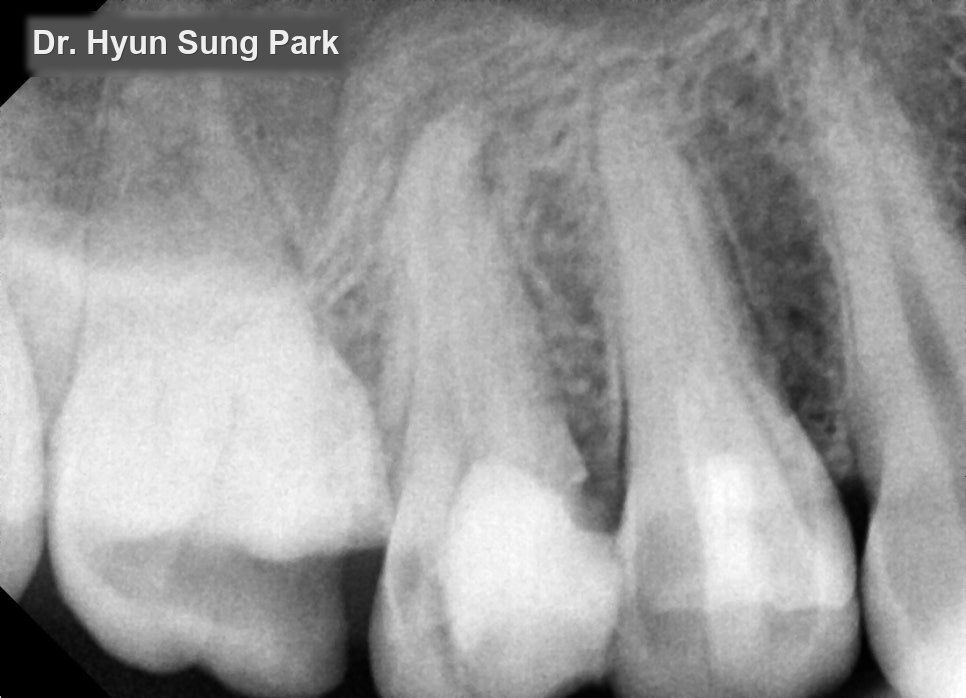
The tooth was retreated rather than extracted. The sequence was:
- The old temporary filling material was completely removed from inside the premolar
- The infected area was disinfected, over several appointments, until the inside was clean
- All the root canals were located and treated
Why finding every canal matters
The more canals a tooth has, the longer this stage takes, and it is tempting to treat the obvious ones and finish. The reason for persisting is that an untreated canal left inside a sealed tooth causes no symptoms at first, then later leads to bone loss at the root tip. Sensitivity to hot and cold, or pain on biting, can return months afterwards.
A canal missed at this stage is not detected until it has already caused damage. That is why it is worth the extra appointment time.
Why could the molar behind it not be saved?
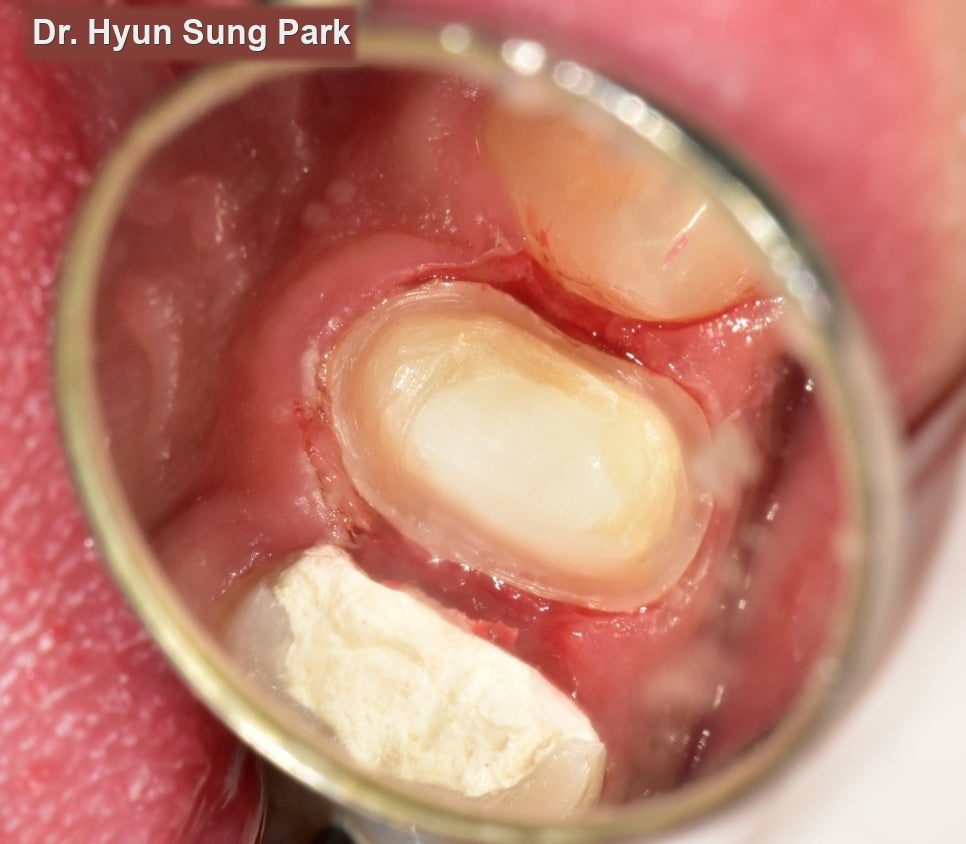
The molar further back had passed the point where treatment offered a reasonable outlook. Too much time had elapsed, and retreating it would not have produced a lasting result.
That tooth was planned for extraction and replacement with an implant. It is the clearest illustration of what the delay costs: the same neglect produced a retreatable tooth in one position and an unsalvageable one in the other. The difference between them was how far each had progressed before anyone intervened.
What is a core, and why is it built up first?
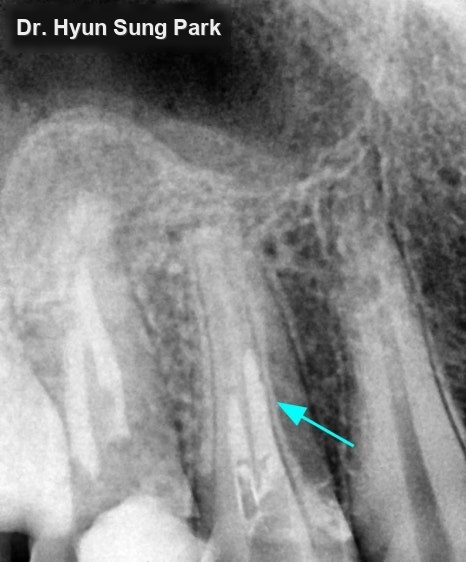
After the root canal work on the premolar, a core was built up to give a crown something solid to sit on. Some discomfort for a day or two afterwards, as the anaesthetic wears off, is normal and settles.
An impression was taken for the crown, and the finished zirconia crown was fitted and the bite adjusted. It was made to resemble the natural teeth in form and shade.
The molar awaiting extraction was restored with Cavit in the meantime, to limit further contamination before its surgery.
If you have to interrupt treatment
Sometimes it genuinely cannot be helped — travel, work, or a change in circumstances. What matters is telling your dentist in advance rather than simply not returning.
Knowing that a gap is coming, we can place a more durable interim seal and take steps to limit contamination during the break. That is a very different situation from a temporary filling left indefinitely by accident.
If treatment was interrupted some time ago — particularly if the tooth was drilled and left — get it seen promptly rather than waiting for symptoms.
How long does root canal retreatment take?
Retreatment of the premolar ran from 7 to 24 January 2025 — under three weeks across several appointments, which is typical for root canal retreatment followed by a crown. The implant for the extracted molar was planned as a separate course of treatment afterwards.
Frequently asked questions
The pain stopped after the first appointment. Do I still need to finish?
Yes. Pain stopping means the inflamed pulp has been removed; it does not mean the tooth is sealed. An unsealed tooth becomes reinfected, and the pain returns later with less tooth remaining to save.
How long can a temporary filling stay in?
Weeks, not months. It wears and dissolves, and once the seal fails the inside of the tooth is contaminated again. If yours has been in for months, have it checked rather than waiting to see whether it hurts.
Can a root canal be redone?
Often yes. The old filling material is removed, the canals are re-cleaned and disinfected, and the tooth is resealed. Whether it is worth attempting depends on how much sound tooth structure remains and on the state of the bone around the root.
Why does a root-treated tooth need a crown?
A tooth that has been opened up and had its pulp removed is more brittle and has less structure left. A crown wraps and protects it. Without one, the risk is a fracture that ends with extraction after all the treatment has been done.
I am travelling and cannot finish the course. What should I do?
Tell us before you go. We can place a more durable interim restoration and plan the remaining appointments around your return. The problem is not the interruption itself — it is an interruption nobody planned for.
Read more: root canal treatment · crowns and veneers · cavities and fillings