
The Orthodontic Treatment Process & Why Precise Diagnosis Matters
Before you construct a building, what comes first? You examine the ground — how firm it is, how level it is, and how large a structure the site can support. Only once all of that is assessed can a blueprint be drawn. Sometimes the assessment itself reveals that the plan will be difficult, or that there are limits.
Orthodontic treatment is exactly the same. Today’s topic is one part of that “process” — and precise diagnosis is extremely important. I would say diagnosis accounts for about 99% of the entire orthodontic process. If I had to sum it up in a single line: “When the diagnosis is different, the result is different, too.”
I was once a patient who received treatment myself. In the past, when posting other patients’ clinical cases, I always applied a mosaic. This time, I’ll show everything as it is, without masking.
1. Checking the Tooth Condition
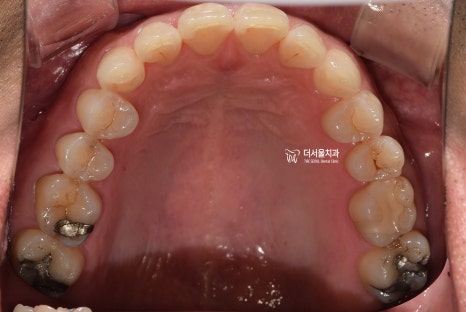
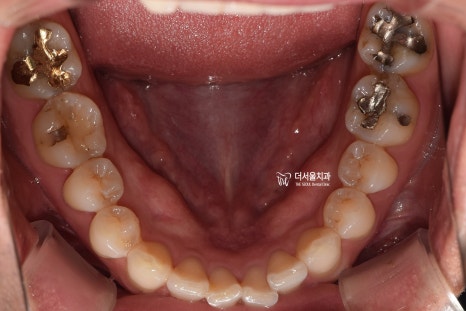
First, I check the state of the patient’s dentition from several directions — frontal, lateral, and occlusal. Are any teeth crooked? Is anything in crossbite? I also look carefully for cavities and inflammation, wisdom teeth that could interfere with tooth movement, and any missing teeth.
2. Why are X-rays and facial photographs needed?
An X-ray reveals the shape and form of the bone. Looking at the frontal view, I can see that I have some facial asymmetry.
A lateral X-ray is taken in the same way. It shows the degree of lip protrusion or a recessed chin, and by using the esthetic line (Ricketts line) — connecting the tip of the nose to the tip of the chin — it tells me which direction the patient should be guided toward.
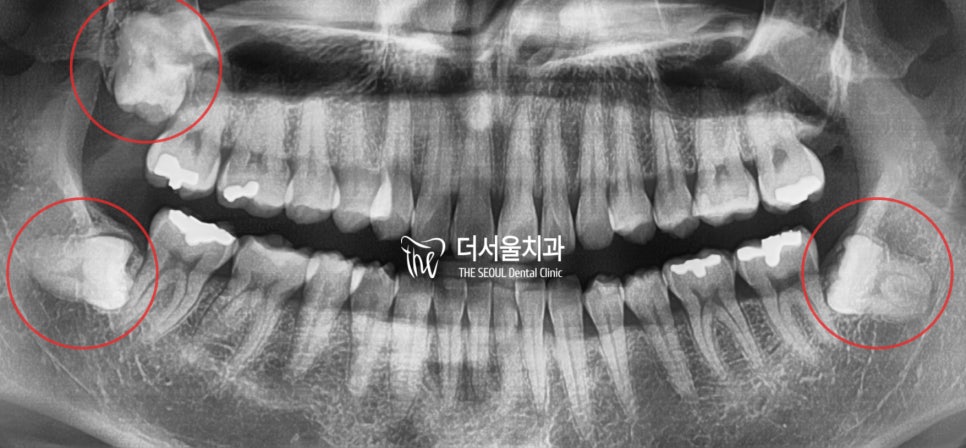
Finally, a panoramic X-ray lets me identify hidden impacted wisdom teeth and more. Once imaging is complete, we’re already about 50% through the orthodontic process. With the patient’s information gathered, a treatment plan suited to the skeletal and dental condition can now be established.
3. Precise Diagnosis
Now for what I call the “flower” of the orthodontic process — precise diagnosis. Honestly, diagnostic criteria differ slightly from doctor to doctor, so I can’t claim that “one person’s way is the single correct answer.” Through this article, let me show you my own reference points.
Remember the lateral cephalometric radiograph (Ceph) shown earlier? On it, we mark virtual reference points called cephalometric bony landmarks.
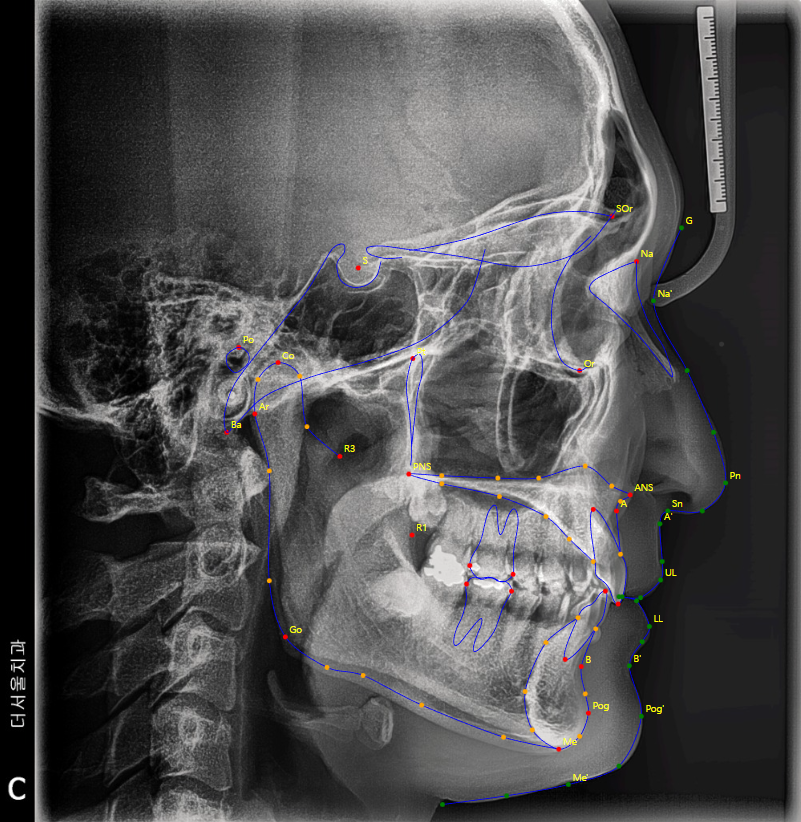

By plotting landmarks according to anatomical structures, we can determine whether extraction is needed and where brackets should be bonded. I mainly look at the Ricketts esthetic line connecting the nose tip and chin tip. Based on this line, if the lips protrude beyond it the case leans toward lip protrusion; if not, it falls within the normal range — and this can become a reference point for the extraction decision.
4. How is the right appliance chosen?
In the past, a direct bonding system (DBS) using brackets and wires was common. It remains one of the classic methods, but for this case I ran an additional simulation with Invisalign clear aligners. This is the appliance I primarily use, and I’ve documented many clinical cases with it.
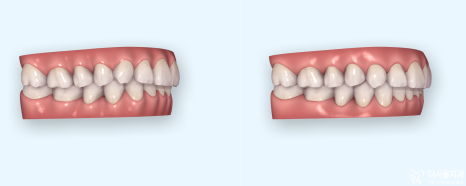
This simulation — the ClinCheck — is shown when a patient chooses Invisalign. Using the iTero intraoral scanner, it lets us preview how much and in which direction each tooth will move, so patients understand the process far more easily.

Why Do Treatment Durations Differ?
This isn’t today’s main topic, but it’s one of the most common questions patients ask. Shortening the treatment period depends on a few factors:
1. Patient cooperation
Attending monthly appointments and improving harmful oral habits.
2. Amount & type of tooth movement
There are several ways to reduce the amount of movement — for example, doing anterior partial correction instead of full correction, or moving the teeth only partway and then completing treatment with prosthetic restorations such as crowns, resin, or laminates. The type of movement matters too:

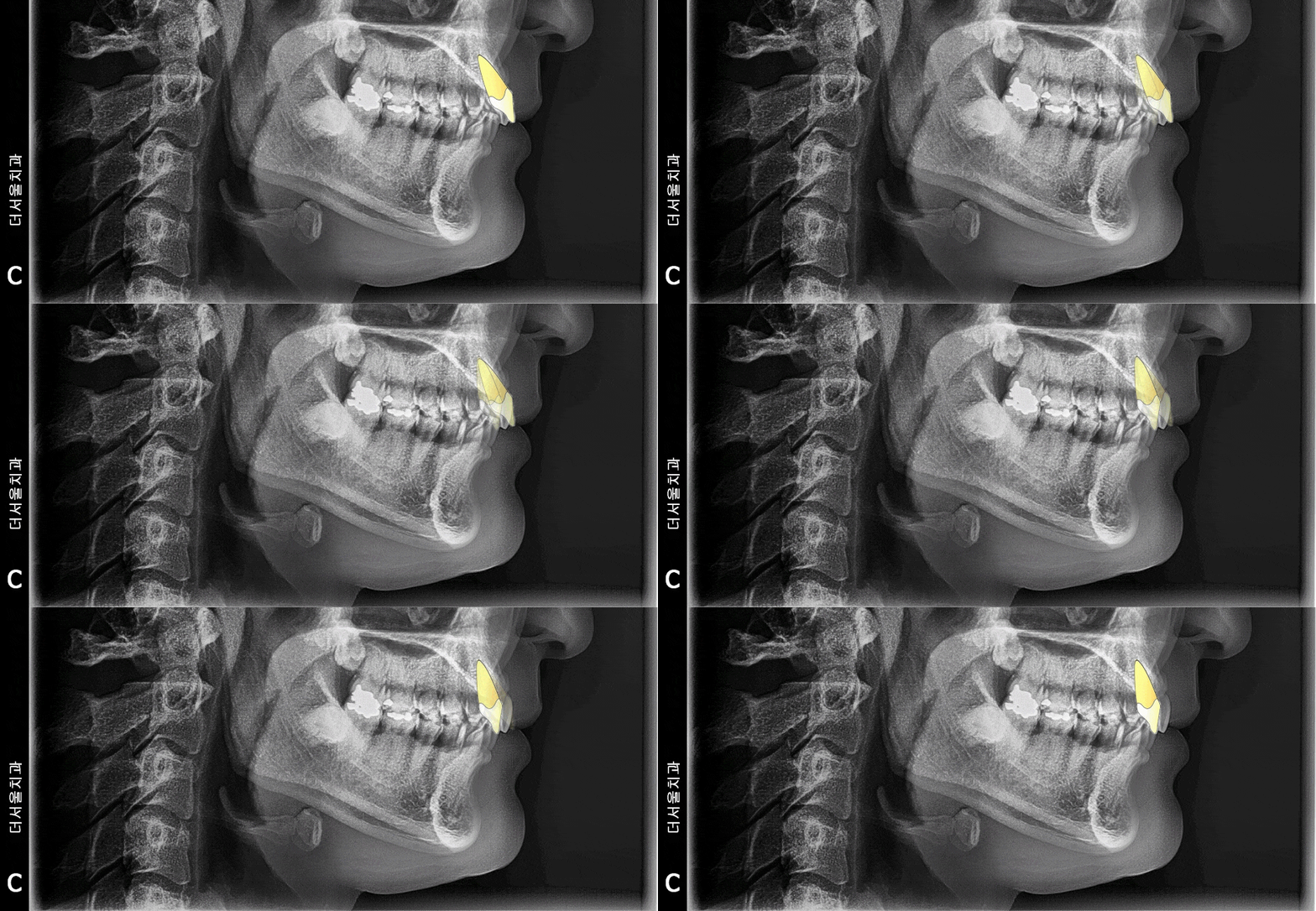
Do we move the tooth while keeping its inclination, or move both its inclination and position together? Naturally, changing both takes longer.
Summary
Everyone’s standard of beauty is different, so when I consult with a patient I listen closely to their wishes. But if I judge that the direction a patient wants won’t yield a good long-term prognosis, that’s when I’ll offer guidance and try to persuade them.
Above all, I hope this article shows you how important diagnosis is. Without diagnosis, you cannot plan how the teeth should move — and what the eye sees can differ greatly from the actual data. Malocclusion (Class I, II, III) must be classified accurately so the right approach can be planned, and that simply cannot be judged by visual inspection alone.
To make this process more accurate — and more comfortable for patients — I’ve built a system around it: the iTero intraoral scanner and the ClinCheck simulation are prime examples. A digital scanner removes the need for stone models, eliminating the shrinkage/expansion errors of the impression process and doing away with messy impressions altogether.
Treatment period: Feb 18, 2021 – Jun 17, 2022 (approximately 16 months).
Let me say it once more: you cannot discuss the orthodontic process without precise diagnosis. What should take one year can be extended indefinitely — to three, six, even seven years. Just as a garment only sits right when the first button is fastened correctly, the start is what matters most.
Frequently Asked Questions
Why is precise diagnosis so important in orthodontics?
Diagnosis makes up roughly 99% of the orthodontic process. Without accurate radiographic and cephalometric diagnosis, no reliable treatment plan can be built, and a one-year case can stretch to three years or more.
What are the steps of an orthodontic diagnosis?
(1) Checking tooth and bite condition, (2) X-rays and facial photos, (3) precise cephalometric analysis using bony landmarks and the Ricketts esthetic line, and (4) appliance selection with an Invisalign ClinCheck simulation.
Why do treatment times vary between patients?
Mainly two reasons: patient cooperation (monthly visits, correcting oral habits) and the amount/type of tooth movement required. Moving both inclination and position takes longer than position alone.