
A missing molar left alone does not stay a missing molar. The bone that held it resorbs, and by the time you decide to replace it there may not be enough left to place an implant into.
What happens if I leave the gap for years?
Beyond the obvious difficulty eating, losing teeth affects speech, and over time can change facial contour as the supporting bone recedes. Most people underestimate how quickly the site itself deteriorates.
That is the argument for having a gap assessed promptly rather than waiting until it becomes inconvenient.
What did the examination find?
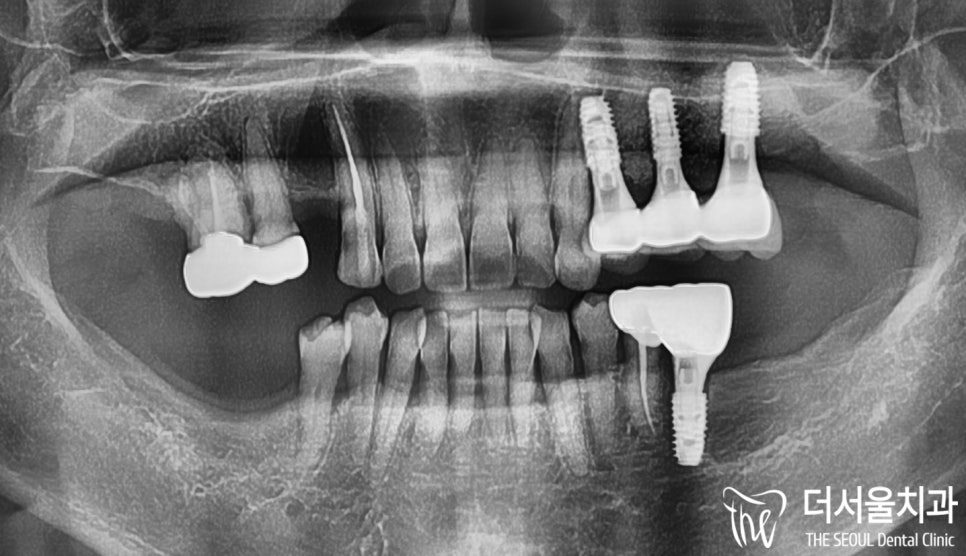
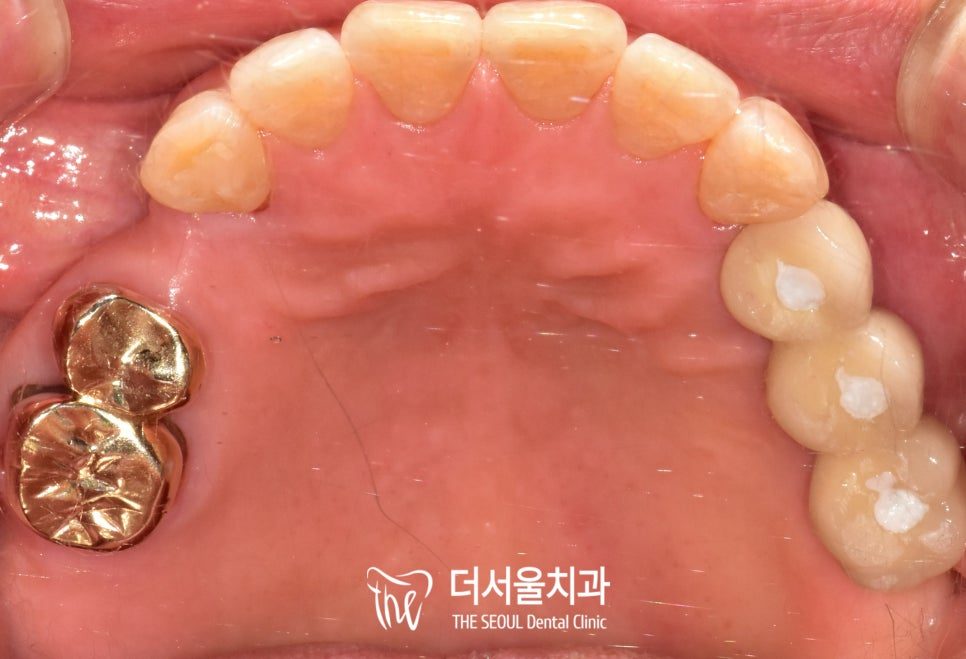
The patient had lost a tooth on the left years earlier — a lesion had grown too large to treat and the tooth was extracted — and the site had been left since.
In the upper arch, few teeth remained, and chewing on the left had been effectively impossible because the molars there were gone. The lower arch was in similar condition, with the large molars missing.
The long-vacant sites showed collapsed gum contour, which pointed to substantial bone loss underneath. A panoramic X-ray confirmed it: the bone profile was poor, and implant surgery could not proceed as things stood.
A sinus lift with bone grafting would be required first.
3D planning: how much bone has to be added
The question at that point was not whether to graft but how much, and that is measured rather than estimated.
3D analysis established:
- How much bone remained at each site
- How deeply a fixture could be seated in what was there
- Where a sinus lift was necessary, and how much graft material it would need
One useful finding came out of it: the lower molar region had not lost much bone, so placement there presented no particular difficulty. Not every site in a compromised mouth is compromised equally, and planning is what separates the sites that need work from the ones that do not.
Working through the surgery digitally beforehand is what makes the difficult sites predictable — you are checking, in advance, what cannot be seen directly during the operation.
What happens during the sinus lift surgery?
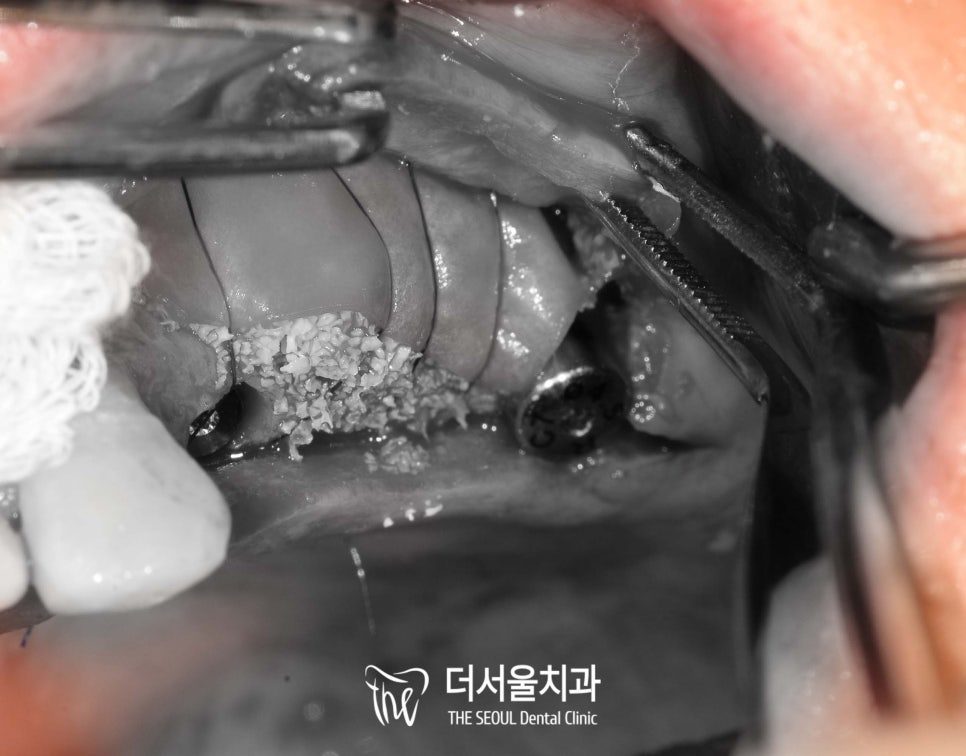
When the gum was reflected, the shortage of bone was directly visible — consistent with the imaging.
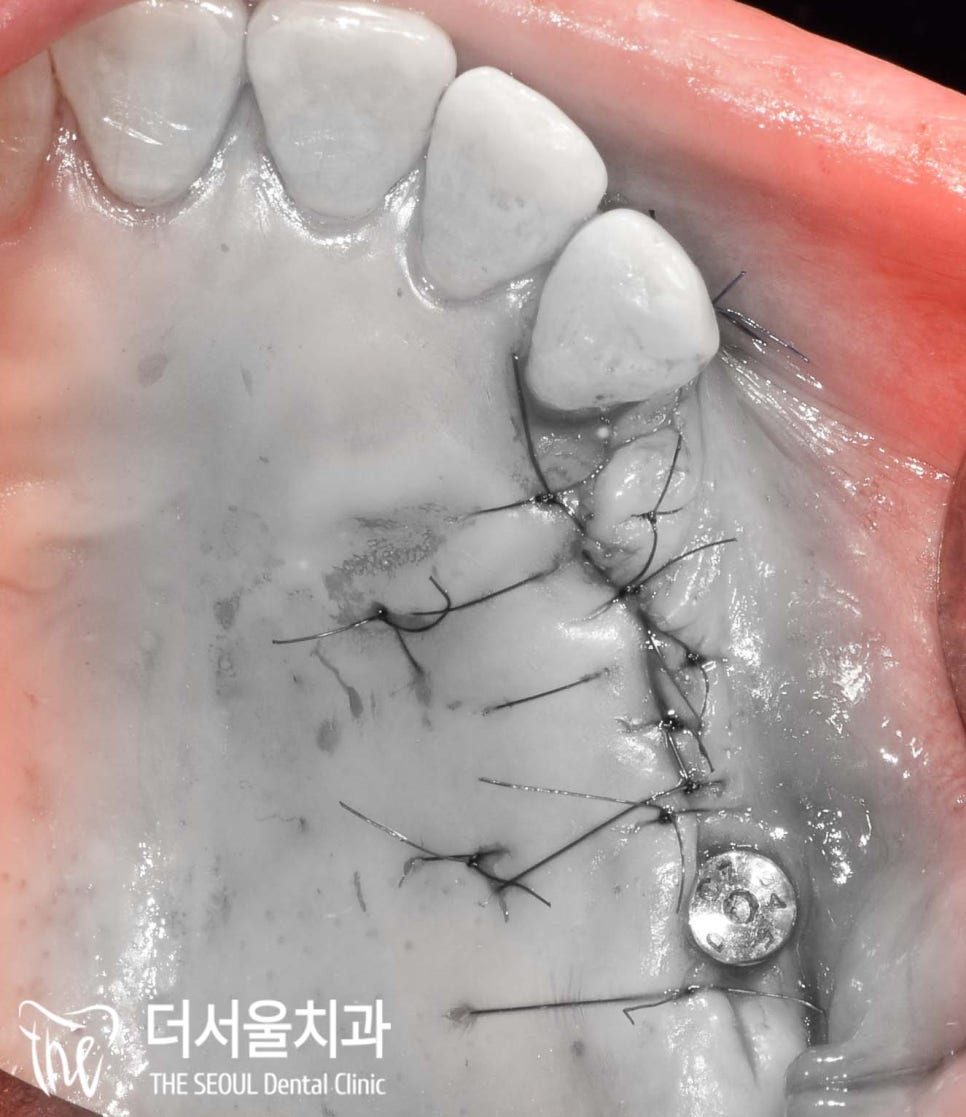
The fixtures were placed carefully according to the plan. Graft material was then packed around them and the site sutured closely so that the graft would consolidate properly and be replaced by the patient’s own bone over time.
Two fixtures were left submerged beneath the gum during healing. Burying a fixture protects it from load and from oral bacteria while integration proceeds, which is worth doing where the surrounding bone is not strong enough to guarantee stability from the start. It requires a second minor procedure later to uncover them, and in a site like this that trade is worth making.
Post-operative panoramic imaging confirmed the sinus lift, the grafting and the fixture placement were all satisfactory.
When are the crowns fitted?
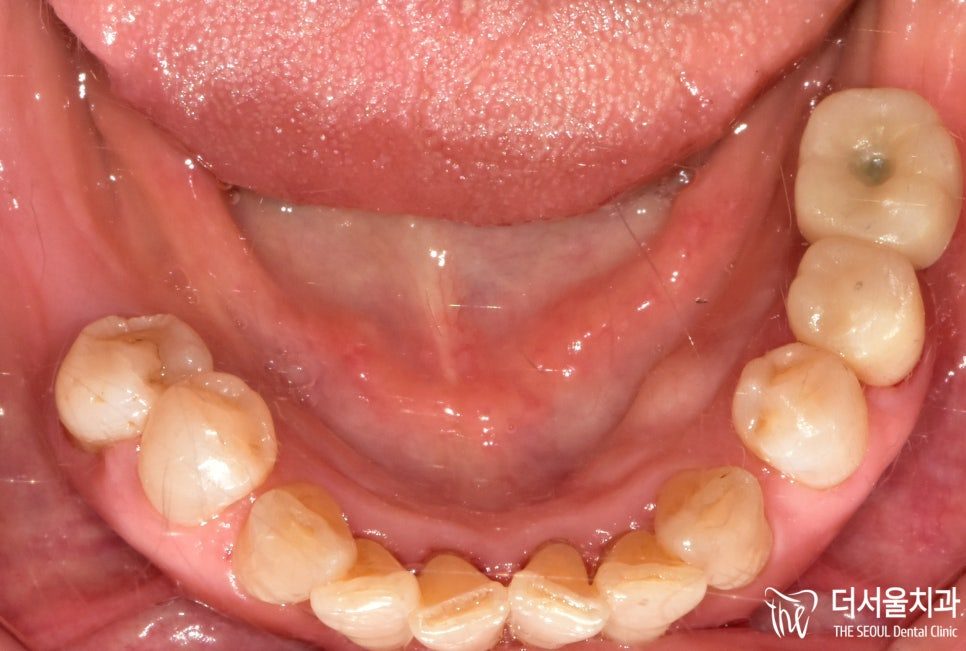
After the healing period, abutments and crowns were fitted and treatment on that side was complete. The patient regained chewing function that had not been available for years.
Remaining gaps on the right side were deferred to a later course of treatment at the patient’s preference — staging like this is normal and often sensible, since it leaves a functioning side to eat on throughout.
How long does a sinus lift implant take?
Treatment ran from mid-July 2022 to mid-January 2023 — about six months for one side, including grafting and the longer healing period a sinus lift requires. Overseas patients should plan two trips for treatment of this type and raise travel dates at the first consultation.
Placing the implant is not the end of it
An implant restoration cannot decay, but it can still affect the gum — and if inflammation sets in there, bone can be lost again around the fixture, which is the same process that caused the original problem.
So the maintenance is the same as for natural teeth:
- Regular check-ups
- Floss and interdental brushes, not brushing alone
Frequently asked questions
Is it too late for an implant if I lost the tooth years ago?
Usually not, but you will more likely need bone grafting, and possibly a sinus lift in the upper jaw. The bone resorbs while the site is empty, so the delay changes what the treatment involves rather than whether it is possible.
How is the amount of bone graft decided?
By 3D imaging, which measures how much bone remains, how deep a fixture can sit in it, and how much volume has to be added. It is measured before surgery, not judged during it.
What does it mean to leave an implant “submerged”?
The fixture is covered by gum tissue during healing rather than left protruding. It is protected from chewing load and from oral bacteria while it integrates, which helps where the surrounding bone is not strong. A minor second procedure uncovers it later.
Can I have one side done at a time?
Yes, and it is often the sensible order — it leaves you a functioning side to eat on while the other heals, and spreads the surgery. This patient deferred the right side to a later course of treatment.
Do I still need to worry about gum disease after implants?
Yes. The implant cannot decay, but the gum and bone around it can become inflamed and bone can be lost again. Cleaning between the teeth and regular check-ups are what prevent a repeat of the original problem.
Read more: bone grafting and sinus lift · digital guided implants · dental implants overview